


Did you know that just a few minutes of mindfulness each day can lower stress and improve emotional well-being? Many people feel overwhelmed by constant distractions and racing thoughts. Building a mindful routine creates space for calm and self awareness. Discover simple, research-backed steps that can help you create a peaceful environment, focus your attention, and bring mindful habits into your daily life for lasting change.
Table of Contents
- Step 1: Prepare A Supportive Mindful Environment
- Step 2: Center Attention On The Present Moment
- Step 3: Engage In Guided Mindful Breathing
- Step 4: Notice Thoughts And Emotions Nonjudgmentally
- Step 5: Integrate Mindfulness Into Everyday Routines
- Step 6: Reflect And Track Your Mindfulness Progress
Quick Summary
| Key Point | Explanation |
|---|---|
| 1. Create a Calm Space | Design a dedicated area free from distractions to encourage mindfulness practice. |
| 2. Center on Your Breath | Focus on your breathing to anchor your awareness in the present moment. |
| 3. Observe Without Judgment | Acknowledge thoughts and emotions as they arise, labeling them neutrally to build emotional resilience. |
| 4. Integrate Mindfulness Daily | Apply mindfulness techniques during routine activities to reinforce present moment awareness. |
| 5. Track Your Progress | Use a journal or tracking system to monitor your mindfulness journey and celebrate small victories. |
Step 1: Prepare a Supportive Mindful Environment
Creating a supportive mindful environment starts with intentionally designing a peaceful space where you can focus completely on the present moment. According to health.harvard.edu , this means establishing a quiet area free from external distractions that allows you to shift away from typical mental preoccupations.
Begin by selecting a dedicated space in your home or workplace that feels calm and comfortable. This could be a small corner of a room with minimal visual clutter or a specific chair that provides good posture support. As recommended by acesaware.org , choose a position where you can sit or lie down comfortably such as a cushioned chair or yoga mat.
When setting up your mindful environment, consider these key elements: soft lighting, minimal noise, comfortable temperature, and perhaps a simple object like a small plant or calming artwork to provide gentle visual focus. Your goal is creating a sanctuary that naturally encourages relaxation and present moment awareness. Turn off electronic devices and consider using soft background sounds like gentle wind chimes or quiet nature recordings if complete silence feels uncomfortable.
A pro tip many practitioners overlook is consistency. Try to use the same space for your mindfulness practice so your brain begins associating that location with calm and introspection. Over time, just entering this space will help trigger a relaxed mental state.
Step 2: Center Attention on the Present Moment
Centering your attention on the present moment is a powerful skill that transforms how you experience life. According to oxfordmindfulness.org, this practice involves deliberately choosing what to pay attention to and how to pay attention to it, recognizing that attention is the gateway to experience.
Start by focusing on something immediate and tangible like your breath. Notice the subtle sensations of inhaling and exhaling. When your mind begins to wander (and it will), gently guide your attention back to your breath without judgment. headsupguys.org highlights that this skill helps individuals become less attached to negative thoughts, allowing them to dissipate naturally over time.
A practical technique is anchoring your awareness through sensory experiences. This could mean feeling the texture of your clothing, listening to ambient sounds, or observing the temperature of the air around you. The goal is not to eliminate thoughts but to create spaciousness around them. Imagine your thoughts as clouds passing through a vast sky your awareness remains steady and clear.
Remember that present moment awareness is a skill. Like any skill, it improves with consistent practice. Some days will feel easier than others. The key is approaching your practice with curiosity and compassion for yourself. In the next step, we will explore specific breathing techniques that can help deepen your mindfulness practice.
Step 3: Engage in Guided Mindful Breathing
Guided mindful breathing is a powerful technique to anchor yourself in the present moment and reduce stress. According to health.harvard.edu, basic mindfulness meditation focuses on the sensations of breathing such as feeling air flow through your nostrils or observing your belly rise and fall with each breath.
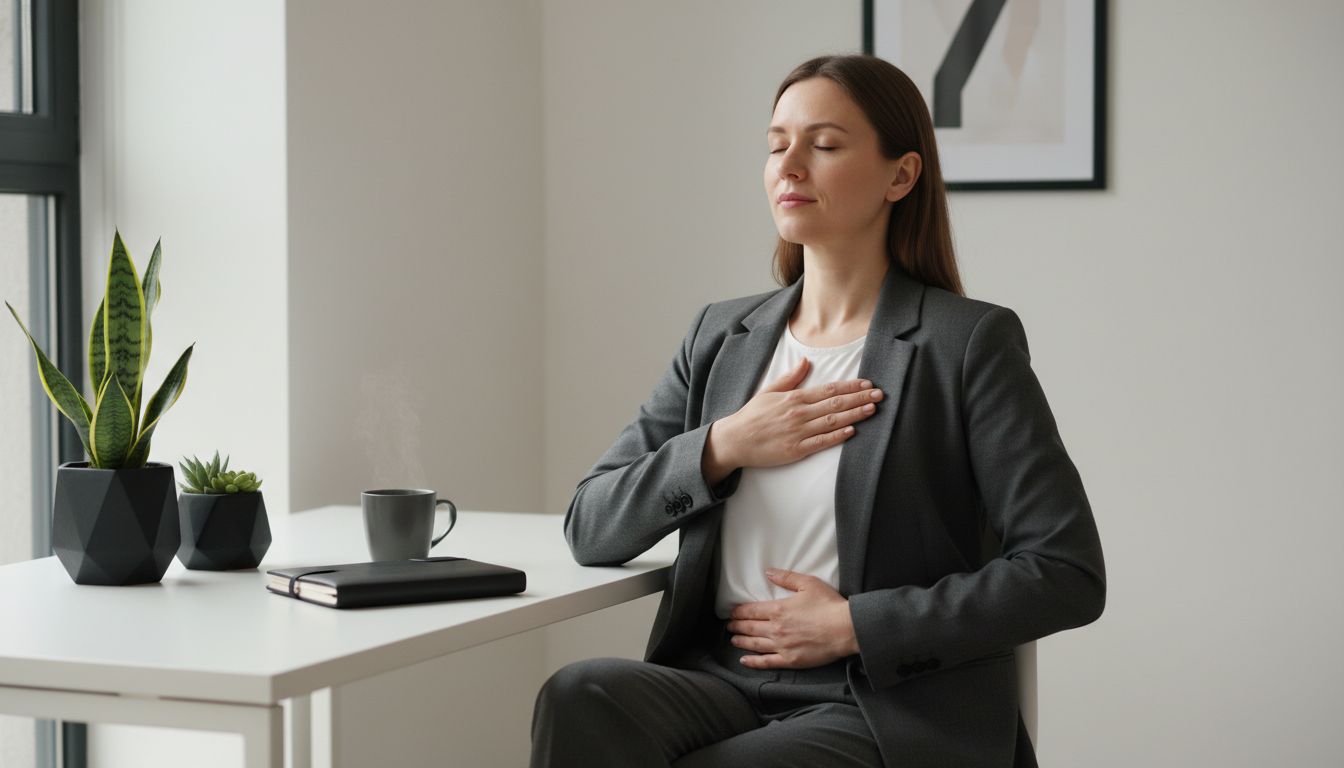
Begin by finding a comfortable seated or lying position. acesaware.org recommends placing one hand on your belly and another on your chest. Breathe slowly through your nose, allowing your belly to rise as you inhale. Feel the gentle expansion and contraction. Notice how the breath moves naturally without forcing or controlling it.
As you practice, your mind will inevitably wander. This is completely normal. When you notice your thoughts drifting away from your breath, simply acknowledge them without judgment and gently guide your attention back to the physical sensation of breathing. Think of your breath as an anchor keeping you connected to the present moment.
A pro tip is to start with short sessions. Even five minutes of mindful breathing can significantly reduce stress and increase your sense of calm. Over time, you can gradually increase the duration of your practice. In the next step, we will explore additional techniques to deepen your mindfulness experience.
Step 4: Notice Thoughts and Emotions Nonjudgmentally
Noticing thoughts and emotions without judgment is a transformative mindfulness skill that helps you develop emotional resilience and self awareness. According to en.wikipedia.org, mental noting is a technique where you label experiences as they arise using simple words, which increases overall awareness and reduces your identification with passing thoughts.
Begin by observing your thoughts and feelings as if you were a neutral observer. When a thought emerges imagine watching it like a cloud passing through the sky. en.wikipedia.org suggests that this non judging approach is directly related to emotional stability. Instead of categorizing experiences as good or bad simply acknowledge their presence. You might silently label thoughts like thinking thinking or feeling feeling without attaching any additional commentary or criticism.
Practice creating space between yourself and your inner experience. When a challenging emotion surfaces sit with it compassionately. Notice its qualities its intensity its texture without getting swept away. Recognize that thoughts and emotions are temporary experiences moving through your consciousness they are not permanent definitions of who you are.
A practical tip is to approach this practice with curiosity and gentleness. Some days will feel easier than others. The goal is not to eliminate thoughts but to change your relationship with them.
In the next step, we will explore how to integrate these mindfulness techniques into your daily routine.
Step 5: Integrate Mindfulness into Everyday Routines
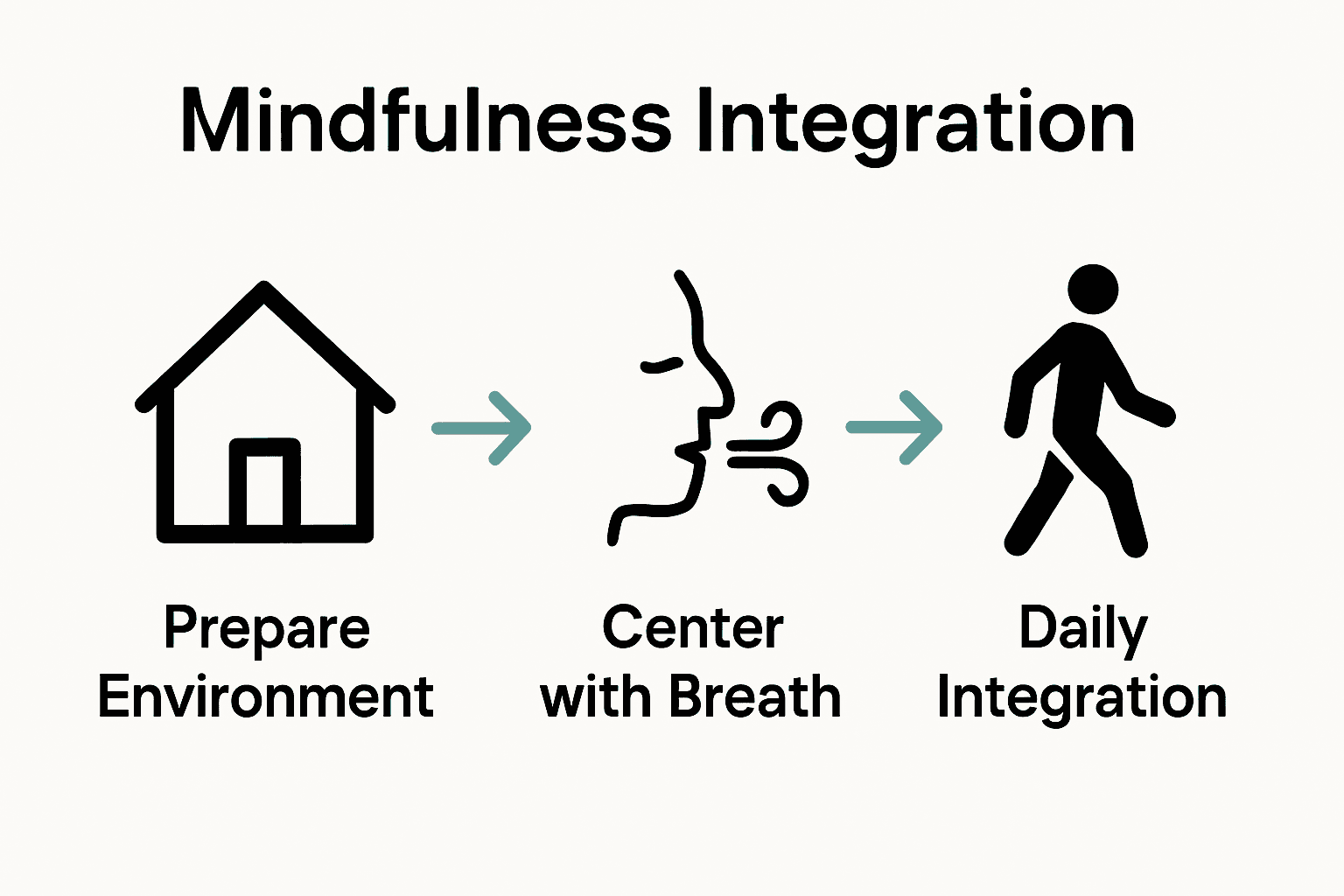
Transforming mindfulness from a structured practice into a living approach means weaving awareness into your daily activities. According to acesaware.org, you can incorporate mindfulness into any task by deliberately directing your attention to specific bodily sensations, such as noticing how your feet lift and lower while walking or paying attention to your breathing patterns.
Start with simple daily activities that offer opportunities for present moment awareness. During routine tasks like washing dishes, brushing teeth, or commuting, intentionally focus on the sensory experience. Feel the temperature of water, notice the texture of your toothbrush, or observe the rhythm of your breath while sitting in traffic. themindfulnessapp.com recommends using the Three Step Breathing Space a quick three minute exercise that helps you step out of autopilot mode and reconnect with the present moment especially during stressful situations.
Consistent small moments of awareness are more powerful than infrequent long meditation sessions. Create gentle reminders for yourself such as mindful pauses between activities or setting a soft alarm every few hours to check in with your present experience. Some people use everyday triggers like drinking water or waiting for a traffic light as opportunities to take three conscious breaths.
Remember that integrating mindfulness is a skill that develops gradually. Be patient and kind with yourself. Some days will feel more natural than others. The goal is not perfection but consistent gentle awareness. In our final step, we will explore how to sustain and deepen your mindfulness practice over time.
Step 6: Reflect and Track Your Mindfulness Progress
Reflecting and tracking your mindfulness journey helps you understand your growth and maintain motivation. According to arxiv.org, experienced mindfulness practitioners use various strategies including social accountability and guidance from teachers to sustain their practice and monitor personal development.
Consider keeping a mindfulness journal where you record brief observations about your practice. Note not just the duration of meditation but also your inner experiences subtle shifts in awareness and emotional responses. arxiv.org suggests that even brief meditation practices can positively impact cognitive functions such as attention and emotional regulation. Your journal might include entries about moments of clarity challenging emotions you observed or times when you successfully redirected your attention.
Creating a simple tracking system can help maintain consistency. This could be a simple calendar where you mark days you practiced or a digital app that logs your meditation time. Some practitioners use a rating system to gauge their present moment awareness energy levels and overall sense of calm. Remember that progress is not linear. Some weeks you might feel more connected and others more distracted. The key is gentle persistence and compassionate self observation.
A practical tip is to review your journal monthly. Look for patterns in your practice identify what supports your mindfulness and what challenges you. Celebrate small victories and approach any perceived setbacks with curiosity rather than judgment. Your mindfulness journey is unique and personal continuing to evolve with each moment of awareness.
Enhance Your Everyday Calm with Expert Mindfulness Guidance
Struggling to create a peaceful routine combining mindfulness with daily life can leave many feeling overwhelmed and disconnected. This article highlights the challenge of maintaining present moment awareness, dealing with wandering thoughts, and integrating mindful practices consistently. If you want to deepen your mindfulness skills and turn calm focus into a lifelong habit, expert support can make all the difference.

Discover personalized strategies through Monika Varela’s professional mindfulness coaching tailored to help you nurture emotional resilience and sustain mindful awareness throughout your busy days. Whether you seek one-on-one therapy, interactive workshops, or corporate training, start your path toward greater balance and mental wellness today. Visit Monika Varela’s website and take the first step to transform your mindfulness practice into lasting calm and clarity.
Frequently Asked Questions
How can I create a supportive mindful environment at home?
To create a supportive mindful environment, choose a quiet space free of distractions where you can relax. Aim for soft lighting and comfortable seating; Consider using calming objects like plants or artwork to enhance the atmosphere.
What techniques can I use to center my attention during mindfulness practice?
You can center your attention by focusing on your breath, noticing the sensations of inhaling and exhaling. When your mind wanders, gently return your focus to your breath to enhance your present moment awareness.
How do I engage in guided mindful breathing?
To engage in guided mindful breathing, sit comfortably and place one hand on your belly and another on your chest. Breathe slowly through your nose, noticing the rise and fall of your belly, and gently return your focus to your breath whenever distractions arise.
What does it mean to notice thoughts and emotions nonjudgmentally?
Noticing thoughts and emotions nonjudgmentally means observing them without labeling them as good or bad. Practice this by acknowledging your thoughts and feelings as temporary experiences and simply let them pass without attachment or criticism.
How can I integrate mindfulness into my daily routines?
Integrate mindfulness by applying present moment awareness to everyday activities, like washing dishes or commuting. Focus on the sensory details, such as the water’s temperature or the rhythm of your breath, and observe your experiences mindfully throughout the day.
How should I track my mindfulness progress?
To track your mindfulness progress, keep a journal where you note your meditation duration and your experiences. Review it regularly to identify patterns and celebrate small victories, helping you stay motivated and aware of your growth.





Aún no hay comentarios, ¡añada su voz abajo!