


Most American and Spanish organizations still rely on outdated views of wellbeing, even though over 150 different tools exist globally to measure it. For corporate wellness coordinators and HR professionals, a clear understanding is critical because misconceptions can weaken even the best programs. This overview clarifies what workplace wellbeing truly means, shatters persistent myths, and highlights smarter strategies for meaningful growth and employee support.
Table of Contents
- Defining Wellbeing and Common Misconceptions
- Types of Wellbeing Investment Strategies
- How Wellbeing Programs Drive Results
- Financial Impact and Measurable ROI
- Pitfalls to Avoid in Wellbeing Investments
Key Takeaways
| Point | Details |
|---|---|
| Wellbeing is Multifaceted | Wellbeing encompasses psychological, emotional, social, and physical dimensions that are essential for overall quality of life. |
| Dynamic Process | Wellbeing is not static; it requires continuous growth, self-reflection, and adaptability to meet individual needs. |
| Tailored Strategies | Successful wellbeing programs should combine organizational, group, and individual strategies to address the interconnected nature of employee health. |
| Measurable ROI | Organizations must establish clear metrics to demonstrate the financial and cultural benefits of their wellbeing investments. |
Defining Wellbeing and Common Misconceptions
Wellbeing is a complex and multifaceted concept that goes far beyond simple physical health. Multiple governments and organizations struggle to establish a consistent definition, reflecting the nuanced nature of human experience and psychological functioning. At its core, wellbeing encompasses psychological, emotional, social, and physical dimensions that contribute to an individual’s overall quality of life.
Contrary to popular belief, wellbeing is not a static state but a dynamic process of continuous growth and adaptation. Researchers have identified over 150 different assessment tools worldwide, which underscores the complexity of defining this concept. Common misconceptions include:
- Wellbeing is solely about happiness
- Mental health and wellbeing are the same thing
- Wellbeing can be achieved through quick fixes or temporary solutions
- Only certain people can develop strong personal wellbeing
In reality, wellbeing is a holistic and interconnected experience involving multiple life domains. It integrates psychological resilience, emotional intelligence, social connections, physical health, and personal growth. Recognizing wellbeing as a multidimensional construct helps individuals and organizations develop more comprehensive and effective strategies for personal and professional development.

Professional Insight: Approach wellbeing as a dynamic, personalized journey that requires consistent self-reflection, adaptability, and intentional practice.
Types of Wellbeing Investment Strategies
Wellbeing investment strategies represent a comprehensive approach to supporting employee health and organizational performance. Research reveals multiple intervention categories that address different organizational needs, ranging from individual-focused initiatives to broader systemic approaches. Understanding these diverse strategies enables organizations to create tailored, holistic wellness programs.
These investment strategies can be categorized into three primary levels:
- Organizational-Level Strategies
- Developing comprehensive wellness policies
- Creating supportive workplace cultures
- Implementing flexible work arrangements
- Establishing mental health resources
- Group-Level Programs
- Team-building wellness activities
- Collaborative health challenges
- Group meditation or mindfulness sessions
- Peer support networks
- Individual-Level Initiatives
- Personalized wellness coaching
- Mental health counseling
- Individual stress management training
- Health risk assessments
Successful wellbeing investment requires a nuanced, integrated approach that recognizes the interconnected nature of employee health. By combining strategies across organizational, group, and individual levels, companies can create robust support systems that address complex human needs and promote sustainable workforce wellness.
Professional Insight: Design wellbeing strategies with flexibility, recognizing that one size does not fit all and individual needs vary significantly across different work environments and employee demographics.
Below is a summary comparing the three main types of wellbeing investment strategies and their unique organizational benefits:
| Strategy Level | Core Approach | Typical Activities | Primary Business Benefit |
|---|---|---|---|
| Organizational-Level | Policies and culture change | Flexible work, mental health access | Improved retention and lower claims |
| Group-Level | Team-based interventions | Health challenges, peer support | Stronger collaboration, team engagement |
| Individual-Level | Personalized coaching and support | Counseling, stress management | Increased productivity, lower absenteeism |
How Wellbeing Programs Drive Results
Organizational Performance fundamentally transforms when strategic wellbeing programs are implemented effectively. Comprehensive research demonstrates significant positive correlations between targeted wellbeing initiatives and measurable workplace outcomes, indicating that investing in employee wellness is not just a moral imperative but a critical business strategy.
The impact of wellbeing programs can be observed across multiple dimensions:
-
Productivity Enhancement
-
Reduced absenteeism
-
Increased employee engagement
-
Improved cognitive performance
-
Higher quality of work output
-
Mental Health Outcomes
-
Decreased stress levels
-
Better emotional regulation
-
Enhanced psychological resilience
-
Improved interpersonal workplace relationships
Research consistently shows that systematic wellbeing interventions produce moderate to substantial improvements in organizational effectiveness, demonstrating that comprehensive wellness approaches yield tangible results. These programs do more than support individual employees; they create a holistic ecosystem of support that strengthens organizational culture and performance.
Successful wellbeing programs integrate multiple strategies, recognizing that employee wellness is a complex, interconnected experience. By addressing physical, mental, emotional, and social dimensions simultaneously, organizations can create powerful, transformative interventions that benefit both individuals and the broader workplace environment.
Professional Insight: Measure and track wellbeing program outcomes using multiple metrics, ensuring continuous improvement and demonstrating return on investment to organizational leadership.
Financial Impact and Measurable ROI
Financial sustainability of wellbeing programs hinges on demonstrating clear, quantifiable returns. Sophisticated methodologies now exist for comprehensively tracking the economic benefits of employee wellness initiatives, transforming these programs from perceived expenses to strategic investments.
Key financial metrics for evaluating wellbeing program effectiveness include:
- Direct Cost Savings
- Reduced healthcare expenditures
- Lower insurance premium rates
- Decreased workers compensation claims
- Minimized disability-related expenses
- Productivity Financial Gains
- Decreased absenteeism costs
- Increased employee output
- Enhanced performance quality
- Reduced turnover expenses
- Indirect Economic Benefits
- Improved team collaboration
- Enhanced organizational reputation
- Better talent attraction capabilities
- Increased employee discretionary effort
Measuring return on investment requires a multifaceted approach that considers both tangible financial outcomes and less quantifiable cultural improvements. Organizations should develop robust tracking mechanisms that capture comprehensive data across multiple performance indicators, creating a holistic view of wellbeing program effectiveness.
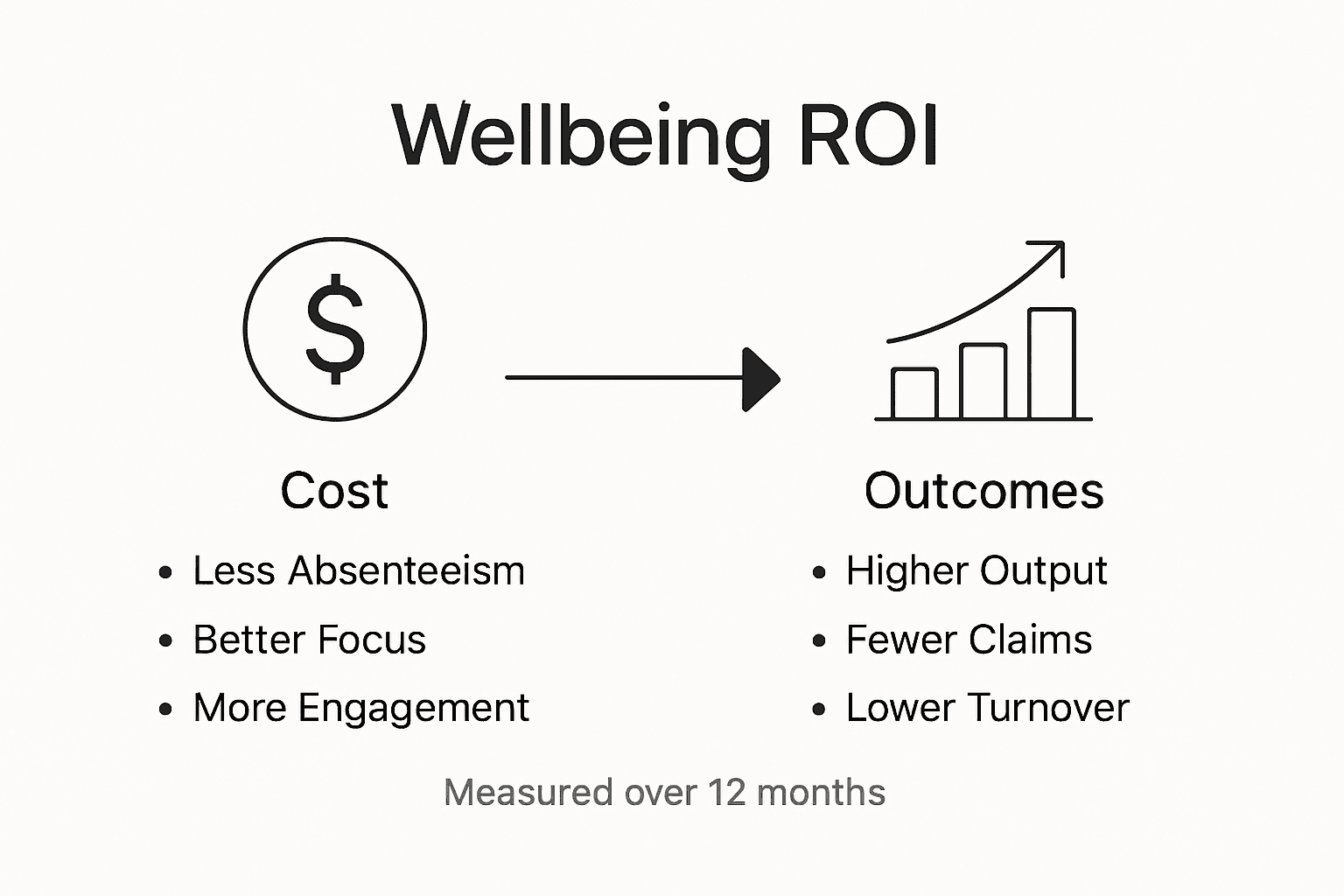
Successful financial evaluation involves establishing baseline metrics, implementing targeted interventions, and systematically monitoring changes. This data-driven approach transforms wellbeing from a discretionary expense to a strategic organizational investment with measurable economic impact.
Professional Insight: Develop a standardized ROI measurement framework that integrates financial, performance, and cultural metrics to comprehensively demonstrate the value of wellbeing investments.
Pitfalls to Avoid in Wellbeing Investments
Strategic wellbeing investments require careful planning and nuanced implementation. Organizations frequently encounter predictable obstacles that can undermine even well-intentioned employee wellness programs, making proactive prevention critical to success.
Common pitfalls organizations must navigate include:
- Misalignment Challenges
- Implementing generic programs without employee input
- Failing to customize interventions for diverse workforce needs
- Overlooking generational and demographic variations
- Assuming a one-size-fits-all approach works
- Communication Breakdown
- Insufficient program transparency
- Complex enrollment processes
- Lack of leadership endorsement
- Inconsistent messaging about program value
- Measurement and Evaluation Errors
- Not establishing clear baseline metrics
- Neglecting long-term tracking
- Focusing solely on quantitative outcomes
- Ignoring qualitative cultural impacts
Successful wellbeing strategies demand continuous adaptation, recognizing that employee needs evolve rapidly. Organizations must develop flexible frameworks that can quickly respond to changing workforce dynamics, technological advancements, and emerging health challenges.
Building effective wellbeing investments requires a holistic, data-driven approach that prioritizes employee perspectives, maintains transparent communication, and demonstrates tangible organizational commitment to workforce health and happiness.
This table highlights common pitfalls in wellbeing initiatives alongside recommended prevention tactics:
| Pitfall Category | Typical Misstep | Proactive Solution |
|---|---|---|
| Misalignment | Using generic unadapted programs | Involve diverse employees in program design |
| Communication Breakdown | Lacking clarity and leadership input | Streamline messaging, engage leadership, simplify access |
| Evaluation Errors | Neglecting holistic measurement | Set clear metrics and monitor both quantitative and qualitative outcomes |
Professional Insight: Create a dynamic wellbeing program framework with built-in feedback mechanisms that allow continuous refinement based on real-time employee insights and evolving organizational needs.
Unlock the Full Potential of Wellbeing in Your Organization
The article highlights the complex challenges of creating effective wellbeing programs that truly enhance employee resilience, engagement, and organizational performance. Many businesses struggle with misaligned strategies, poor communication, and the need for continuous adaptation to evolving workforce needs. If your goal is to move beyond generic solutions and build a customized, holistic approach that drives real, measurable results it is vital to integrate psychological expertise with mindfulness and communication skills.
Discover how Monika Varela, a psychologist and mindfulness coach, can help you develop dynamic wellbeing initiatives that address individual and group needs while fostering an inclusive culture. Through personalized therapy, targeted workshops, and corporate training, her proven methods empower employees to manage stress effectively, improve mental wellness, and boost productivity. Take the first step toward transforming your organization by visiting Monikavarela.com. Explore her range of services and book a consultation now to create wellbeing programs that deliver lasting business benefits.
Frequently Asked Questions
What is wellbeing and why is it important for businesses?
Wellbeing is a multifaceted concept that includes psychological, emotional, social, and physical dimensions. Investing in wellbeing is crucial because it enhances employee health, boosts productivity, and ultimately contributes to organizational success.
How can organizations effectively implement wellbeing programs?
Organizations can implement effective wellbeing programs by developing comprehensive wellness policies, creating supportive workplace cultures, and offering tailored initiatives at organizational, group, and individual levels. Engaging employees in the design process is also essential.
What are the measurable benefits of investing in employee wellbeing?
Investing in employee wellbeing can lead to reduced absenteeism, increased engagement, improved cognitive performance, and higher quality work output, ultimately enhancing overall organizational performance.
What common pitfalls should organizations avoid when investing in wellbeing?
Common pitfalls include using generic programs without employee input, lacking clear communication about program values, and neglecting long-term evaluation of the programs. Organizations should prioritize employee perspectives and adapt strategies based on feedback.





Aún no hay comentarios, ¡añada su voz abajo!