


Most conversations happen on autopilot, yet only a small fraction of people consciously notice the impact of their words. Studies show mindful communication can reduce conflict and increase positive outcomes in relationships. This matters because the way we speak shapes not only our connections with others, but also our own sense of calm and understanding. Mindful speaking provides practical ways to turn everyday dialogue into something deeper, offering tools for more honest, empathetic interaction.
Table of Contents
- Defining Mindful Speaking And Context
- Variations And Related Practices
- Core Elements Of Mindful Speaking
- Practical Mindful Speaking Techniques
- Applications In Therapy And Leadership
Key Takeaways
| Point | Details |
|---|---|
| Mindful Speaking Defined | A deliberate communication practice that promotes awareness, presence, and authentic expression, transcending simple verbal exchange. |
| Core Techniques | Key practices include pausing, relaxing, listening deeply, and speaking truthfully to foster genuine connections. |
| Applications | Mindful speaking is valuable in therapy and leadership, enhancing emotional processing and empathetic listening while reducing reactivity. |
| Transformative Potential | This approach transforms routine conversations into meaningful interactions, nurturing understanding and mutual respect. |
Defining Mindful Speaking and Context
Mindful speaking is a deliberate communication approach rooted in awareness, presence, and intentional expression. As explored in research by Cambridge.org, this practice stems from ancient traditions and involves maintaining a non-judgmental awareness of thoughts, actions, and emotions while focusing intently on the present moment.
At its core, mindful speaking transcends simple verbal communication. It represents a holistic approach to interaction that integrates psychological, emotional, and spiritual dimensions. Drawing inspiration from practices like Insight Dialogue Wikipedia, mindful speaking involves several key principles:
- Pause before responding
- Relax your mental and physical state
- Open yourself to genuine connection
- Listen with deep, authentic attention
- Speak with genuine intention and truth
The practice demands more than technical communication skills. It requires cultivating inner stillness, emotional intelligence, and a profound commitment to authentic human connection. By approaching conversations with mindfulness, individuals can transform routine exchanges into meaningful, transformative interactions that honor both the speaker and listener’s experience.
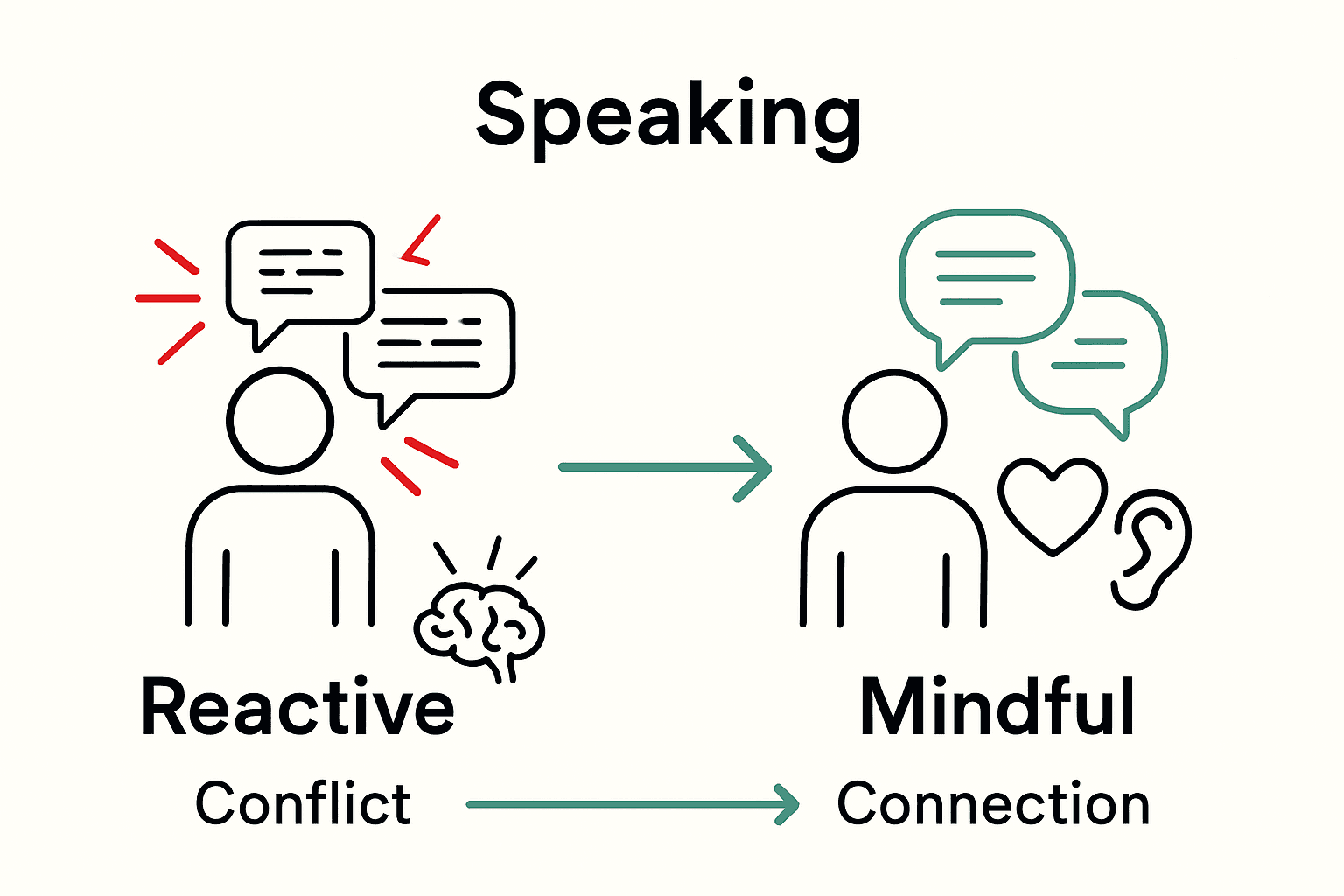
Practically speaking, mindful speaking is about creating space between stimulus and response. It means consciously choosing words that are kind, necessary, and true, rather than reflexively reacting from a place of unconscious emotion or habitual pattern. This approach promotes deeper understanding, reduces interpersonal conflict, and creates opportunities for genuine empathy and mutual respect.
Variations and Related Practices
Mindful speaking encompasses a rich landscape of contemplative practices that extend far beyond traditional communication techniques. As explored in Wikipedia’s Contemplative Practices in Action, these approaches integrate mindfulness across diverse contexts, offering nuanced ways of engaging with communication and personal awareness.
Different traditions and schools of thought have developed unique variations of mindful communication:
-
Plum Village Tradition: Developed by Thich Nhat Hanh Wikipedia, this approach emphasizes mindfulness as a living energy that permeates daily interactions. Practitioners focus on:
- Mindful breathing during conversations
- Intentional listening
- Creating spaciousness in communication
-
Compassionate Communication: Also known as Nonviolent Communication (NVC), this method prioritizes empathy and understanding over judgment and reaction.
-
Zen Communication: Rooted in Buddhist philosophy, this practice emphasizes presence, simplicity, and authentic expression.
Each variation shares a fundamental principle: transforming communication from a transactional exchange to a deeply human, connected experience. By integrating mindfulness, these practices help individuals move beyond reactive patterns, creating space for genuine understanding and meaningful dialogue.

Practitioners often discover that mindful speaking is less about perfect technique and more about cultivating an inner state of openness, curiosity, and compassion. Whether through breathing practices, intentional pauses, or cultivating deep listening, these approaches offer powerful tools for more authentic, transformative human connection.
Core Elements of Mindful Speaking
Mindful speaking requires a deliberate and nuanced approach to communication that goes beyond mere verbal exchange. Drawing from the Insight Dialogue framework Wikipedia, the core elements of mindful speaking involve a series of intentional practices designed to create deeper, more authentic connections.
At the heart of mindful speaking are several critical elements:
- Pause: Creating intentional space between stimulus and response
- Relax: Releasing tension and cultivating inner calm
- Open: Approaching conversation with genuine curiosity and receptiveness
- Listen Deeply: Engaging with full attention and without judgment
- Speak Truthfully: Expressing thoughts and feelings with authenticity and compassion
Research on mindful listening from ERIC emphasizes the transformative power of being fully present during communication. This involves more than just hearing words – it’s about understanding the emotional landscape behind those words, recognizing subtle nuances, and creating a safe space for genuine expression.
Practically, mindful speaking demands continuous self-awareness. It requires practitioners to monitor their internal state, manage emotional reactivity, and consciously choose responses that promote understanding. By integrating these core elements, individuals can transform ordinary conversations into profound opportunities for connection, learning, and mutual respect.
Practical Mindful Speaking Techniques
Mindful speaking transforms communication from a reflexive exchange to an intentional, compassionate interaction. Drawing from the Insight Dialogue framework Wikipedia, practical techniques emerge that can be immediately applied to enhance interpersonal communication.
Key practical techniques include:
-
Breath Awareness: Use conscious breathing to ground yourself before and during conversations
- Take three deep breaths before responding
- Pause when feeling emotionally triggered
- Use breathing as a reset mechanism
-
Body Scan Technique: Develop awareness of physical and emotional states
- Notice tension in your body
- Observe emotional reactions without judgment
- Release unnecessary physical and mental tension
Research from ERIC highlights the importance of creating a non-judgmental communication environment. This involves developing strategies that help you:
- Stay present and fully engaged
- Listen without preparing your response
- Recognize and suspend personal biases
- Respond with genuine curiosity
Practically, mindful speaking is about creating a spacious internal landscape where communication can flow authentically. By consistently practicing these techniques, individuals can transform their interactions from superficial exchanges to meaningful, compassionate dialogues that foster genuine understanding and connection.
Applications in Therapy and Leadership
Mindful speaking emerges as a powerful transformative tool across therapeutic and leadership contexts, offering nuanced approaches to communication and personal growth. Research in mindfulness interventions demonstrates its profound potential for healing and professional development.
In therapeutic settings, mindful speaking becomes a critical intervention strategy. Drawing from Wikipedia’s Mindfulness-based Pain Management research, practitioners use these techniques to:
- Facilitate emotional processing
- Create safe communication spaces
- Support trauma-informed healing
- Reduce psychological distress
- Enhance emotional regulation
Leadership applications reveal equally compelling benefits. Mindful communication enables leaders to:
- Cultivate empathetic listening
- Manage complex interpersonal dynamics
- Reduce reactive decision-making
- Build trust through authentic dialogue
Research from BMC Psychology further illuminates how mindful speaking practices enhance communication skills and personal autonomy. By integrating intentional awareness into professional interactions, individuals can transform potential conflict zones into opportunities for mutual understanding and collaborative growth.
Ultimately, mindful speaking transcends traditional communication models. It represents a holistic approach that recognizes communication as a deeply human, interconnected experience – one that requires presence, compassion, and genuine engagement.
Unlock the Power of Mindful Speaking to Transform Your Conversations
Are you ready to move beyond reactive communication and create authentic, meaningful connections? This guide to mindful speaking highlights key challenges like managing emotional responses, cultivating deep listening, and expressing yourself with genuine intention. If you want to reduce misunderstandings and foster empathy in your daily interactions you are not alone. Many struggle with pausing before responding or speaking with truthful compassion — skills that can be strengthened through mindful awareness.

Discover how Monika Varela, a seasoned psychologist and mindfulness coach, can help you develop these essential communication skills. Explore a range of services tailored to improve your mindfulness and speaking abilities today at Monikavarela.com. Stay updated on the latest techniques and insights by visiting our Noticias archivos – Mónika Varela. Take your mindful speaking journey forward and transform your interactions by booking a session or workshop now through our accessible platform.
Frequently Asked Questions
What is mindful speaking?
Mindful speaking is a deliberate communication approach characterized by awareness, presence, and intentional expression. It involves maintaining non-judgmental awareness of thoughts, actions, and emotions while focusing on the present moment.
What are the key principles of mindful speaking?
The key principles of mindful speaking include pausing before responding, relaxing your mental and physical state, opening yourself to genuine connection, listening deeply and authentically, and speaking truthfully with intention and compassion.
How can I practice mindful speaking in everyday conversations?
You can practice mindful speaking by using techniques like breath awareness to ground yourself, performing body scans to recognize tension, and intentionally pausing before responding to foster a more meaningful and empathetic dialogue.
What are the benefits of mindful speaking in therapeutic settings?
In therapeutic settings, mindful speaking helps facilitate emotional processing, create safe communication spaces, support trauma-informed healing, reduce psychological distress, and enhance emotional regulation.





Aún no hay comentarios, ¡añada su voz abajo!