




Did you know that up to 93 percent of communication effectiveness depends on nonverbal cues rather than words alone? Whether you are speaking, writing, or interacting across cultures, your ability to communicate shapes every relationship you build. Clear communication not only helps you share ideas but also earns trust and respect. Discover practical ways to refine your speech, body language, listening, and more for deeper connection and real impact.
Table of Contents
- 1. Verbal Communication: Speaking With Clarity And Confidence
- 2. Nonverbal Communication: Using Body Language Effectively
- 3. Listening Skills: Practicing Active And Mindful Listening
- 4. Written Communication: Crafting Clear And Concise Messages
- 5. Emotional Intelligence: Understanding And Managing Emotions
- 6. Assertive Communication: Expressing Needs Respectfully
- 7. Intercultural Communication: Bridging Cultural Differences
Quick Summary
| Takeaway | Explanation |
|---|---|
| 1. Speak Clearly and Confidently | Use clear articulation and strong tone to engage your audience effectively. |
| 2. Master Nonverbal Signals | Your body language influences how others perceive your confidence and intentions. |
| 3. Practice Active Listening | Fully engage in conversations to build trust and understanding with others. |
| 4. Write with Clarity and Purpose | Organize thoughts simply and directly to enhance comprehensibility in writing. |
| 5. Cultivate Emotional Intelligence | Develop self-awareness and empathy to improve interpersonal interactions and communication. |
1. Verbal Communication: Speaking with Clarity and Confidence
Verbal communication is your gateway to powerful human connection. When you speak with clarity and confidence, you transform simple words into compelling messages that resonate deeply with your audience.
According to research from the International Journal of Scientific Research, effective verbal communication hinges on three critical elements: articulation, tone modulation, and purposeful language selection. These skills are not innate talents but learnable techniques that anyone can master with practice and awareness.
The foundation of strong verbal communication begins with crystal clear articulation. This means speaking at a measured pace that allows listeners to absorb each word. Imagine your words as puzzle pieces that fit together seamlessly helping your message flow naturally. Mumbling or rushing through sentences creates barriers to understanding.
Confidence plays an equally powerful role in verbal communication. Your tone of voice communicates far more than the actual words you speak. A steady voice signals authority and credibility while wavering or uncertain tones can undermine your message. Research examining patient interactions shows that confidence directly influences how others perceive and trust your communication.
To improve your verbal communication skills, try these practical strategies:
- Practice speaking slowly and deliberately
- Record yourself to identify speech patterns
- Focus on breathing deeply before important conversations
- Use pauses strategically to emphasize key points
Remember that mastering verbal communication is a journey. Each conversation is an opportunity to refine your skills and connect more authentically with those around you. By approaching communication as a skill to develop rather than an innate trait, you unlock your potential to become a more compelling and impactful communicator.
2. Nonverbal Communication: Using Body Language Effectively
Nonverbal communication speaks volumes before you ever utter a single word. Your body language can communicate confidence, empathy, engagement or uncertainty faster than verbal language ever could.
According to groundbreaking research, up to 93% of communication effectiveness comes from nonverbal elements such as body positioning, facial expressions, and physical gestures. This means the way you move, stand, and interact physically can dramatically reshape how others perceive your message and intentions.
Posture plays a critical role in nonverbal communication. An open stance with shoulders back and head held high signals confidence and approachability. Conversely, crossed arms or a hunched position can suggest defensiveness or insecurity. Think of your body as a powerful communication instrument that continuously broadcasts signals about your internal state.
Eye contact is another powerful nonverbal tool. Maintaining appropriate eye contact demonstrates attentiveness and sincerity. Too little eye contact might suggest discomfort or dishonesty while excessive staring can feel intimidating. The key is finding a natural balance that feels comfortable and genuine.
To improve your nonverbal communication skills, practice these strategies:
- Mirror the body language of the person you are communicating with
- Practice maintaining relaxed yet engaged physical postures
- Be aware of your facial expressions during conversations
- Use hand gestures to emphasize key points
- Keep physical distance appropriate to the context
Understanding and mastering nonverbal communication is like learning a universal language. It requires observation, practice and a willingness to be intentional about the signals you send. By developing awareness of your body language, you can become a more effective and nuanced communicator.
3. Listening Skills: Practicing Active and Mindful Listening
Listening is far more than simply hearing words. Active and mindful listening transforms conversations from passive exchanges into meaningful connections that build understanding and trust.
Research demonstrates that truly effective listening goes beyond hearing surface level words. It involves complete engagement with the speaker both mentally and emotionally. According to studies in communication research, active listening requires intentional focus and genuine interest in comprehending the complete message being communicated.
Mindful listening means being fully present in the conversation. This means setting aside distractions like smartphones or mental preoccupations. Your entire awareness becomes dedicated to understanding not just the words but the underlying emotions and intentions behind the message. You are not preparing your response but absorbing the speaker’s perspective with genuine curiosity.
The physical aspects of listening are equally important. Nonverbal cues signal your engagement including maintaining appropriate eye contact, nodding to show understanding, and using open body language. These signals communicate that you are actively processing and valuing what the speaker shares.
To develop robust listening skills, consider these practical strategies:
- Put away digital devices during conversations
- Practice reflecting back what you have heard
- Ask clarifying questions to demonstrate understanding
- Suspend judgment and remain curious
- Pay attention to the speaker emotional undertones
Listening is a profound act of connection. By approaching conversations with intention and genuine curiosity, you transform simple interactions into opportunities for deeper human understanding. Remember that great listeners are not born but cultivated through mindful practice and genuine empathy.
4. Written Communication: Crafting Clear and Concise Messages
Written communication is the art of transforming thoughts into words that inform, persuade, and connect with your audience. When done effectively, your written messages become powerful bridges of understanding.
Research highlights that exceptional written communication hinges on three fundamental principles: clarity, conciseness, and purposeful structure. Your goal is to communicate your message in a way that is immediately comprehensible and engaging to the reader.
Clarity begins with simplicity. Complex ideas do not require complicated language. In fact, the most profound messages are often communicated through straightforward words. Think of your writing like a clear window where the message shines through without distortion. Academic or professional jargon often creates barriers instead of facilitating understanding.
Structure plays a critical role in written communication. Organize your thoughts in a logical sequence that guides the reader naturally from one point to the next. Begin with a strong opening that captures attention. Follow with well developed paragraphs that build your argument or narrative. Conclude with a summary that reinforces your key message.
To elevate your written communication skills, implement these practical strategies:
- Use active voice to make writing more direct
- Break complex ideas into shorter paragraphs
- Proofread for unnecessary words
- Read your writing aloud to check flow
- Get feedback from others
Written communication is a skill that improves with intentional practice. By focusing on clarity, simplicity, and thoughtful organization, you transform your writing from mere text into a compelling form of connection and expression.
5. Emotional Intelligence: Understanding and Managing Emotions
Emotional intelligence is the superpower that transforms how you interact with yourself and others. It is the ability to recognize, understand, and skillfully navigate the complex landscape of human emotions.
Research reveals that emotional intelligence comprises five critical components: self awareness, self regulation, motivation, empathy, and social skills. These interconnected abilities determine how effectively you communicate, build relationships, and manage challenges in both personal and professional contexts.
Self awareness is the foundation of emotional intelligence. This means developing a deep understanding of your emotional patterns recognizing what triggers specific feelings and understanding how those emotions influence your behavior. Imagine your emotions as a sophisticated internal GPS system that provides valuable insights about your experiences and reactions.
Self regulation takes emotional intelligence to the next level. It is not about suppressing emotions but about responding to them thoughtfully instead of reactively. When you can pause between feeling an emotion and choosing your response, you create space for more intentional and constructive interactions.
To develop your emotional intelligence, practice these transformative strategies:
- Keep a daily emotion journal
- Practice mindfulness meditation
- Ask trusted friends for honest feedback
- Learn to pause before reacting
- Develop empathy by listening deeply
Emotional intelligence is a lifelong journey of self discovery. By approaching your emotions with curiosity and compassion, you unlock the potential to communicate more authentically, build deeper connections, and navigate life’s challenges with greater resilience and wisdom.
6. Assertive Communication: Expressing Needs Respectfully
Assertive communication is the delicate art of standing up for yourself while honoring the feelings and perspectives of others. It is a powerful approach that balances personal boundaries with genuine respect and empathy.
Research highlights that assertive communication operates on a critical spectrum between passive and aggressive communication styles. Where passive communication surrenders personal needs and aggressive communication bulldozes over others, assertive communication creates a harmonious middle ground of mutual understanding and genuine dialogue.
Respect is the cornerstone of assertive communication. This means expressing your thoughts, feelings, and needs clearly and directly while simultaneously acknowledging the legitimacy of the other person’s perspective. It is not about winning an argument but creating a collaborative space where both parties feel heard and valued.
The language of assertiveness matters deeply. Using statements that begin with “I” allows you to own your experience without blaming or attacking. For instance saying “I feel frustrated when deadlines are not met” communicates your experience more effectively than “You always mess up the deadlines.”
To develop assertive communication skills, practice these transformative strategies:
- Use calm and steady vocal tone
- Maintain direct eye contact
- Practice using “I” statements
- Learn to say no without feeling guilty
- Validate the other person’s perspective
Assertive communication is a skill that grows with practice. By approaching conversations with courage, respect, and genuine curiosity, you create opportunities for deeper understanding and more meaningful connections in both personal and professional relationships.
7. Intercultural Communication: Bridging Cultural Differences
Intercultural communication is more than understanding different languages. It is about navigating the intricate landscape of human experiences, perspectives, and unspoken social codes that shape how we interact and understand each other.
Research reveals that successful intercultural communication requires three fundamental capabilities: cultural awareness, empathy, and adaptive communication strategies. These skills transform potential misunderstandings into opportunities for genuine connection and mutual respect.
Cultural awareness begins with curiosity. Instead of making assumptions, approach every cross cultural interaction with an open mind and genuine desire to understand. Recognize that your cultural lens is just one of many valid perspectives. Each culture has its unique communication patterns body language norms and social expectations that shape interactions.
Nonverbal communication plays a critical role in intercultural exchanges. What might be considered polite in one culture could be perceived as offensive in another. For instance direct eye contact might signal confidence in some cultures while being seen as confrontational in others. The key is to observe carefully and remain flexible.
To develop robust intercultural communication skills, practice these transformative strategies:
- Learn about different cultural communication styles
- Practice active listening without judgment
- Ask respectful clarifying questions
- Be patient with potential misunderstandings
- Show genuine interest in learning
Intercultural communication is a journey of continuous learning and humility. By approaching differences with respect, curiosity, and an open heart, you transform potential barriers into bridges of understanding that connect people across diverse backgrounds.
This table summarizes key components and strategies from the article on effective communication skills including verbal, nonverbal, listening, and more.
| Topic | Description | Key Strategies |
|---|---|---|
| Verbal Communication | Clarity and confidence transform words into compelling messages. | Speak slowly, record speech, focus on breath, use pauses. |
| Nonverbal Communication | Body language significantly impacts message perception. | Mirror body language, maintain good posture, use eye contact. |
| Listening Skills | Active listening fosters understanding and trust. | Reflect on hearing, ask questions, avoid distractions. |
| Written Communication | Clarity, conciseness, and structure enhance message delivery. | Use active voice, proofread, seek feedback, read aloud. |
| Emotional Intelligence | Recognize and manage emotions for better interaction. | Keep an emotion journal, practice mindfulness, develop empathy. |
| Assertive Communication | Balances self-expression with respect for others. | Use “I” statements, maintain eye contact, validate others. |
| Intercultural Communication | Bridges differences through cultural awareness and empathy. | Learn about cultures, ask questions, listen actively, show interest. |
Unlock Your Full Potential with Expert Communication Coaching
The “7 Essential Types of Communication Skills for Growth” article highlights the challenges many people face when trying to communicate clearly, actively listen, and express themselves assertively. If you struggle with speaking confidently, mastering nonverbal cues, or managing emotions during conversations you are not alone. These pain points can hold you back from meaningful connections and professional success. Developing skills like emotional intelligence and intercultural communication requires dedicated guidance and personalized practice.
Expert guidance is available at Monika Varela’s site, where you can find tailored therapeutic and training services designed to strengthen your communication skills and mindfulness. Whether you need one-on-one psychotherapy, public speaking coaching, or corporate workshops you will receive compassionate support built on proven techniques.
Explore effective communication and mindfulness solutions to transform your interactions and reduce anxiety.
Start your journey to authentic, assertive communication today and experience the confidence that comes from mastering these essential skills.
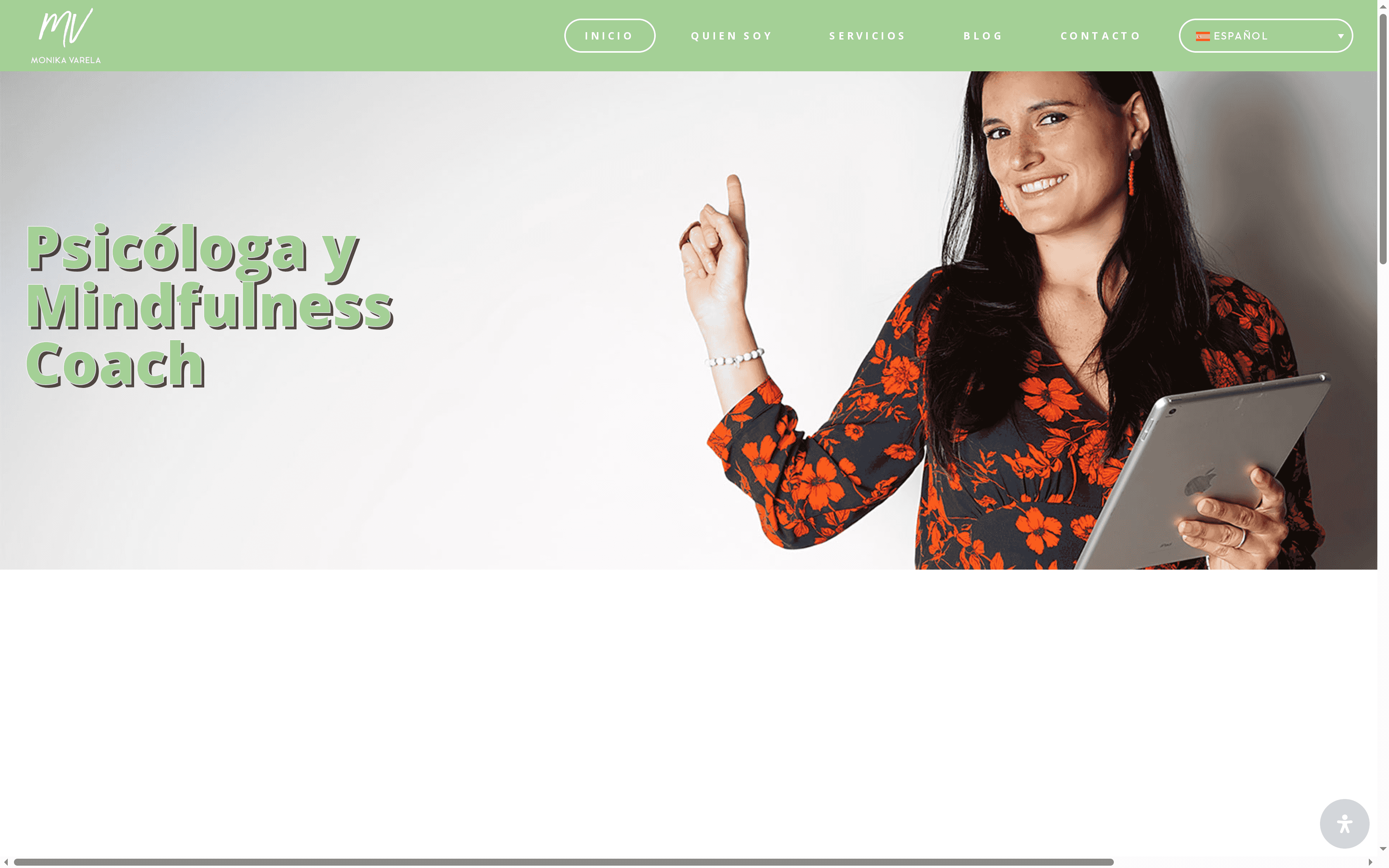
Take control of your communication challenges now. Visit Monika Varela to book a session, learn practical strategies, and empower both your personal and professional growth through expert coaching and mindful awareness.
Frequently Asked Questions
What are the key types of communication skills I need for personal and professional growth?
Effective communication skills include verbal communication, nonverbal communication, listening skills, written communication, emotional intelligence, assertive communication, and intercultural communication. Focus on developing each of these areas to become a more impactful communicator in various situations.
How can I improve my verbal communication skills?
To enhance your verbal communication, practice speaking clearly and with confidence. Record yourself speaking and listen for areas of improvement, making it a goal to refine your articulation over the next 30 days.
What strategies can I use to develop my active listening skills?
Practice active listening by being fully present in conversations and avoiding distractions. Set a goal to repeat back what you’ve heard in at least three conversations this week to deepen your understanding and engagement.
How can I demonstrate effective nonverbal communication?
Demonstrate effective nonverbal communication by maintaining appropriate eye contact and open body language. Aim to consciously observe your body language in your next few interactions, adjusting your posture to appear more engaged and confident.
What steps can I take to cultivate emotional intelligence?
Start developing emotional intelligence by keeping a daily emotion journal to track your feelings and responses. Commit to this practice for at least two weeks to gain insights into your emotional patterns and improve your self-awareness.
How do I practice assertive communication effectively?
Practice assertive communication by using “I” statements to express your needs and feelings while validating the other person’s perspective. Make it a habit to use at least one “I” statement in your conversations each day to build your confidence and assertiveness.





2 Comentarios
[…] 7 Essential Types of Communication Skills for Growth – Mónika Varela […]
🙂