


Over 35 percent of adults say they feel stressed most days, but few realize that not all stress management techniques work the same way. Mindfulness stands out because it focuses on changing how we relate to stressful thoughts, rather than trying to avoid them. Backed by research, this mental practice reshapes patterns in the brain, supports emotional resilience, and helps people develop healthier responses to daily challenges.
Table of Contents
- Defining Mindfulness And Stress Reduction
- Key Mindfulness Techniques For Stress Relief
- Scientific Evidence Behind Mindfulness Benefits
- Practical Applications For Professionals And Organizations
- Common Challenges And How To Overcome Them
Key Takeaways
| Point | Details |
|---|---|
| Mindfulness Enhances Well-Being | Mindfulness cultivates present-moment awareness, fostering a balanced relationship with mental experiences rather than attempting to eliminate stress. |
| Effective Mindfulness Techniques | Techniques like breath awareness meditation, body scan, and mindful movement are powerful tools for reducing psychological tension and enhancing emotional regulation. |
| Neurological and Physiological Benefits | Regular mindfulness practice leads to measurable brain and body changes, including improved emotional regulation and stress response, ultimately enhancing overall health. |
| Mindfulness in Professional Settings | Integrating mindfulness programs in the workplace can boost employee well-being and productivity, creating resilient and adaptive work environments. |
Defining Mindfulness and Stress Reduction
Mindfulness is a powerful mental practice focused on cultivating present-moment awareness and reducing psychological distress. According to research from Oxford Academic, mindfulness fundamentally involves interrupting cognitive rumination processes that perpetuate stress reactivity. Unlike traditional stress management techniques, this approach doesn’t try to eliminate stress entirely but helps practitioners develop a more balanced relationship with their mental experiences.
At its core, mindfulness combines meditation, self-reflection, and intentional awareness techniques designed to help individuals observe their thoughts without judgment. PubMed Central highlights that mindfulness-based stress reduction (MBSR) programs specifically integrate meditation and yoga practices to enhance self-awareness and emotional regulation. These practices teach practitioners critical skills like:
- Recognizing stress triggers
- Developing non-reactive awareness
- Cultivating emotional resilience
- Interrupting automatic stress response patterns
The physiological benefits of mindfulness extend beyond momentary relaxation. Regular practice can actually reshape neural pathways, reducing the brain’s default tendency to engage in negative thought spirals. By training attention and promoting a curious, accepting stance toward internal experiences, individuals learn to respond to challenges more deliberately and with greater emotional intelligence. This transformative approach doesn’t just manage stress temporarily but provides long-term tools for psychological flexibility and mental well-being.
Key Mindfulness Techniques for Stress Relief
Mindfulness offers a diverse toolkit of techniques designed to interrupt stress cycles and promote emotional regulation. PubMed research confirms that multiple approaches can effectively reduce psychological tension, with meditation and body awareness emerging as powerful primary strategies. These techniques work by redirecting mental focus, creating space between emotional triggers and reactive responses.
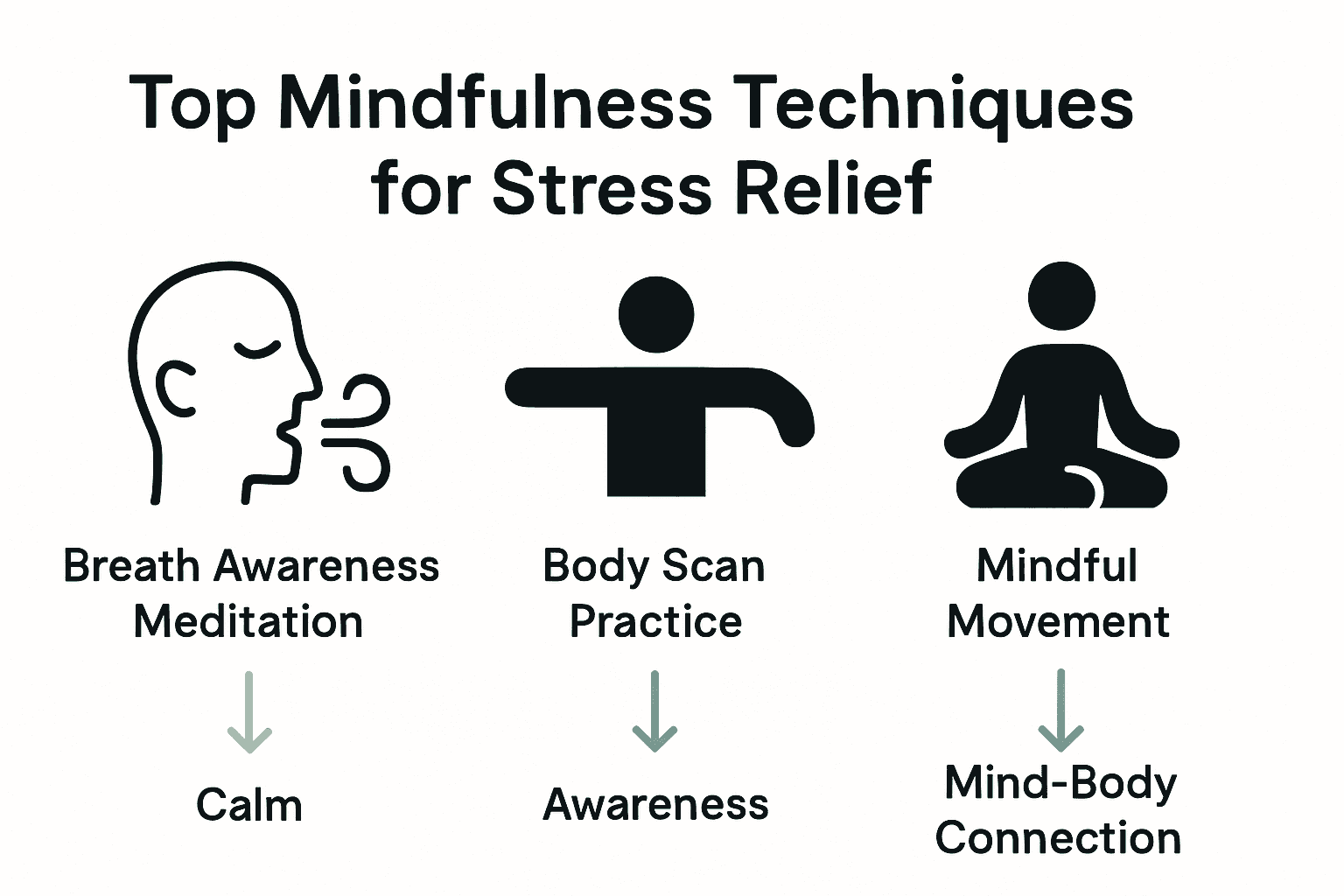
Several core mindfulness techniques have proven particularly effective in managing stress:
- Breath Awareness Meditation
- Focuses attention on natural breathing patterns
- Helps calm the nervous system
- Reduces rumination and anxiety
- Body Scan Practice
- Systematically relaxes muscle groups
- Increases somatic awareness
- Interrupts physical stress manifestations
- Mindful Movement
- Integrates gentle yoga or tai chi
- Combines physical and mental relaxation
- Promotes mind-body connection
Research from PubMed Central specifically highlights the transformative potential of mindfulness-based stress reduction (MBSR) techniques among high-stress populations like medical students. By practicing these methods consistently, individuals can develop a more resilient approach to handling psychological challenges.
 The key is not eliminating stress entirely, but learning to navigate emotional landscapes with greater skill and self-compassion.

Scientific Evidence Behind Mindfulness Benefits
The scientific community has increasingly recognized mindfulness as a powerful tool for mental and physical well-being. PubMed research demonstrates compelling evidence of neurological and physiological transformations triggered by consistent mindfulness practices. These studies reveal that mindfulness is not just a wellness trend, but a scientifically validated approach to managing stress and improving overall health.
Research highlights several key neurological benefits:
-
Brain Structure Modifications
- Increased gray matter density
- Enhanced neural connectivity
- Improved emotional regulation centers
-
Stress Response Alterations
- Reduced cortisol levels
- Lower inflammatory markers
- Improved autonomic nervous system balance
A comprehensive PubMed meta-analysis reveals that mindfulness-based stress reduction demonstrates significant positive outcomes across diverse populations. Notably, participants experienced not just psychological improvements, but also measurable physiological changes. The research suggests that regular mindfulness practice can create lasting neuroplastic changes, essentially rewiring the brain’s stress response mechanisms.
Beyond immediate stress reduction, scientific evidence indicates long-term benefits that extend into multiple life domains. Regular practitioners show improved immune function, enhanced emotional resilience, and better cognitive performance. The most profound finding is that mindfulness is not a temporary coping mechanism, but a transformative practice capable of fundamentally reshaping how individuals perceive and interact with challenging experiences.
Practical Applications for Professionals and Organizations
Mindfulness has emerged as a critical strategy for enhancing workplace performance and employee well-being. arXiv research exploring mindfulness implementations in software development environments reveals how organizational mindfulness can transform professional dynamics. By integrating targeted practices, companies can create more resilient, adaptive work cultures that support mental health and productivity.
Key practical applications for professionals include:
- Workplace Mindfulness Programs
- Short meditation sessions during work hours
- Stress management workshops
- Guided breathing exercises
- Technology-Enabled Mindfulness
- Digital meditation platforms
- Voice-assisted mindfulness interventions
- Personalized wellness tracking
- Team Building and Communication
- Mindful communication training
- Emotional intelligence workshops
- Conflict resolution through awareness techniques
Research from arXiv highlights innovative approaches to implementing mindfulness, particularly through technology-enabled interventions. Cutting-edge voice interfaces and digital platforms are making mindfulness more accessible and personalized for professionals. These tools not only provide stress management techniques but also create scalable solutions for organizations seeking to prioritize mental well-being. The goal is not just reducing stress, but creating a holistic approach to professional development that integrates mental, emotional, and cognitive resilience.
Common Challenges and How to Overcome Them
Mindfulness practice isn’t always smooth sailing. arXiv research exploring mindfulness implementation reveals that professionals often encounter significant psychological barriers when first attempting to integrate these techniques. Initial resistance, time constraints, and skepticism can derail even the most well-intentioned mindfulness efforts.
Common challenges practitioners face include:
- Mental Resistance
- Difficulty maintaining consistent practice
- Intrusive thoughts during meditation
- Feeling frustrated with slow progress
- Practical Obstacles
- Limited time for practice
- Lack of quiet meditation spaces
- Difficulty establishing routine
- Performance Anxiety
- Worrying about “doing it right”
- Comparing personal progress to others
- Feeling overwhelmed by expectations
arXiv research suggests innovative solutions like artistic visualization of physiological signals can help overcome engagement challenges. By transforming mindfulness from a potentially intimidating practice into an interactive, personalized experience, practitioners can reduce initial resistance. The key is approaching mindfulness with curiosity and self-compassion, understanding that it’s a skill developed gradually. Techniques like starting with short, manageable sessions, using guided meditations, and celebrating small victories can help individuals breakthrough initial barriers and establish a sustainable mindfulness practice.
Transform Your Stress Into Strength With Mindfulness
Stress can feel overwhelming when your mind gets stuck in negative thought loops and automatic reactions. This article shows how mindfulness techniques like breath awareness and mindful movement reshape your brain’s stress response. If you are ready to move beyond frustration, mental resistance, and the struggle of trying to “do it right,” personalized guidance can make all the difference. At Monika Varela’s website, you will find expert support in developing sustainable mindfulness skills and emotional resilience that fit your life.
Experience the power of mindfulness tailored to your unique challenges with professional coaching, therapeutic sessions, and accessible mindfulness workshops. Take the first step to reduce stress, improve communication, and boost wellbeing today. Visit Monikavarela.com to book your session and start transforming how you manage stress with proven science-backed practices.
Frequently Asked Questions
What is mindfulness and how does it help with stress reduction?
Mindfulness is a mental practice focused on present-moment awareness that helps individuals cultivate a balanced relationship with their mental experiences. It reduces stress by interrupting negative thought patterns and enhancing emotional regulation.
What techniques are commonly used in mindfulness for stress relief?
Common mindfulness techniques for stress relief include breath awareness meditation, body scan practice, and mindful movement like yoga or tai chi. These practices help redirect focus and promote emotional regulation.
How can mindfulness change the brain’s response to stress?
Regular mindfulness practice can reshape neural pathways, improve emotional regulation, reduce cortisol levels, and enhance the brain’s ability to manage stress. This leads to lasting improvements in how individuals respond to stress over time.
What challenges do people face when starting mindfulness practice and how can they overcome them?
Common challenges include mental resistance, practical obstacles like limited time, and performance anxiety. Overcoming these can involve starting with short sessions, using guided meditations, and approaching practice with curiosity and self-compassion.






Aún no hay comentarios, ¡añada su voz abajo!