



Nearly 85 percent of American patients say genuine communication with their therapist shapes how safe they feel in counseling. In therapeutic settings, the difference between casual talk and intentional dialogue is profound. Every gesture, facial expression, and word can impact trust and healing. This overview explains how skilled communication empowers both therapists and patients, highlighting the subtle ways American professionals create space for authentic emotional growth.
Table of Contents
- Defining Communication In Therapeutic Settings
- Essential Communication Types In Therapy
- Building Trust Through Active Listening
- Nonverbal Communication And Its Impact
- Common Pitfalls And How To Avoid Them
Key Takeaways
| Point | Details |
|---|---|
| Therapeutic Communication | It involves intentional interactions between healthcare professionals and patients, focusing on healing and psychological growth through verbal and nonverbal elements. |
| Key Communication Skills | Effective therapy relies on verbal communication, active listening, nonverbal cues, and careful language that fosters a safe environment for patients. |
| Role of Nonverbal Communication | Nonverbal signals, such as body language and facial expressions, significantly impact the therapeutic relationship and convey empathy and acceptance. |
| Avoiding Communication Pitfalls | Therapists must be mindful of using jargon and judgmental language, striving for compassion to maintain authentic connections with patients. |
Defining Communication in Therapeutic Settings
Therapeutic communication represents a nuanced and intentional approach to interaction between healthcare professionals and patients. Unlike casual conversation, this specialized form of dialogue serves a profound purpose: facilitating healing, understanding, and psychological growth.
At its core, therapeutic communication is a structured interaction designed to improve patient health . This approach encompasses both verbal and nonverbal elements that go far beyond simple information exchange. Key components include:
- Thoughtful language selection
- Carefully modulated vocal tones
- Intentional body language
- Strategic eye contact
- Active listening techniques
Professional therapists recognize that communication is not just about transmitting information, but creating a safe, supportive environment where patients feel heard and validated. The fundamental goal is building psychological safety – a space where individuals can explore vulnerable emotions and experiences without judgment.
Nonverbal communication plays an equally critical role in therapeutic settings. A therapist’s posture, facial expressions, and physical positioning can communicate empathy, openness, and acceptance even more powerfully than words. Subtle cues like maintaining appropriate physical distance, adopting a relaxed yet attentive stance, and offering gentle, non-intrusive eye contact can significantly impact a patient’s comfort and willingness to engage authentically in the therapeutic process.
Essential Communication Types in Therapy
Therapeutic communication encompasses multiple sophisticated communication channels that professionals strategically utilize to support patient healing and understanding. Five essential communication skills form the foundation of effective therapeutic interactions , each playing a critical role in creating meaningful therapeutic connections.
Verbal communication represents the most direct form of interaction, involving carefully chosen words, tone, and linguistic patterns. Therapists craft their language to be compassionate, clear, and non-judgmental, creating a safe space for patients to explore complex emotions. Vocal communication extends beyond word choice, incorporating pitch, volume, and emotional resonance to convey empathy and understanding.
Nonverbal communication emerges as equally powerful, encompassing body language, facial expressions, and physical positioning. Body communication involves subtle cues like posture, gesture, and physical proximity that communicate acceptance and emotional attunement. Nonviolent Communication principles further enhance this approach by emphasizing four critical components:
- Objective observation
- Authentic feeling expression
- Identifying underlying needs
- Making clear, compassionate requests
Touch communication and action communication represent more specialized therapeutic interaction modes. While touch must be used extremely carefully and with explicit consent, action communication involves actively supporting patients through concrete guidance, goal-setting, and collaborative problem-solving strategies. These nuanced communication approaches transform therapy from a passive dialogue into an active, transformative healing process.

Building Trust Through Active Listening
Active listening transforms therapeutic communication from a passive exchange into a profound connection of understanding and empathy. This critical communication skill enables practitioners to decode both spoken and unspoken patient experiences , creating a foundation of trust that is essential for meaningful therapeutic progress.
At its core, active listening involves more than simply hearing words. It requires complete psychological presence, where therapists fully engage with a patient’s narrative, picking up on subtle emotional nuances, body language, and underlying meanings. Practitioners must suspend judgment, resist the impulse to interrupt, and create a safe space that invites genuine emotional exploration.
Effective therapeutic communication demands compassion and intentional empathy development , with active listening serving as the primary mechanism for building rapport. Key techniques include:
- Maintaining consistent eye contact
- Offering minimal verbal encouragements
- Reflecting back patient statements
- Asking clarifying questions
- Demonstrating nonverbal attentiveness
Self-reflection becomes a critical skill for therapists practicing active listening. By continuously examining their own emotional responses, biases, and communication patterns, professionals can create a more authentic and responsive therapeutic environment. The goal is not just to hear words, but to understand the deeper emotional landscape that patients navigate, transforming listening from a passive act into a powerful tool for healing and personal growth.
Nonverbal Communication and Its Impact
Nonverbal communication serves as a powerful, often unconscious language that speaks volumes beyond spoken words. These complex communication platforms transmit intricate messages through multiple sensory channels , including eye contact, body positioning, physical proximity, and subtle emotional signals that profoundly shape therapeutic interactions.
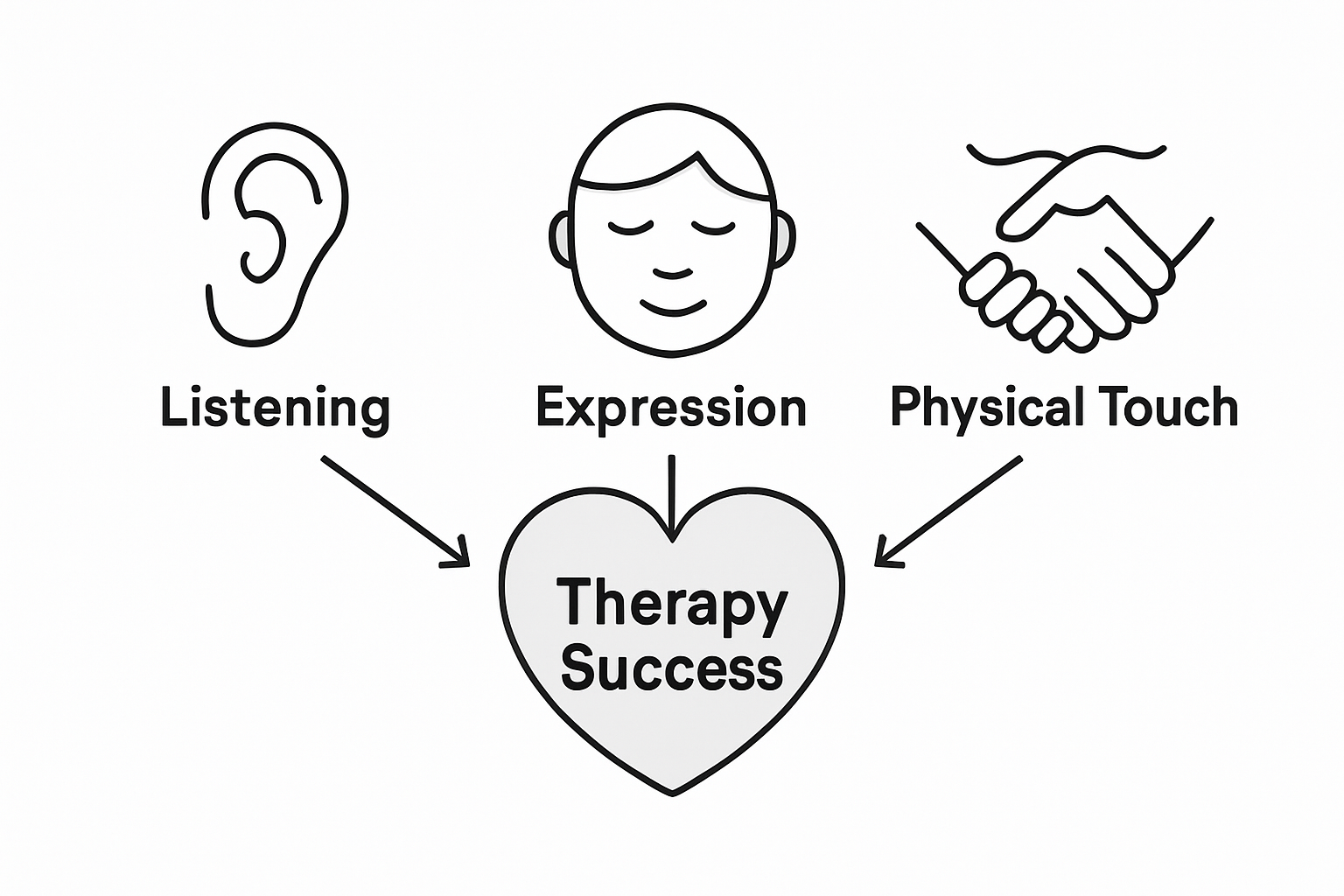
Therapeutic relationships fundamentally depend on nuanced nonverbal cues that build rapport and trust. A therapist’s body language can communicate safety, acceptance, and empathy more powerfully than verbal reassurances. Subtle elements like maintaining appropriate physical distance, adopting an open posture, and using gentle facial expressions create an environment where patients feel genuinely heard and supported.
Nonverbal communication encompasses several critical dimensions:
- Facial expressions revealing emotional states
- Body posture indicating engagement or withdrawal
- Gesture patterns reflecting internal experiences
- Physical proximity signaling comfort levels
- Subtle muscular tensions communicating unspoken tensions
Understanding these nonverbal signals requires exceptional perceptual skills. Therapists must develop a sophisticated awareness of both their own and their patients’ unconscious communication patterns. This heightened sensitivity allows professionals to decode underlying emotional narratives, recognize potential defensive mechanisms, and respond with genuine empathy and precision. By mastering the intricate language of nonverbal communication, therapists transform therapeutic conversations from mere dialogues into profound opportunities for healing and personal transformation.
Common Pitfalls and How to Avoid Them
Communication in therapeutic settings requires extraordinary precision and self-awareness. Therapists must navigate complex linguistic landscapes to avoid potential communication traps , recognizing that even well-intentioned words can create unintended emotional barriers or misunderstandings.
Therapy speak represents a significant communication pitfall where professionals inadvertently use jargon, patronizing language, or overly clinical terminology that distances patients from genuine connection. Common mistakes include:
- Using psychological terminology without explanation
- Interpreting patient experiences prematurely
- Minimizing emotional experiences
- Displaying subtle judgmental undertones
- Failing to validate individual emotional experiences
Professionals must cultivate extreme linguistic sensitivity, continuously monitoring their communication for potential disconnection points. This requires ongoing self-reflection, supervision, and a commitment to understanding each patient’s unique communication style and emotional landscape. Effective therapists learn to translate complex psychological concepts into accessible, compassionate language that feels supportive rather than academic or detailed.
Avoiding communication pitfalls demands more than technical skill. It requires emotional intelligence, cultural competence, and a deep understanding of individual human experiences. By maintaining genuine curiosity, practicing radical empathy, and remaining humble about the complexity of human emotions, therapists can create truly transformative therapeutic relationships that honor each patient’s unique journey of healing and self-discovery.
Enhance Your Therapy Success with Masterful Communication Skills
Effective therapeutic communication builds trust and fosters healing by using active listening, nonverbal cues, and compassionate language. If you recognize the challenges of navigating complex patient interactions or seek to deepen your ability to create psychological safety, developing these essential skills is critical for your growth and your clients’ well-being. Monika Varela, a psychologist and mindfulness coach, offers expert guidance tailored to transform your therapeutic practice and empower you with mindful communication strategies.
Take the next step toward mastering these vital skills today by exploring the comprehensive services available at Monikavarela.com . From personalized psychotherapy to specialized training in mindful communication and empathy development, Monika’s offerings equip you with the tools to connect authentically and elevate therapy outcomes. Visit Monikavarela.com now to begin your journey to enhanced therapeutic success through the power of communication.
Frequently Asked Questions
What is therapeutic communication?
Therapeutic communication is a specialized form of interaction between healthcare professionals and patients aimed at facilitating healing and understanding. It encompasses both verbal and nonverbal communication to create a safe and supportive environment.
How does active listening enhance therapy outcomes?
Active listening transforms communication by enabling therapists to fully engage with a patient’s narrative. This skill builds trust and allows for the exploration of complex emotions, which is essential for effective therapeutic progress.
What role does nonverbal communication play in therapy?
Nonverbal communication conveys emotions and intentions through cues like body language, facial expressions, and eye contact. It significantly influences the therapeutic relationship by creating a sense of safety and acceptance for patients.
How can therapists avoid communication pitfalls?
Therapists can avoid communication pitfalls, such as using jargon or minimizing emotions, by practicing linguistic sensitivity. This involves monitoring their language, seeking to understand each patient’s unique communication style, and continuously reflecting on their interactions.






Aún no hay comentarios, ¡añada su voz abajo!