




Most american adults believe social skills come naturally, but research shows these abilities are actually learned and refined through practice. Communication and interpersonal success affect not just careers but relationships, emotional well-being, and daily life. By understanding what social skills truly are—and clearing up a few stubborn myths—readers can unlock a path to more confident, effective interactions in every setting.
Table of Contents
- Defining Social Skills And Common Misconceptions
- Types Of Social Skills And Real-World Examples
- Key Benefits For Professionals And Individuals
- Barriers To Developing Social Skills Effectively
- Common Mistakes And What To Avoid
Key Takeaways
| Point | Details |
|---|---|
| Social skills are learned capabilities | Contrary to common belief, social skills can be developed through practice and are crucial for effective personal and professional interactions. |
| Soft skills are key for success | Social skills significantly impact employability and career advancement, often outweighing technical skills in importance. |
| Barriers to skill development exist | Individuals may face challenges like anxiety, lack of exposure, and cognitive differences that hinder their ability to develop social skills. |
| Awareness of common mistakes is essential | Avoiding missteps such as inadequate listening and poor conflict resolution is crucial for enhancing interpersonal effectiveness. |
Defining Social Skills and Common Misconceptions
Social skills represent the foundational behaviors and communication strategies that enable meaningful human interactions. According to hcps, these are essential behaviors that allow individuals to engage effectively and harmoniously with others in various personal and professional contexts.
Contrary to widespread belief, social skills are not an innate talent bestowed upon a select few, but rather a learned capability that can be systematically developed and refined. Many people mistakenly assume that social competence is a static trait, when in reality, it is a dynamic skill set that responds to intentional practice and strategic learning. As research from stlouisfed indicates, soft skills – which encompass social abilities – play a critical role in professional success, often surpassing technical expertise in determining career trajectories.
The most prevalent misconceptions about social skills include:
- Believing they are purely natural talents
- Assuming technical skills are more important than interpersonal abilities
- Thinking social competence cannot be improved
- Underestimating the impact of communication on personal and professional relationships
Understanding social skills requires recognizing them as complex, multifaceted competencies. They involve emotional intelligence, active listening, nonverbal communication, empathy, and the ability to navigate diverse social environments with grace and authenticity. By reframing social skills as learnable strategies rather than fixed personality traits, individuals can approach their development with confidence and purpose.
Types of Social Skills and Real-World Examples
Social skills are complex and multidimensional, encompassing a wide range of interpersonal competencies that facilitate effective communication and relationship building. According to ggie, these skills can be categorized into critical areas such as social awareness and relationship skills, which are fundamental to navigating human interactions successfully.
Research from jaunty highlights several key social skills that are essential for personal and professional success:
- Empathy: Understanding and sharing the feelings of others
- Assertiveness: Communicating needs and boundaries clearly and respectfully
- Teamwork: Collaborating effectively with diverse groups of people
- Active Listening: Fully concentrating on and comprehending what others communicate
Practical examples of these skills in action demonstrate their profound impact. In a professional setting, empathy might look like recognizing a colleague’s stress and offering support. Assertiveness could involve confidently presenting ideas during a team meeting. Teamwork might manifest as successfully coordinating a complex project across different departments, while active listening could mean asking clarifying questions during important discussions.
Beyond these core competencies, advanced social skills include reading nonverbal cues, managing emotional responses, negotiating effectively, and adapting communication styles to different social contexts. These nuanced abilities transform basic interaction into meaningful, productive relationships across personal and professional domains.

Key Benefits for Professionals and Individuals
Strong social skills are a transformative asset that extends far beyond simple communication, offering profound advantages in both personal and professional landscapes. According to stlouisfed, developing soft skills significantly enhances employability and creates opportunities for career advancement by fostering a collaborative and productive work environment.
Research from ggie highlights the comprehensive impact of robust social skills across multiple life domains. These skills contribute to:
- Better academic performance
- Stronger personal relationships
- Enhanced emotional well-being
- Reduced engagement in risky behaviors
- Improved ability to navigate complex social settings
In professional contexts, individuals with advanced social skills gain competitive advantages that traditional technical expertise cannot provide. These advantages include more effective leadership, superior team collaboration, enhanced conflict resolution capabilities, and increased likelihood of career progression. Employers consistently rank interpersonal abilities as critical factors in hiring decisions, recognizing that employees who communicate effectively, demonstrate empathy, and build positive workplace relationships are more likely to contribute to organizational success.
Beyond career benefits, exceptional social skills translate into personal growth, emotional intelligence, and more meaningful human connections. They enable individuals to build deeper, more authentic relationships, navigate challenging social situations with confidence, and develop a nuanced understanding of human behavior that enriches both professional interactions and personal experiences.
Barriers to Developing Social Skills Effectively
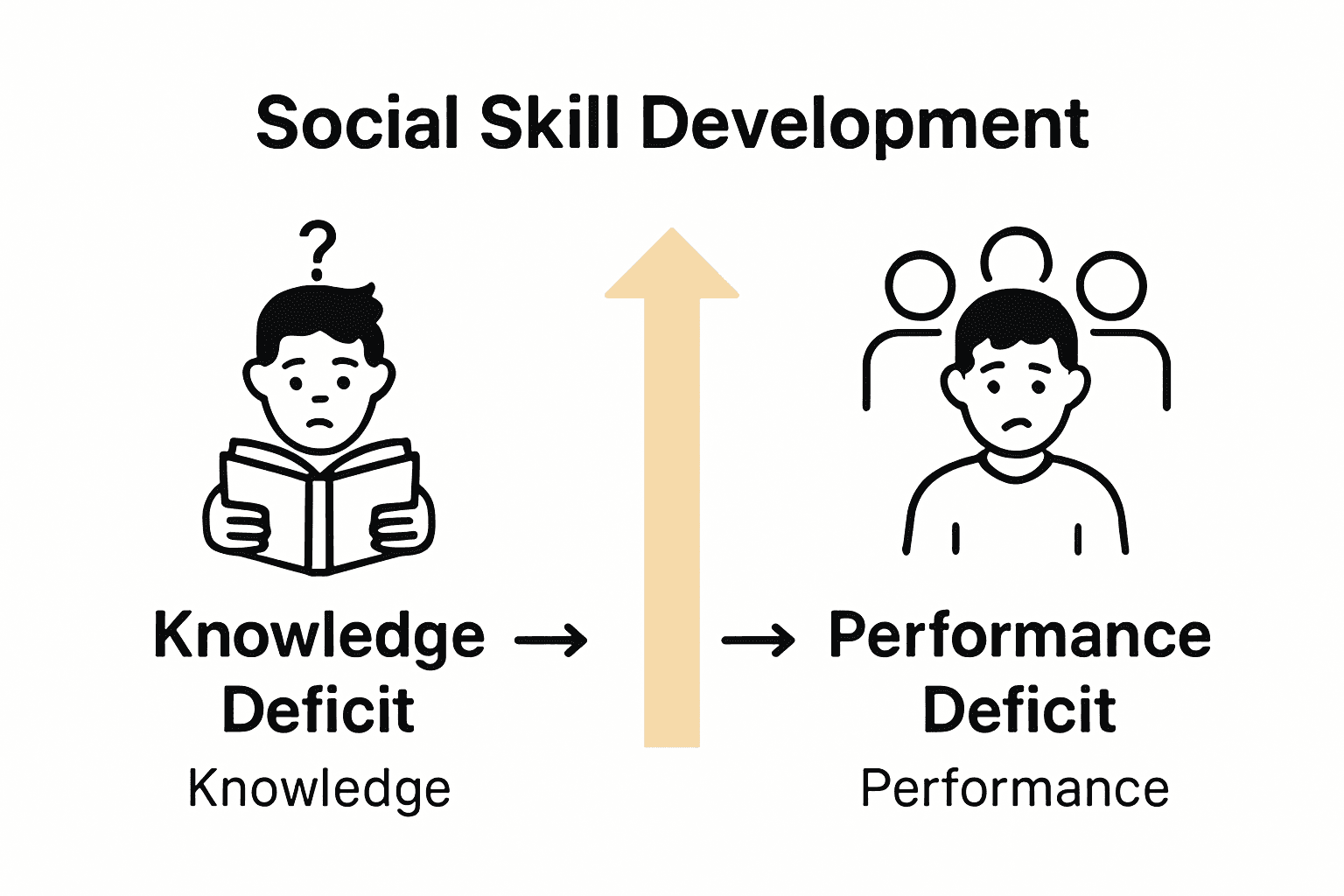
Developing social skills is a complex process fraught with numerous challenges that can impede personal growth and interpersonal effectiveness. According to altarvalleyschools, individuals typically encounter two primary barriers to skill acquisition: knowledge deficits and performance deficits. Knowledge deficits occur when people lack understanding of appropriate social skills, while performance deficits emerge when individuals understand the skills but struggle to implement them effectively.
Some fundamental barriers to developing social skills include:
- Deep-seated anxiety in social interactions
- Limited exposure to diverse social environments
- Neurological differences affecting social perception
- Low self-confidence and fear of judgment
- Insufficient practice and feedback mechanisms
- Cognitive or sensory processing challenges
Research from perkins highlights that certain populations, such as individuals with visual impairments, face unique challenges in developing social skills. These challenges often stem from difficulties perceiving nonverbal communication cues and understanding complex social norms, which require specialized intervention strategies.
Psychological and environmental factors play significant roles in creating social skill development barriers. Past traumatic experiences, social anxiety, neurodevelopmental conditions, and limited social opportunities can create invisible walls that prevent individuals from developing robust interpersonal capabilities. Recognizing these barriers is the first critical step toward designing targeted interventions that can help individuals overcome their specific social interaction challenges and build meaningful connections with others.
Common Mistakes and What to Avoid
Developing effective social skills requires navigating a complex landscape of interpersonal interactions, where seemingly minor missteps can significantly undermine communication and relationship building. According to friends-international, one of the most critical mistakes in skill development is failing to create a supportive learning environment that provides consistent practice and meaningful feedback.
Research from polygence identifies several key mistakes individuals frequently make in social interactions:
- Inadequate Active Listening: Interrupting others or preparing responses instead of truly hearing them
- Poor Conflict Resolution: Becoming defensive or aggressive during disagreements
- Lack of Collaboration: Prioritizing individual goals over team objectives
- Overtalking: Dominating conversations without allowing others to contribute
- Nonverbal Miscommunication: Ignoring body language and emotional cues
- Inconsistent Communication: Sending mixed signals or being unpredictable
Most social skill mistakes stem from deep-seated psychological patterns, including fear of vulnerability, low self-awareness, and limited emotional intelligence. These underlying issues can create communication barriers that prevent genuine connection. By recognizing and actively working to overcome these common pitfalls, individuals can develop more nuanced, empathetic, and effective interpersonal strategies that foster meaningful relationships in both personal and professional contexts.
Successful social skill development requires a commitment to continuous learning, self-reflection, and intentional practice. Embracing vulnerability, cultivating genuine curiosity about others, and maintaining a growth mindset are essential strategies for transforming potential mistakes into opportunities for deeper understanding and connection.
Unlock Your Social Potential with Expert Guidance
Struggling with social anxiety or unsure how to build stronger relationships is common when developing social skills. This article highlights challenges like knowledge and performance deficits that hold many back. If you want to overcome fears, improve active listening, and practice empathy confidently, understanding these barriers is the first step toward meaningful change.
Discover personalized support through Monika Varela’s professional services designed to enhance your communication skills and mindfulness. With tailored coaching in psychotherapy, public speaking, and corporate training, you can break through limiting patterns and cultivate authentic social confidence. Act now to transform your interpersonal abilities and unlock greater success and well-being. Start your journey at https://monikavarela.com and experience the difference that expert guidance makes.
Frequently Asked Questions
What are social skills?
Social skills are the foundational behaviors and communication strategies that enable individuals to engage effectively and harmoniously with others in personal and professional contexts.
Why are social skills important for professional success?
Social skills are crucial as they often surpass technical expertise in determining career trajectories and contribute to effective leadership, team collaboration, and conflict resolution.
Can social skills be developed over time?
Yes, social skills are learned capabilities that can be systematically developed and refined through intentional practice and strategic learning.
What are some common barriers to developing social skills?
Common barriers include social anxiety, limited exposure to diverse environments, low self-confidence, and insufficient practice and feedback mechanisms.





Aún no hay comentarios, ¡añada su voz abajo!