


Most American and European professionals searching for personal growth encounter a major decision: whether to seek coaching or therapy for support. Nearly 75 percent report confusion about the differences between these two roles. Understanding their unique approaches, credentials, and boundaries is crucial. This guide helps you cut through mixed messages from the coaching industry and mental health field, so you can confidently choose the support that fits your objectives and background.
Table of Contents
- Defining Coach and Therapist Roles Clearly
- Key Differences in Approach and Scope
- Credentials, Ethics, and Legal Frameworks
- When to Seek Coaching or Therapy Support
- Risks, Overlaps, and Common Misconceptions
Key Takeaways
| Point | Details |
|---|---|
| Distinction between Coaching and Therapy | Coaches focus on goal-setting and personal growth, while therapists address deep emotional healing and mental health issues. |
| Professional Credentials | Therapists are licensed professionals with extensive training, whereas coaching credentials are primarily voluntary and self-regulated. |
| When to Seek Each Service | Coaching is suitable for targeted performance improvement, and therapy is essential for addressing complex psychological challenges. |
| Understanding Boundaries | Clients must recognize the differences between coaching and therapy to avoid misconceptions and ensure appropriate professional support. |
Defining Coach and Therapist Roles Clearly
Professionals seeking personal growth often find themselves uncertain about the distinctions between coaches and therapists. While both aim to support individual development, these roles have fundamental differences in approach, training, and objectives. Coaching emerged as a distinct discipline in the 1980s, establishing a unique framework for personal and professional advancement.
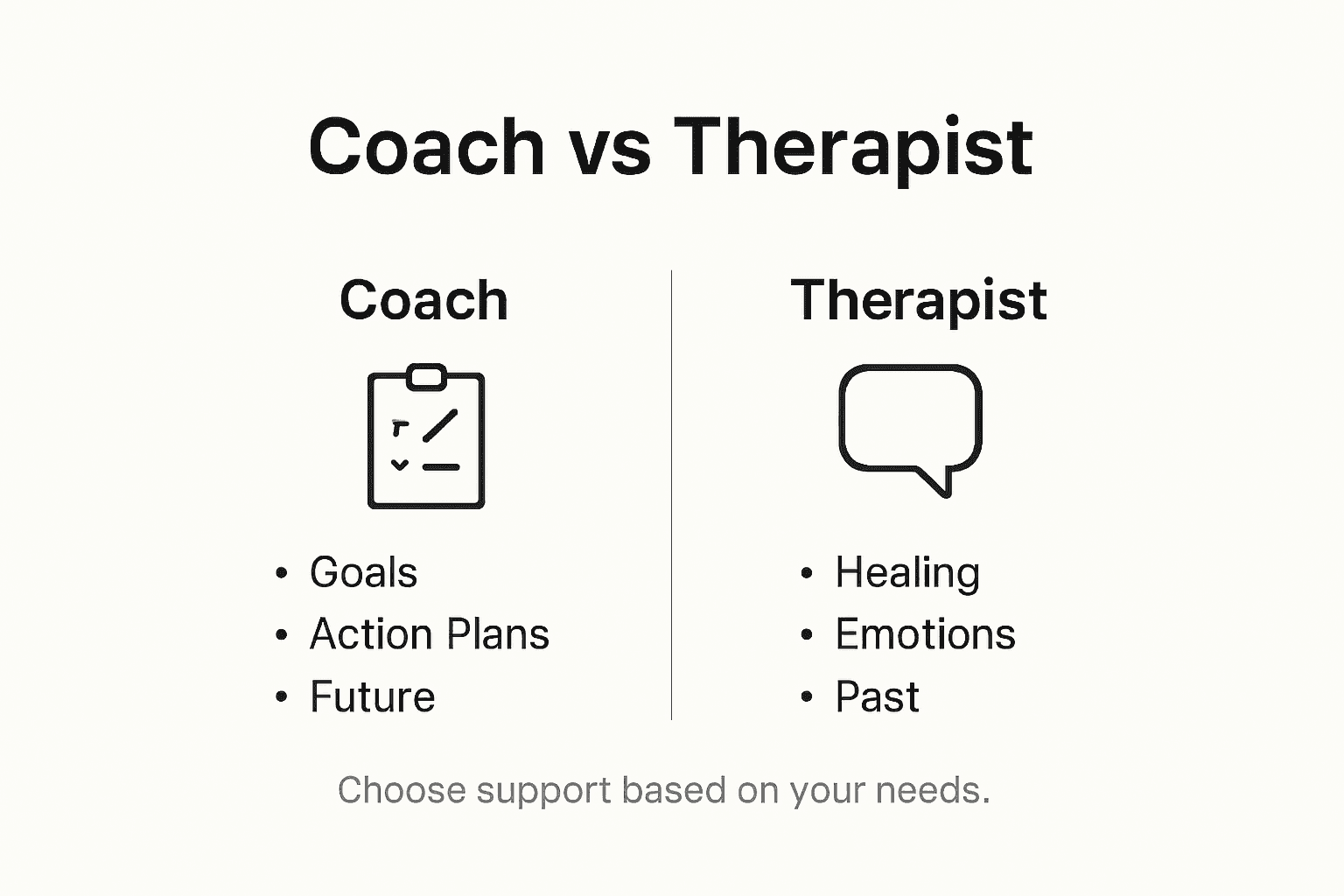
Coaches primarily focus on goal-setting, future potential, and actionable strategies for growth. They work with clients to identify specific objectives, develop action plans, and overcome immediate challenges in professional or personal domains. Unlike therapists, coaches are not licensed mental health professionals and do not diagnose or treat psychological conditions. Their approach emphasizes forward momentum, helping clients unlock their potential and create meaningful change in their current circumstances.
Therapists, by contrast, operate within a regulated mental health framework. They are licensed professionals trained to diagnose and treat psychological disorders, with extensive academic training and supervised clinical experience. Their work involves deep psychological exploration, addressing past traumas, emotional healing, and treating mental health conditions. Therapists use clinical methodologies to help clients understand underlying psychological patterns, process emotional experiences, and develop coping mechanisms for complex mental health challenges.
Pro tip: Before choosing between a coach or therapist, clearly assess your primary needs: immediate goal achievement suggests coaching, while deep emotional healing indicates therapeutic support.
Here’s a quick comparison of coaching and therapy roles to help clarify which support may best suit different needs:
| Aspect | Coach | Therapist |
|---|---|---|
| Primary Focus | Future goals and personal growth | Emotional healing and mental health |
| Credentials | Voluntary certifications | State/national licensure |
| Typical Techniques | Goal setting, accountability | Clinical methods, psychological exploration |
| When to Seek | Skill-building, life transitions | Anxiety, trauma, persistent struggles |
Key Differences in Approach and Scope
Professional development requires understanding the nuanced differences between coaching and therapeutic interventions. Coaching fundamentally focuses on present and future goals, emphasizing actionable strategies for personal and professional advancement. Unlike therapy, coaching operates without diagnostic intentions, concentrating instead on helping clients create concrete action plans and overcome immediate challenges.
The scope of therapeutic work differs dramatically from coaching. Therapists engage in comprehensive psychological exploration, addressing complex emotional landscapes and treating underlying mental health conditions. They utilize evidence-based clinical techniques to help clients process past traumas, understand deep-seated psychological patterns, and develop robust emotional coping mechanisms. Their work requires extensive academic training, supervised clinical experience, and adherence to strict professional and ethical standards.

Coaches, by contrast, maintain a more solution-oriented approach. They help clients implement specific outcomes within shorter timeframes, focusing on skill-building, strategic planning, and accountability. Their partnerships are typically less formal and more collaborative, targeting immediate personal or professional growth objectives. Coaches are not licensed mental health professionals and cannot diagnose or treat psychological disorders, which represents a critical boundary in their professional practice.
Pro tip: Consider your primary objective carefully: seek a therapist for deep emotional healing and mental health support, choose a coach for targeted performance improvement and future-oriented goal achievement.
Credentials, Ethics, and Legal Frameworks
Professional credentials represent a critical differentiator between coaches and therapists, with each profession maintaining distinct regulatory standards. The International Coaching Federation (ICF) establishes ethical guidelines that emphasize clear boundaries between coaching and therapeutic practice, requiring coaches to recognize when clients might need professional mental health intervention and make appropriate referrals.
Therapists operate under rigorous legal and professional frameworks that mandate extensive credentials. Licensed mental health professionals must complete advanced academic degrees, undergo supervised clinical training, and maintain ongoing professional certification. State and national regulatory boards impose strict requirements for diagnosis, treatment, confidentiality, and ethical conduct. These professionals are legally obligated to adhere to complex reporting standards, patient protection protocols, and professional conduct guidelines that protect client welfare.
Coaching credentials, by contrast, remain largely voluntary and unregulated. Professional competence frameworks have emerged to standardize coaching practice, particularly for professionals integrating coaching techniques into therapeutic or consulting practices. Certification programs through organizations like the ICF provide professional standards, but lack the legal mandates governing therapeutic practice. Coaches are primarily self-regulated, focusing on professional development, ethical conduct, and maintaining clear professional boundaries.
Pro tip: Always verify a professional’s specific credentials, ask about their training background, and confirm their professional affiliations before entering a coaching or therapeutic relationship.
This table summarizes the ethical and legal frameworks regulating both professions:
| Professional Standards | Coaching | Therapy |
|---|---|---|
| Ethical Oversight | ICF guidelines, self-regulated | Strict state/national regulations |
| Legal Requirements | Not legally mandated | Legally mandated, extensive protocols |
| Client Protection | Referral if issues arise | Confidentiality, mandatory reporting |
| Training | Variable, organization-dependent | Rigorous academic and clinical training |
When to Seek Coaching or Therapy Support
Personal growth journeys require strategic decision-making about professional support. Therapy becomes essential when individuals are struggling with underlying mental health challenges, such as persistent anxiety, depression, unresolved trauma, or emotional dysfunction that impede daily functioning. These complex psychological conditions demand clinical intervention, professional diagnostic skills, and structured therapeutic approaches to facilitate healing and emotional recovery.
Coaching, in contrast, serves professionals and individuals who are mentally healthy but seeking targeted performance improvement or navigational support through specific life transitions. This approach works best for people facing career challenges, leadership development goals, or skill-building objectives within defined timeframes. Coaches help clients create actionable strategies, maintain accountability, and drive forward momentum toward clearly defined personal or professional outcomes.
Some situations might benefit from a combined approach, where coaching and therapy complement each other. For instance, someone recovering from workplace burnout might simultaneously work with a therapist to process underlying emotional stress and a coach to redesign career strategies. The key is recognizing that these professional support systems are not mutually exclusive but can be powerful tools for holistic personal development when applied thoughtfully and strategically.
Pro tip: Conduct an honest self-assessment of your current emotional state and specific objectives, then consult with professionals who can help you determine the most appropriate support pathway for your unique needs.
Risks, Overlaps, and Common Misconceptions
Professional boundaries in support services demand careful navigation. The boundaries between coaching and therapy can become dangerously blurred, creating significant risks for clients seeking mental health support. Common misconceptions include assuming coaching can replace therapeutic intervention or that all emotional support is interchangeable, which can lead to potentially harmful misdiagnosis and inadequate treatment strategies.
Coaches encountering complex emotional challenges face critical ethical responsibilities. The International Coaching Federation emphasizes the necessity of recognizing when a client requires professional therapeutic intervention, mandating immediate and appropriate referral to licensed mental health professionals. This requirement protects clients from receiving unqualified psychological support and ensures they receive specialized care matching their specific needs. Professionals in both domains must maintain transparent communication about their scope of practice, qualifications, and limitations.
The potential for professional overlap creates unique challenges, particularly as some therapists incorporate coaching techniques and some coaches address emotional development. This intersection requires exceptional professional integrity, clear communication, and a commitment to client welfare. Practitioners must continuously assess their competencies, maintain strict ethical standards, and prioritize client safety over professional ego or financial considerations. Understanding these nuanced boundaries helps clients make informed decisions about seeking appropriate professional support.
Pro tip: Always verify a professional’s specific credentials, ask direct questions about their training and approach, and trust your intuition if something feels outside their stated expertise.
Find the Right Support for Your Personal Growth Journey
Choosing between coaching and therapy can feel overwhelming when you face challenges like emotional struggles or the need to achieve specific life goals. This article highlights the crucial difference between therapists who focus on emotional healing and licensed mental health care and coaches who guide you through goal-setting and accountability toward future success. If you are striving to clarify your objectives and take deliberate steps toward growth or healing, you deserve expert guidance tailored to your unique needs.

Explore professional services that combine deep psychological expertise with mindful coaching techniques at Monika Varela’s website. Whether you need therapeutic support to process emotional challenges or mindfulness coaching to enhance your communication skills and personal effectiveness, Monika offers compassionate, licensed care and accessible online booking. Beginning your path today ensures immediate access to trusted guidance that respects your goals and wellbeing. Learn more about her psychotherapy and coaching offerings to take the next step toward transformation.
Frequently Asked Questions
What is the main difference between a coach and a therapist?
Coaches focus on future goals and personal growth, helping clients set and achieve specific objectives. Therapists, on the other hand, address emotional healing and psychological disorders, utilizing clinical methods to explore past traumas and mental health issues.
When should I seek coaching instead of therapy?
Coaching is suitable when you are mentally healthy but want to improve performance, navigate life transitions, or achieve specific goals. If you’re facing persistent emotional challenges, therapy would be more appropriate.
Can a coach help with emotional issues?
While some coaches may touch on emotional development, they are not licensed mental health professionals and cannot provide treatment for psychological conditions. If you have complex emotional issues, it’s crucial to seek help from a qualified therapist.
How do I determine whether I need a coach or therapist?
Assess your needs: if you require immediate goal achievement and personal development, consider coaching. If you need deep emotional healing or support for mental health issues, seek therapy.





Aún no hay comentarios, ¡añada su voz abajo!