




Strong communication is at the heart of every successful relationship, yet studies show that nearly 65 percent of misunderstandings in the workplace result from poor communication habits. The way you express yourself not only impacts your personal connections but also shapes how others perceive and respond to you. Learning to assess and refine your communication style opens the door to deeper trust and more meaningful interactions, setting you up for growth in every area of life.
Table of Contents
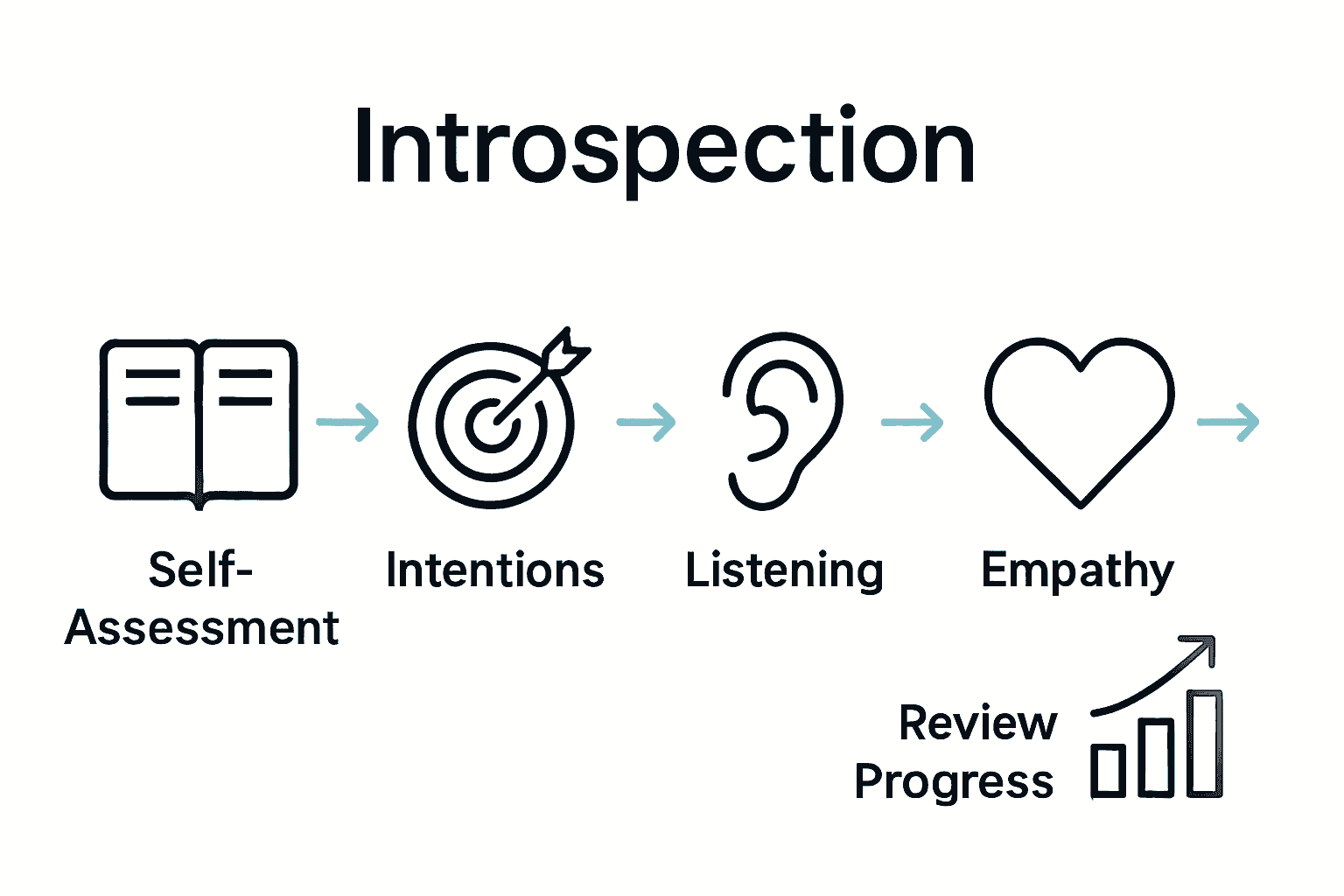
- Step 1: Assess Your Current Communication Habits
- Step 2: Set Clear Intentions For Mindful Interactions
- Step 3: Engage In Deep Listening Without Judgment
- Step 4: Respond Thoughtfully With Empathy And Clarity
- Step 5: Review And Refine Your Communication Approach
Quick Summary
| Key Point | Explanation |
|---|---|
| 1. Assess your communication habits | Evaluate your style by tracking daily interactions, identifying patterns and emotional responses. |
| 2. Set clear intentions for interactions | Define specific goals for each conversation to align your communication with your core values. |
| 3. Engage in deep listening | Practice active listening by focusing fully on the speaker without judgment or distractions. |
| 4. Respond with empathy and clarity | Validate emotions and craft responses that address the speaker’s true needs while maintaining compassion. |
| 5. Review and refine your communication | Regularly reflect on your conversations to identify themes and seek feedback for continuous improvement. |
 |
|
Step 1: Assess your current communication habits
Understanding your current communication style is the first step toward meaningful transformation. As recommended by University of Reading, evaluating your communication effectiveness requires setting clear objectives and identifying key performance indicators.
Start by creating a self reflection journal where you document your daily interactions. Pay attention to specific communication patterns. Track moments when conversations feel smooth and comfortable versus times when miscommunication occurs. Write down specific scenarios where you struggled to express yourself clearly or felt misunderstood.
 Note your emotional reactions during these interactions and identify potential triggers or communication blocks.
Consider using a structured self assessment framework. Suraasa recommends creating a questionnaire to evaluate communication strengths and weaknesses. Ask yourself critical questions like: How often do I listen without interrupting? Do I ask clarifying questions? Am I comfortable expressing my emotions authentically? Rate yourself honestly on a scale from one to ten for each skill.
A helpful tip is recording some of your conversations with consent and reviewing them later. This provides an objective perspective on your communication style that self reflection alone might miss. Your goal is awareness not criticism. Approach this assessment with curiosity and compassion toward yourself.
By understanding your current communication habits, you are laying the groundwork for more intentional and meaningful connections. The next step will involve developing specific strategies to enhance your communication skills.
Step 2: Set clear intentions for mindful interactions
Setting clear intentions transforms your communication from reactive to purposeful. As Calm suggests, mindful intentions help align your actions with core values and create more meaningful interactions.
Begin by identifying the core purpose of each interaction before you engage. Ask yourself what you truly want to achieve. Are you seeking understanding? Offering support? Resolving a conflict? Write down a specific intention for each significant conversation. For example an intention might be “I want to listen openly and understand my colleague’s perspective without judgment” or “I aim to express my feelings honestly and respectfully”.
Research from BMC Medical Education emphasizes the importance of clear communication goals. Create a simple mental checklist before important conversations. Pause and breathe. Clarify your emotional state. Consider the other person’s potential perspective. Remind yourself of your core intention to connect authentically.
A powerful tip is developing a pre conversation ritual. This could be a 60 second meditation where you center yourself and recall your communication intention. Visualize the interaction going smoothly. Breathe deeply and release any preexisting assumptions or emotional tension.
By setting clear intentions you transform communication from a passive experience to an active practice of connection and understanding. The next step will help you develop active listening skills that complement these intentional approaches.
Step 3: Engage in deep listening without judgment
Deep listening transforms conversations from transactional exchanges to meaningful connections. arXiv research highlights how understanding participants without judgment can significantly enhance collaborative interactions.
Practice active listening by giving your full attention. Put away electronic devices. Make comfortable eye contact. Position your body to show you are fully present. Focus on the speakers words not preparing your response. Notice the emotions behind their language. Listen to understand not to react or defend. Resist the impulse to interrupt or offer immediate solutions. Allow spaces of silence where the speaker can fully express themselves.
According to communication research from arXiv, effective deep listening requires recognizing diverse communication styles. Some people express themselves slowly. Others need more time to articulate complex thoughts. Practice patience. Suspend your internal commentary. Observe the speakers body language. Pay attention to tone and emotional undertones.
A powerful technique is reflective listening. After the speaker finishes pause and summarize what you heard. Use phrases like “What I hear you saying is…” or “It sounds like you are feeling…” This demonstrates you were genuinely listening and creates space for clarification. Approach this practice with genuine curiosity and openness.
By mastering deep listening you create a foundation of trust and understanding.
Your next step will involve developing empathetic response skills that build upon these listening techniques.
Step 4: Respond thoughtfully with empathy and clarity
Communicating with empathy and clarity transforms interactions from mere exchanges to meaningful connections. arXiv research emphasizes how delivering messages with genuine empathy can significantly enhance engagement and understanding.
When formulating your response start by validating the speakers emotions. Acknowledge their feelings before offering perspectives or solutions. Use phrases that demonstrate you truly heard them such as “It sounds like you are feeling frustrated” or “I can understand why this situation would be challenging for you”. Speak slowly and intentionally. Choose words that are direct yet compassionate. Focus on using soft language that creates psychological safety.
Research from arXiv suggests that contextual understanding is crucial for clear communication. Before responding consider the broader emotional landscape of the conversation. Ask yourself what underlying needs might be present. Are they seeking validation? Support? Problem solving? Align your response to their actual emotional requirement rather than your initial interpretation.
A powerful technique is the pause and reflect method. After deeply listening take a deliberate breath before responding. This momentary pause allows you to center yourself and craft a response from a place of genuine connection. Avoid reactive language. Instead speak from a place of curiosity and openness.
By responding with empathy and clarity you create a foundation of trust and mutual understanding. Your next step will involve exploring how to maintain mindful communication across different relational contexts.
Step 5: Review and refine your communication approach
Continuous improvement is the cornerstone of effective communication. SAGE Publications emphasizes the importance of systematically reviewing and aligning communication strategies to enhance personal growth and interpersonal understanding.
Establish a weekly reflection practice dedicated to analyzing your communication interactions. Keep a detailed journal documenting conversation experiences. Record moments of successful connection and instances where communication felt challenging. Identify specific patterns. Were you reactive? Defensive? Compassionate? Note the emotional landscape of each interaction. Look for recurring themes in your communication style that might require adjustment.
Research from RefHub suggests creating a structured assessment framework. Develop a personal communication scorecard. Rate key skills like active listening empathy clarity and emotional regulation. Use a scale from one to ten. Track your progress over time. Be honest but compassionate with yourself. The goal is growth not perfection.
A powerful technique is seeking feedback from trusted friends colleagues or mentors. Ask specific questions about your communication style. Request candid observations about your strengths and potential areas for improvement. Create a safe space for genuine feedback. Listen without defensiveness. Approach this as an opportunity for learning and personal development.
By consistently reviewing and refining your communication approach you transform it from a static skill to a dynamic practice of continuous growth and connection.
Unlock Mindful Communication Skills for Lasting Connections
Are you ready to overcome common communication challenges like misunderstanding, emotional disconnect, or reactive responses? This article highlights the power of mindful intentions, deep listening without judgment, and empathetic responses to transform how you relate to others. If you want to build stronger personal and professional relationships using these proven strategies, support from a skilled guide can make all the difference.
Explore how Monika Varela, a psychologist and mindfulness coach, brings this approach to life through personalized therapy and training. Whether you struggle with expressing emotions clearly or wish to practice ongoing refinement of your communication style, Monika’s holistic services are designed to help you achieve lasting growth and meaningful connections. Start your journey today by visiting Noticias archivos – Mónika Varela for insights and MonikaVarela.com to book a session or workshop tailored to your needs. Take this step now to embrace mindful communication and transform your relationships.
Frequently Asked Questions
How can I assess my current communication habits for mindful communication?
Start by creating a self-reflection journal to document your daily interactions. Note specific patterns, emotional reactions, and instances of miscommunication, and aim to evaluate these over a month to spot trends.
What steps can I take to set clear intentions before a conversation?
Identify the core purpose of your conversation and write down a specific intention, such as wanting to listen openly or express feelings honestly. Take a moment to pause and breathe before engaging, which can help align your actions with your goals.
How can I improve my deep listening skills?
Practice giving your full attention during conversations by putting away distractions and maintaining eye contact. Focus on understanding the speaker’s words and emotions, and allow for pauses, which can enhance connection and understanding.
What are effective ways to respond with empathy in conversations?
Validate the speaker’s emotions before offering your perspective by acknowledging their feelings. Use deliberate, compassionate language and consider their emotional needs to ensure your responses are aligned with what they’re seeking.
How can I establish a routine to review and refine my communication skills?
Dedicate time each week to reflect on your communication interactions by keeping a detailed journal. Rate your skills on a scale from one to ten, and seek feedback from trusted peers to identify areas for improvement in your communication style.
What techniques can I use to maintain mindful communication across different contexts?
Before engaging in varied interactions, clarify your intention and practice active listening. Tailor your approach based on setting—like professional versus personal—and pause to recalibrate and reflect, ensuring meaningful engagement in all types of conversations.
Recommended
- Top Communication Skills Platforms – Expert Comparison 2025 – Mónika Varela
- Why Mindfulness Matters in 2025: Complete Guide – Mónika Varela
- Why Join Mindfulness Workshops: The Definitive Guide – Mónika Varela
- Mastering Mindfulness for Professionals: Complete Guide – Mónika Varela
- Coaching And Communication: Complete Expert Guide – Hoop Mentality





Aún no hay comentarios, ¡añada su voz abajo!