


Most advice about self-awareness falls short because it overlooks the active role of attention in shaping our thoughts and feelings. In psychology, mindful self-awareness is more than just reflection or calming the mind. Studies show that individuals who practice mindful awareness experience measurably lower stress and greater emotional resilience. Understanding this approach unlocks practical ways to notice your inner world, challenge common misconceptions, and deepen growth both in personal life and at work.
Table of Contents
- Defining Mindful Self-Awareness In Psychology
- Key Elements And Core Misconceptions
- Practical Techniques For Daily Practice
- Benefits For Personal And Professional Growth
- Challenges, Limits, And What To Avoid
Key Takeaways
| Point | Details |
|---|---|
| Mindful Self-Awareness Definition | It involves intentional, non-judgmental attention to present-moment experiences, fostering emotional intelligence and metacognitive skills. |
| Common Misconceptions | Mindfulness is not about clearing the mind but about observing thoughts and emotions without judgment or immediate reaction. |
| Practical Techniques | Techniques like mindful breathing, body scans, and journaling can be incorporated into daily routines to enhance self-awareness. |
| Benefits for Growth | Mindful self-awareness leads to improved emotional regulation, stress management, and better interpersonal skills, enhancing overall well-being and performance. |
Defining Mindful Self-Awareness in Psychology
Mindful self-awareness represents a profound psychological approach to understanding our inner experiences with intentional, non-judgmental attention. According to BMC Psychology, mindfulness is fundamentally about “paying attention in a particular way: on purpose, in the present moment, and nonjudgmentally.” This definition captures two essential components of psychological awareness: regulating attention to our current experience and maintaining an open, accepting orientation toward that experience.
Psychological awareness goes beyond simple reflection. It involves a deliberate, structured method of observing our thoughts, emotions, and bodily sensations without criticism or immediate reaction. As research from University of Buffalo indicates, self-awareness and mindfulness are fundamental features of mindful self-care, encompassing both structured practices like meditation and informal awareness during daily activities.
The core elements of mindful self-awareness include:
- Intentional focus on present-moment experiences
- Non-judgmental observation of internal states
- Cultivating emotional intelligence
- Developing metacognitive skills
- Practicing compassionate self-understanding
By integrating these principles, professionals can transform their approach to personal and workplace challenges, creating more responsive and resilient mental frameworks that support holistic psychological well-being.
Key Elements and Core Misconceptions
Understanding mindful self-awareness requires dispelling common myths and recognizing its nuanced psychological foundations. According to BMC Psychology, a crucial misconception is that mindfulness demands completely clearing one’s mind of thoughts. In reality, mindfulness involves two key components: attentively regulating present-moment experiences and maintaining an accepting, open orientation toward those experiences without harsh self-judgment.
Contrary to popular belief, mindful self-awareness is not a passive process but an active, intentional practice. University of Buffalo research highlights that mindfulness encompasses both formal practices like meditation and informal awareness integrated into daily activities. This comprehensive approach challenges the narrow perception that mindfulness is solely a structured meditation technique.
The core elements that distinguish authentic mindful self-awareness include:
- Intentional, non-reactive observation of internal experiences
- Accepting thoughts and emotions without immediate categorization
- Recognizing mental patterns without becoming entangled in them
- Developing metacognitive skills that promote emotional intelligence
- Cultivating a compassionate, curious approach to self-understanding
Professionals seeking personal growth must understand that mindful self-awareness is not about achieving a perfect, thought-free state, but about developing a flexible, compassionate relationship with one’s inner experiences. By embracing this nuanced approach, individuals can transform their psychological landscape, creating more resilient and adaptive mental frameworks.
Practical Techniques for Daily Practice
Mindful self-awareness transforms from an abstract concept to a tangible skill through consistent, intentional practice. VA Whole Health Library suggests integrating mindfulness into routine activities by paying deliberate attention to visual and auditory stimuli, observing surroundings with fresh perception during everyday moments like commuting or walking.
One powerful entry point is the mindful breathing check-in. As research from SQ Centre demonstrates, this technique involves sitting comfortably and observing your natural breathing rhythm. This simple practice fosters present-moment awareness and emotional regulation, requiring only five minutes of dedicated attention.
Practical techniques for daily mindful self-awareness include:
- Morning body scan meditation (5-10 minutes)
- Mindful eating during one meal per day
- Breath awareness during transitions between activities
- Journaling emotional experiences without judgment
- Periodic sensory awareness breaks
Successful integration of mindful self-awareness requires consistent, gentle practice.
 Professionals should approach these techniques with curiosity and compassion, understanding that mastery comes through patient, non-judgmental repetition. By embedding these practices into daily routines, individuals can progressively develop a more responsive, balanced relationship with their inner experiences.
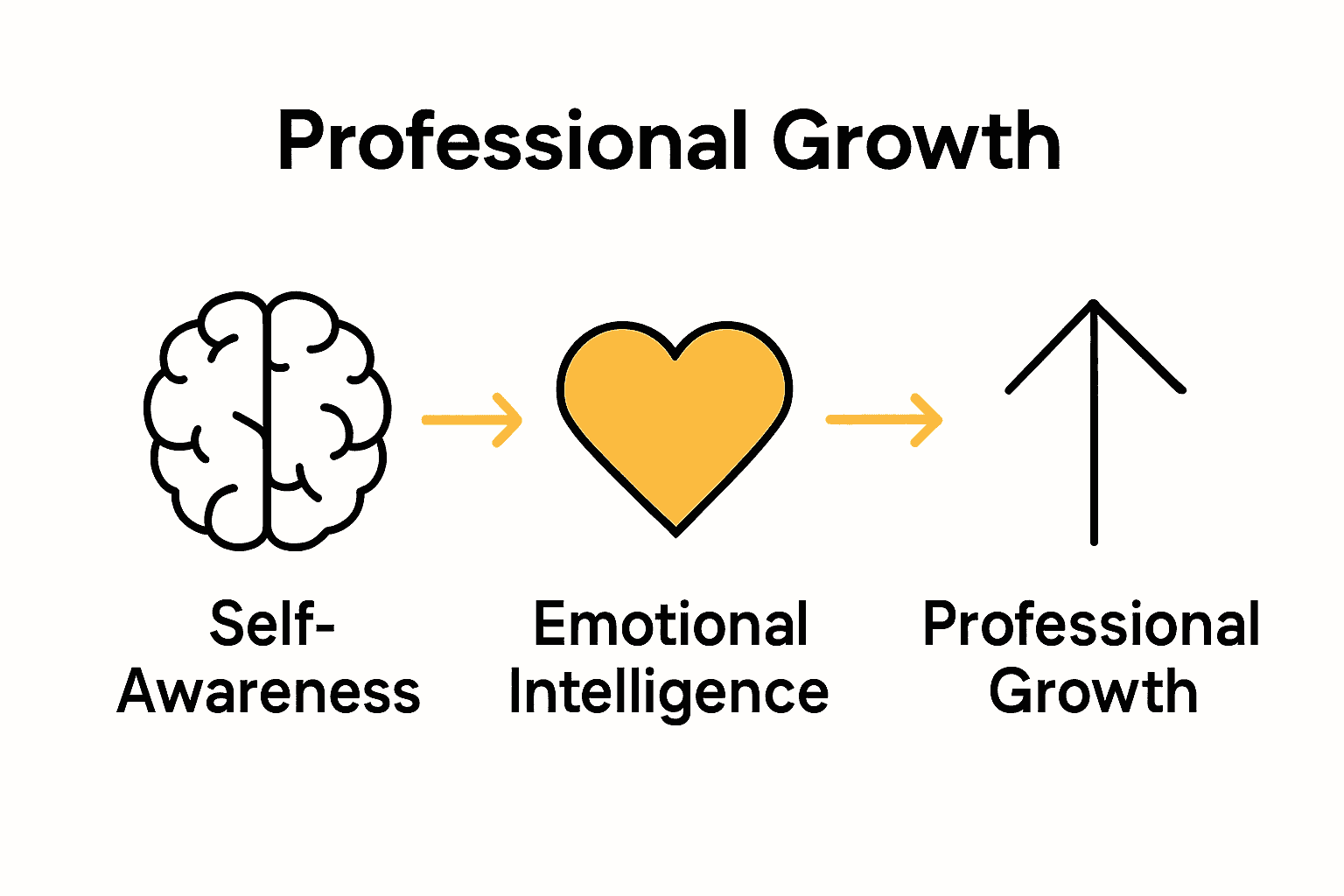
Benefits for Personal and Professional Growth
Mindful self-awareness offers transformative advantages that extend across personal and professional domains. BMC Psychology research reveals that acting with awareness is positively correlated with enhanced learning enjoyment and reduced test anxiety, demonstrating significant cognitive and emotional benefits that directly impact performance and well-being.
Professionals who cultivate mindful self-awareness experience profound psychological shifts. University of Buffalo acknowledges that mindful self-care practices contribute substantially to mental health and personal development. These practices enable individuals to navigate complex workplace challenges with greater emotional intelligence, resilience, and adaptive thinking.
Key benefits of mindful self-awareness include:
- Enhanced emotional regulation
- Improved stress management capabilities
- Increased cognitive flexibility
- Better interpersonal communication skills
- Heightened decision-making precision
- Reduced workplace burnout
- Elevated capacity for empathy and understanding
By integrating mindful self-awareness into daily professional practices, individuals can cultivate a more balanced, responsive approach to personal and organizational challenges.
This holistic approach transforms potential sources of stress into opportunities for growth, learning, and meaningful connection.
Challenges, Limits, and What to Avoid
Mindful self-awareness is not a simple, straightforward practice, and understanding its potential pitfalls is crucial for meaningful implementation. BMC Psychology highlights a critical misconception that mindfulness requires completely clearing one’s mind of thoughts, which can lead to significant frustration and potential abandonment of the practice.
University of Buffalo research emphasizes the challenge of balancing formal mindfulness practices like meditation with informal awareness in daily life. Neglecting either approach can substantially limit the effectiveness of mindfulness in promoting overall well-being and personal growth.
Common challenges and potential pitfalls to avoid include:
- Expecting immediate or perfect results
- Forcing concentration instead of allowing natural awareness
- Judging your mindfulness practice as ‘good’ or ‘bad’
- Treating mindfulness as a quick fix for complex emotional issues
- Overlooking the importance of consistent, gentle practice
- Comparing your progress to others
- Becoming overly rigid or dogmatic about techniques
Successful mindful self-awareness requires patience, compassion, and a nuanced understanding that progress is non-linear. Professionals should approach their practice with curiosity and openness, recognizing that challenges are inherent to the learning process and not indicators of failure.
Unlock Your Professional Potential Through Mindful Self-Awareness
The article highlights how mindful self-awareness is an active practice that helps professionals regulate emotions, improve decision-making, and build resilience in the workplace. Many struggle with the frustration of expecting quick results or misunderstandings about mindfulness requiring a thought-free mind. If you want to break free from these common pitfalls and develop real emotional intelligence and metacognitive skills, professional guidance can accelerate your growth.

Explore tailored psychotherapy, mindfulness workshops, and coaching at Monika Varela’s website where expert support meets a compassionate, inclusive approach. Discover effective ways to integrate mindful self-awareness into your daily routine with services designed specifically for professionals aiming to enhance communication skills, stress management, and overall mental wellness. Act now to start transforming challenges into opportunities by visiting Monika Varela’s site. Your journey to a more balanced, resilient professional life begins today.
Frequently Asked Questions
What is mindful self-awareness?
Mindful self-awareness is a psychological approach that involves intentionally focusing on present-moment experiences with non-judgmental observation. It includes understanding thoughts, emotions, and bodily sensations without criticism or immediate reaction.
How can I practice mindful self-awareness in my daily life?
You can practice mindful self-awareness by integrating techniques such as mindful breathing, body scans, mindful eating, and periodic sensory awareness breaks into your daily routine, allowing for a more responsive and balanced relationship with your inner experiences.
What are the benefits of practicing mindful self-awareness?
Practicing mindful self-awareness provides various benefits, including enhanced emotional regulation, improved stress management, increased cognitive flexibility, better communication skills, and reduced burnout, all contributing to both personal and professional growth.
What common misconceptions exist about mindful self-awareness?
A common misconception is that mindfulness requires completely clearing your mind of thoughts. In reality, mindful self-awareness involves actively observing your thoughts and emotions without judgment, making it an active rather than passive practice.
Recommended
- Mastering Mindfulness for Professionals: Complete Guide – Mónika Varela
- Why Mindfulness Matters in 2025: Complete Guide – Mónika Varela
- Why Join Mindfulness Workshops: The Definitive Guide – Mónika Varela
- Top Communication Skills Platforms – Expert Comparison 2025 – Mónika Varela
- How to Build Self-Confidence: Practical Steps to Transform Your Mindset and Achieve Your Goals
- Stress Management for Professionals: Achieve Calm and Focus – Mastering Conflict





Aún no hay comentarios, ¡añada su voz abajo!