


Over 60 percent of american professionals report feeling stressed at work, yet few realize how profoundly mindfulness can reshape daily life. This practice goes far beyond simple relaxation, offering tools for greater focus, emotional balance, and resilience. With research supporting benefits in both personal and professional settings, exploring the core principles of mindfulness empowers individuals to handle work and life with more clarity and confidence.
Table of Contents
- Defining Mindfulness And Its Core Principles
- Types Of Mindfulness Practices For Professionals
- How Mindfulness Enhances Workplace Performance
- Real-World Examples Of Mindfulness In Careers
- Common Challenges And How To Overcome Them
Key Takeaways
| Point | Details |
|---|---|
| Mindfulness Defined | Mindfulness is an intentional practice of non-judgmental awareness, focusing on present experiences and promoting emotional balance. |
| Professional Practices | Mindfulness in the workplace incorporates formal meditation, micro-mindfulness techniques, and technology-assisted practices to enhance mental wellness. |
| Workplace Benefits | Practicing mindfulness improves emotional regulation, cognitive clarity, and interpersonal dynamics, leading to enhanced workplace performance. |
| Overcoming Challenges | Professionals can address common mindfulness challenges by creating adaptable routines and viewing obstacles as growth opportunities. |
Defining Mindfulness and Its Core Principles
Mindfulness represents a profound psychological approach focused on cultivating deliberate, non-judgmental awareness of present moment experiences. According to research from Springer, mindfulness encompasses four critical dimensions: bodily sensations, emotional states, cognitive processes, and awareness of the surrounding environment.
At its core, mindfulness is characterized by several fundamental principles that distinguish it from casual awareness. These principles include:
- Present-centered attention: Consciously directing focus to immediate experiences
- Non-judgmental observation: Accepting thoughts and feelings without criticism
- Equanimous attitude: Maintaining emotional balance and stability
- Intentional awareness: Purposefully engaging with current moment experiences
Research from the Oxford Psychology Department highlights that mindfulness is not merely a passive state but an active, dynamic process of engagement. Practitioners learn to observe their internal and external experiences with curiosity and openness, creating a transformative approach to understanding personal psychological landscapes.
By integrating these principles, individuals can develop a more compassionate relationship with themselves, reduce stress, and enhance overall psychological resilience. Mindfulness becomes a powerful tool for personal growth, offering a structured method to navigate complex emotional and cognitive experiences with greater clarity and self-awareness.
Types of Mindfulness Practices for Professionals
Mindfulness practices for professionals have evolved dramatically, offering diverse strategies to integrate mental wellness into demanding work environments. According to research from ArXiv, contemporary practitioners now leverage multiple technologies and approaches to support their mindfulness journey, including mobile applications, live streaming sessions, virtual reality environments, and wearable technology.
Professional mindfulness practices can be categorized into several key approaches:
- Formal Meditation Sessions: Structured sitting practices lasting 10-45 minutes
- Micro-Mindfulness Techniques: Brief 2-5 minute exercises integrated throughout workday
- Technology-Assisted Practices: Using apps, guided audio sessions, and digital platforms
- Group Accountability Sessions: Collaborative mindfulness workshops and team practices
Research from TCI Thailand suggests a four-stage process for making mindfulness more accessible in professional settings. This approach emphasizes transforming everyday activities into opportunities for mindful awareness, allowing professionals to practice without significant time investment.
By exploring these diverse mindfulness techniques, professionals can develop a flexible, personalized approach to mental wellness.
 The goal is not perfection but consistent, intentional engagement with present-moment experiences, ultimately enhancing focus, emotional regulation, and overall workplace performance.
How Mindfulness Enhances Workplace Performance
Mindfulness has emerged as a powerful strategy for transforming professional performance, offering sophisticated techniques to navigate complex workplace challenges. Research from BMC Public Health demonstrates significant impacts on reducing emotional exhaustion and improving overall workplace effectiveness, particularly in high-stress professional environments.
Workplace performance is enhanced through mindfulness in several critical dimensions:
- Emotional Regulation: Managing stress and maintaining composure under pressure
- Cognitive Clarity: Improving focus and decision-making capabilities
- Interpersonal Dynamics: Enhancing communication and empathy with colleagues
- Resilience: Building psychological stamina and adaptability
According to College Life, practical mindfulness techniques can be seamlessly integrated into professional routines. These include pre-meeting meditation, mindful breathing during stressful interactions, and structured reflection periods that help professionals reset and realign their mental states.
By consistently practicing mindfulness, professionals can transform their workplace experience. The goal is not just performance improvement, but creating a sustainable approach to work that balances productivity with personal well-being, ultimately leading to more innovative, resilient, and emotionally intelligent professional environments.
Real-World Examples of Mindfulness in Careers
Mindfulness is transforming professional environments across diverse industries, demonstrating its versatility and profound impact on workplace performance. Research from ArXiv reveals innovative approaches to integrating mindfulness, including the groundbreaking use of social robots to deliver targeted mindfulness sessions in professional settings, highlighting technology’s emerging role in mental wellness strategies.
Career applications of mindfulness span multiple professional domains:
- Tech Industry: Software engineers using meditation to enhance coding focus
- Healthcare: Medical professionals practicing mindful communication with patients
- Finance: Traders developing emotional regulation techniques
- Education: Teachers implementing mindfulness for classroom management
- Creative Fields: Designers using reflective practices to boost innovation
According to ArXiv, artificial intelligence is now enabling personalized, immersive mindfulness experiences tailored to specific professional challenges. These AI-driven applications can create customized meditation and reflection protocols that address individual workplace stress patterns and performance goals.
By integrating mindfulness strategically, professionals can transform their work experience from reactive to proactive. The key is viewing mindfulness not as a standalone activity, but as a fundamental approach to navigating complex professional landscapes, ultimately creating more resilient, empathetic, and high-performing work environments.
Common Challenges and How to Overcome Them
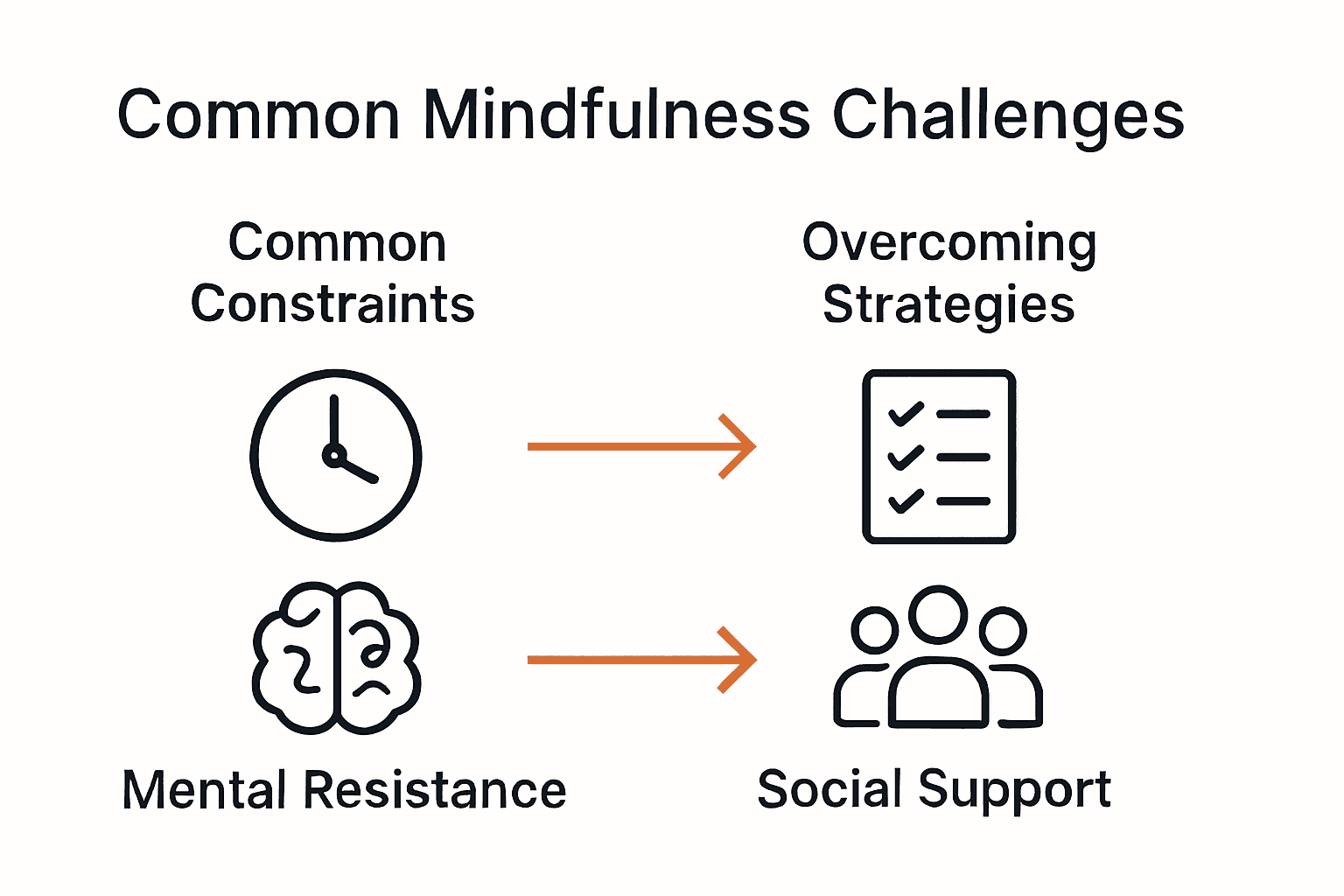
Mindfulness practice is not without its obstacles, and professionals often encounter significant barriers when attempting to integrate mindfulness into their daily routines. Research from ArXiv highlights the primary challenges, including maintaining consistency and developing a sustainable long-term practice amid demanding professional environments.
Common mindfulness challenges professionals frequently encounter include:
- Time Constraints: Feeling overwhelmed by busy schedules
- Mental Resistance: Struggling with persistent mental chatter
- Inconsistent Practice: Difficulty establishing regular routines
- Performance Anxiety: Worrying about “doing mindfulness correctly”
- Motivation Burnout: Losing enthusiasm after initial attempts
According to TCI Thailand, overcoming these challenges requires a structured four-stage approach that emphasizes adaptability and personalization. This process involves creating micro-moments of mindfulness, leveraging social accountability, and developing flexible practice strategies that fit within existing professional workflows.
Successful mindfulness integration demands patience and strategic approach. Professionals should view challenges as opportunities for growth, understanding that mindfulness is a skill developed through consistent, compassionate practice. By embracing imperfection and creating realistic, personalized strategies, individuals can transform potential obstacles into meaningful pathways for personal and professional development.
Unlock Your Professional Potential with Mindfulness Coaching
Feeling overwhelmed by nonstop stress or finding it hard to stay focused at work is a common challenge for many professionals. The article highlights key pain points such as time constraints, inconsistent practice, and mental resistance that can block your growth. By embracing core mindfulness principles like intentional awareness and emotional regulation you can transform these obstacles into powerful tools for resilience and clarity.
Discover personalized solutions that fit within your busy schedule at Monikavarela.com. Monika Varela, a psychologist and mindfulness coach, offers tailored psychotherapy, corporate mindfulness workshops, and communication training designed to enhance your workplace performance and well-being. Take the first step toward greater focus and emotional balance today by visiting Monikavarela.com to book your session or explore ongoing programs for professionals just like you.
Frequently Asked Questions
What is mindfulness in a professional context?
Mindfulness in a professional context refers to the intentional practice of being present and aware of one’s thoughts, feelings, and surroundings without judgment. It involves techniques that help improve focus, emotional regulation, and overall workplace effectiveness.
How can mindfulness practices enhance workplace performance?
Mindfulness practices can enhance workplace performance by improving emotional regulation, cognitive clarity, interpersonal dynamics, and resilience. These skills help professionals manage stress, make better decisions, and communicate more effectively with colleagues.
What are some common mindfulness practices for professionals?
Common mindfulness practices for professionals include formal meditation sessions, micro-mindfulness techniques throughout the workday, technology-assisted practices like apps, and group accountability sessions that foster collaborative mindfulness activities.
What challenges do professionals face when practicing mindfulness, and how can they overcome them?
Professionals often face challenges like time constraints, mental resistance, inconsistent practice, performance anxiety, and motivation burnout. Overcoming these challenges can involve creating micro-moments of mindfulness, leveraging social accountability, and developing flexible practice strategies adaptable to their work environment.





Aún no hay comentarios, ¡añada su voz abajo!