


More than 60 percent of american adults say public speaking makes them nervous, yet mindful preparation can change the entire experience. A growing number of speakers are realizing that the right environment, calming routines, and steady attention help break the cycle of stress. Whether you are presenting in front of a crowd or joining a virtual meeting, understanding how to create a mindful space and use simple breathing exercises will help you feel more centered and confident before you even say a word.
Table of Contents
- Step 1: Prepare Your Mindful Space For Speaking
- Step 2: Practice Grounding Breathing Techniques
- Step 3: Engage In Focused Body Awareness
- Step 4: Cultivate Present Moment Attention Onstage
- Step 5: Assess Your Mindful Speaking Progress
Quick Summary
| Key Point | Explanation |
|---|---|
| 1. Create a Calm Speaking Environment | Set up a quiet, distraction-free space with natural light and calming objects to reduce anxiety before your presentation. |
| 2. Practice Grounding Breathing Techniques | Use the 4-7-8 breathing method to regulate your nervous system and lower anxiety before speaking engagements. |
| 3. Engage in Body Awareness | Perform a systematic body scan to connect with your physical self and release tension before you start speaking. |
| 4. Maintain Present Moment Focus | Stay engaged with your audience by anchoring your awareness in the present, minimizing distractions from the past or future. |
| 5. Track Your Mindful Progress | Keep a journal to assess your mindfulness journey and celebrate small victories in your speaking practice. |
Step 1: Prepare Your Mindful Space for Speaking
Setting up a mindful environment is crucial for reducing public speaking anxiety and creating a calm mental landscape before your presentation. According to Caroline Goyder, a renowned communications expert, grounding exercises and intentional space preparation can significantly stabilize your mental and physical state.
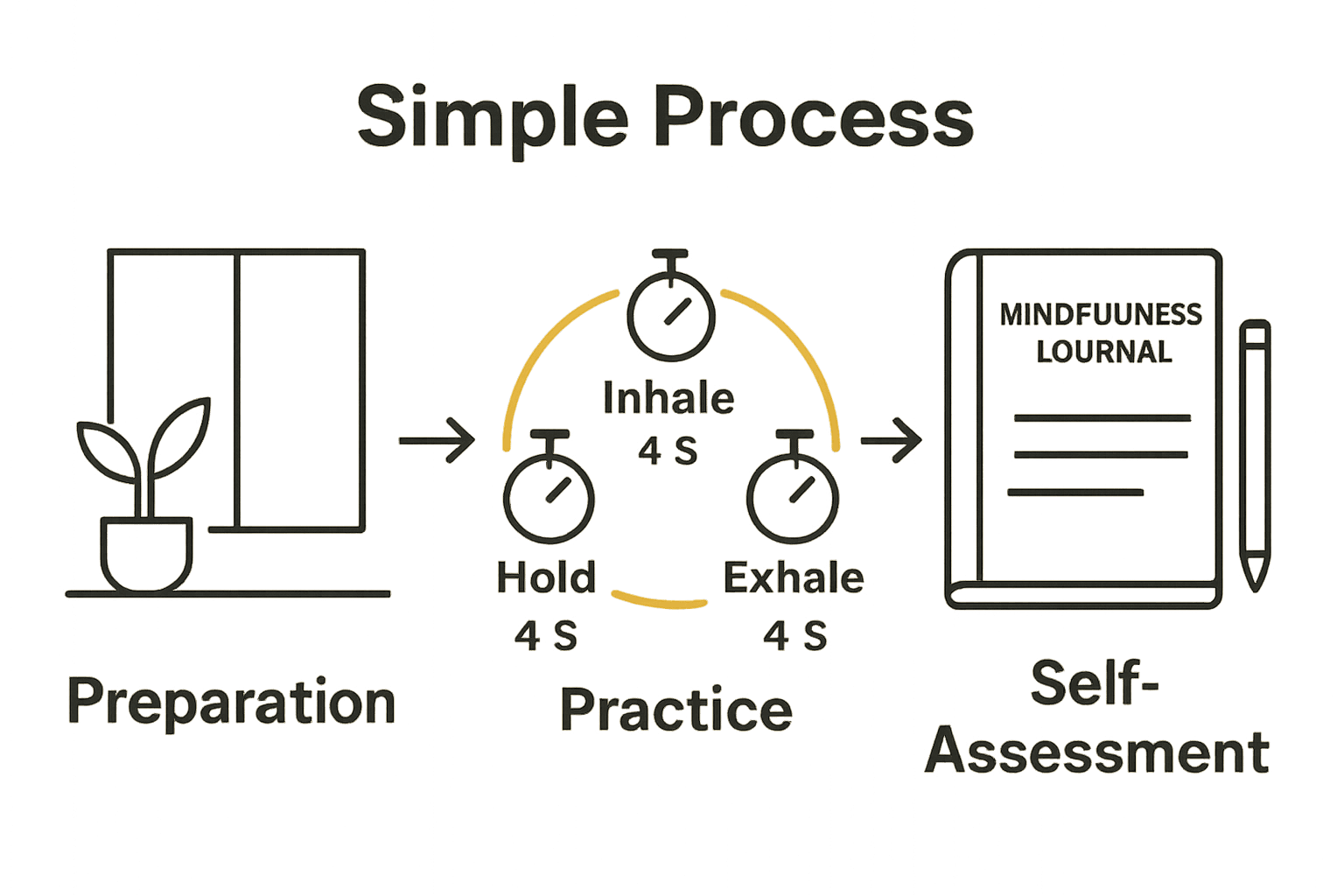
To create your optimal speaking space, start by selecting a quiet area where you can practice without interruptions. Clear the space of potential distractions such as electronic devices, cluttered surfaces, or background noise. Position yourself near natural light or a window if possible, as soft natural illumination can help reduce stress and promote a sense of openness. Consider adding a small plant or calming object that serves as a visual anchor point to help center your attention.
Practical preparation extends beyond physical space to your body positioning. Practice standing with your feet shoulder width apart, maintaining an upright yet relaxed posture. Perform gentle breathing exercises that help regulate your nervous system and create internal calm. Take slow, deep breaths that expand your diaphragm and release tension. These preliminary steps transform your environment from a potential source of stress into a supportive platform for confident communication.
Remember that your mindful space is a personal sanctuary designed to support your speaking goals. Each small adjustment contributes to building confidence and emotional resilience before stepping into your presentation.
Step 2: Practice Grounding Breathing Techniques
Mastering grounding breathing techniques can transform your speaking anxiety into calm confidence. University of Washington research reveals specific breathing methods that activate your body’s natural relaxation response and help stabilize your mental state before public speaking.
One powerful technique is the 4-7-8 breathing method. Start by sitting or standing in a comfortable position with your spine straight. Inhale quietly through your nose for 4 seconds, feeling your abdomen expand. Then hold that breath for 7 seconds, allowing oxygen to circulate through your body. Finally, exhale slowly through your mouth for 8 seconds, releasing tension and creating a sense of internal calm. Repeat this cycle 3-4 times to reset your nervous system and reduce speaking anxiety.
Trauma Research UK suggests complementing breathing techniques with sensory grounding. As you practice your breathing, simultaneously engage your senses by noticing five things you can see, four things you can touch, three things you can hear, two things you can smell, and one thing you can taste. This multisensory approach anchors you in the present moment and interrupts anxious thought patterns.
Practice these techniques daily to build muscle memory and confidence. Your breath becomes a powerful tool for managing public speaking stress and maintaining composure under pressure.

Step 3: Engage in Focused Body Awareness
Body awareness transforms public speaking from a stressful experience into a mindful practice of self connection. Sexual Assault Support Centre of Waterloo Region recommends a systematic body scan technique that helps speakers ground themselves and release accumulated tension before presenting.
Begin your body awareness practice by finding a quiet space where you can stand or sit comfortably. Close your eyes and start with your feet. Notice how they feel connected to the ground. Slowly move your attention upward through each body part sequentially. Feel the weight in your legs, the alignment of your spine, the tension in your shoulders. Pay attention to subtle sensations without judgment. As Mindfulness Based Stress Reduction research indicates, this practice helps interrupt anxious thought patterns and creates a sense of internal stability.
As you scan your body, take slow breaths and imagine releasing any stored tension. Wiggle your fingers and toes. Roll your shoulders. Gently stretch your neck. The goal is not perfection but awareness. This practice reconnects you with your physical self and provides a powerful reset before speaking. Each moment of body awareness builds confidence and emotional resilience for your upcoming presentation.
Step 4: Cultivate Present Moment Attention Onstage
Maintaining focused attention during public speaking transforms anxiety into powerful connection. SAGE Flex for Public Speaking research highlights the critical importance of activating the relaxation response to stay fully engaged with your audience and message.
To cultivate present moment attention, start by anchoring yourself through sensory awareness. As you step onstage, notice the feel of the floor beneath your feet, the temperature of the room, and the subtle sounds around you. Connect with your breath and allow each inhale and exhale to ground you in the current moment. Resist the temptation to drift into future worries or past concerns. Instead, view your presentation as a dynamic conversation unfolding in real time. Arxiv research suggests that immersive awareness can dramatically enhance your performance by keeping you fully connected to the present experience.
Practice micro moments of mindfulness during your presentation. When you feel your mind wandering, gently redirect your attention back to your breath, your body, and the immediate context of your speaking. Each return to the present moment is a small victory that builds your capacity for calm and focused communication. Remember that present moment attention is not about perfection but about continuous gentle redirection.
Step 5: Assess Your Mindful Speaking Progress
Tracking your mindfulness journey transforms abstract practice into measurable personal growth. The Five Facet Mindfulness Questionnaire provides a structured approach to understanding your mindful speaking development across critical psychological dimensions.
Begin your assessment by creating a personal mindfulness journal. After each speaking engagement, reflect on five key areas: your ability to observe without judgment, your capacity to describe experiences accurately, your awareness of present moment sensations, your ability to act with conscious intention, and your tendency to avoid emotional reactivity. Arxiv research suggests technology can support this tracking process, offering innovative ways to monitor your mindfulness progression.
Pay attention to subtle shifts in your speaking patterns. Notice how your breath remains more steady, how you pause with greater intentionality, and how you respond to audience reactions with increased emotional regulation. Your progress is not about perfection but about consistent gentle awareness. Celebrate small victories the moments when you stay present, when anxiety does not derail your communication, when you speak with authentic connection. This compassionate self assessment transforms mindful speaking from a technique into a profound personal practice.
Build Lasting Confidence with Mindful Public Speaking Support
Public speaking can trigger deep anxiety and disrupt your ability to stay present and connected with your audience. If you find yourself struggling with nervousness despite practicing grounding exercises, mindful breathing, and body awareness techniques this article highlights, you are not alone. Many speakers face challenges in transforming stress into calm confidence and sustaining present moment attention onstage.
At Monika Varela’s website, you can access personalized coaching and therapeutic services designed to strengthen your mindful speaking skills. Whether you want to deepen your practice of grounding techniques or build new habits of emotional resilience, Monika offers tailored support to help you manage anxiety and connect authentically with your audience. Explore insights and updates on mindfulness and communication in the Noticias archivos – Mónika Varela and discover practical strategies that meet your unique journey.
Take the next step toward calm, confident speaking today. Visit https://monikavarela.com to learn about workshops, one-on-one coaching, and accessible mindfulness training options that empower you to master public speaking with clarity and composure.
Frequently Asked Questions
How can I create a mindful space before speaking?
To create a mindful space, choose a quiet area free from distractions. Clear away any clutter, use natural light, and add a calming object to help center your focus.
What breathing techniques can help reduce speaking anxiety?
The 4-7-8 breathing technique is effective for calming nerves. Inhale for 4 seconds, hold for 7, and exhale for 8 seconds, repeating this cycle 3-4 times to reset your nervous system.
What does a body awareness practice involve?
A body awareness practice involves performing a systematic body scan where you focus on each part of your body, starting from your feet to your head. Take slow breaths and notice any tension or sensations to help ground yourself before speaking.
How can I maintain present moment attention while speaking?
To maintain present moment attention while speaking, anchor yourself by noticing your surroundings, such as the floor beneath your feet or sounds in the room. Redirect your focus gently back to your breath whenever your mind starts to wander.
How do I track my progress in mindfulness techniques for speaking?
You can track your mindfulness progress by keeping a personal journal where you reflect on various aspects of your speaking experience after each engagement. Evaluate areas like your emotional regulation and present moment awareness to see how you improve over time.
What should I do if I feel anxious right before my presentation?
If you feel anxious right before your presentation, practice quick grounding techniques, such as deep breathing or a brief body awareness exercise. Spend a few moments focused on your breath or noticing your surroundings to help calm your nerves.





Aún no hay comentarios, ¡añada su voz abajo!