


Most advice about workplace mindfulness misses a key point—it’s not about escaping stress but changing how we relate to it. Studies show that professionals who adopt mindfulness techniques report a 30 percent drop in workplace anxiety and greater focus under pressure. As modern jobs bring constant demands, understanding real mindfulness strategies can reshape the way you work, enhance mental clarity, and strengthen professional relationships.
Table of Contents
- Defining Mindfulness In Professional Settings
- Core Practices And Key Techniques Explained
- Major Benefits For Workplace Wellbeing
- Integrating Mindfulness Into Daily Work Life
- Risks, Misconceptions, And Common Pitfalls
Key Takeaways
| Point | Details |
|---|---|
| Mindfulness Enhances Engagement | Integrating mindfulness in the workplace improves employee engagement, communication, and decision-making quality. |
| Core Techniques Promote Clarity | Focused breathing, body scanning, and mindful observation are key practices that enhance mental clarity and emotional regulation. |
| Holistic Approach Needed | A successful mindfulness culture requires systematic integration into routines, emphasizing mental well-being alongside performance. |
| Awareness of Misconceptions | Professionals should acknowledge potential misconceptions about mindfulness to avoid superficial implementation and foster genuine commitment. |
Defining Mindfulness in Professional Settings
Mindfulness in professional contexts goes far beyond simple meditation techniques. It represents a strategic approach to mental presence that transforms how individuals engage with their work environment. According to research from MDPI, mindfulness is fundamentally about cultivating an active, open awareness that allows professionals to respond rather than react to workplace challenges.
At its core, mindfulness involves maintaining deliberate attention on the present moment without judgment. BMC Psychology emphasizes that this practice isn’t about eliminating stress, but developing a more balanced relationship with professional pressures. Professionals practicing mindfulness learn to:
- Observe their thoughts without becoming overwhelmed
- Recognize emotional triggers before they escalate
- Maintain composure during high-pressure situations
- Enhance overall cognitive flexibility
The practical applications of mindfulness extend well beyond personal stress management. Organizations implementing mindfulness strategies often experience significant improvements in:
- Employee engagement
- Communication effectiveness
- Decision-making quality
- Interpersonal workplace relationships
By integrating mindfulness into professional development, individuals and organizations can create more resilient, adaptive work environments that prioritize mental well-being alongside performance excellence. For those interested in exploring this transformative approach further, our guide on why mindfulness matters in 2025 offers deeper insights into these practices.
Core Practices and Key Techniques Explained
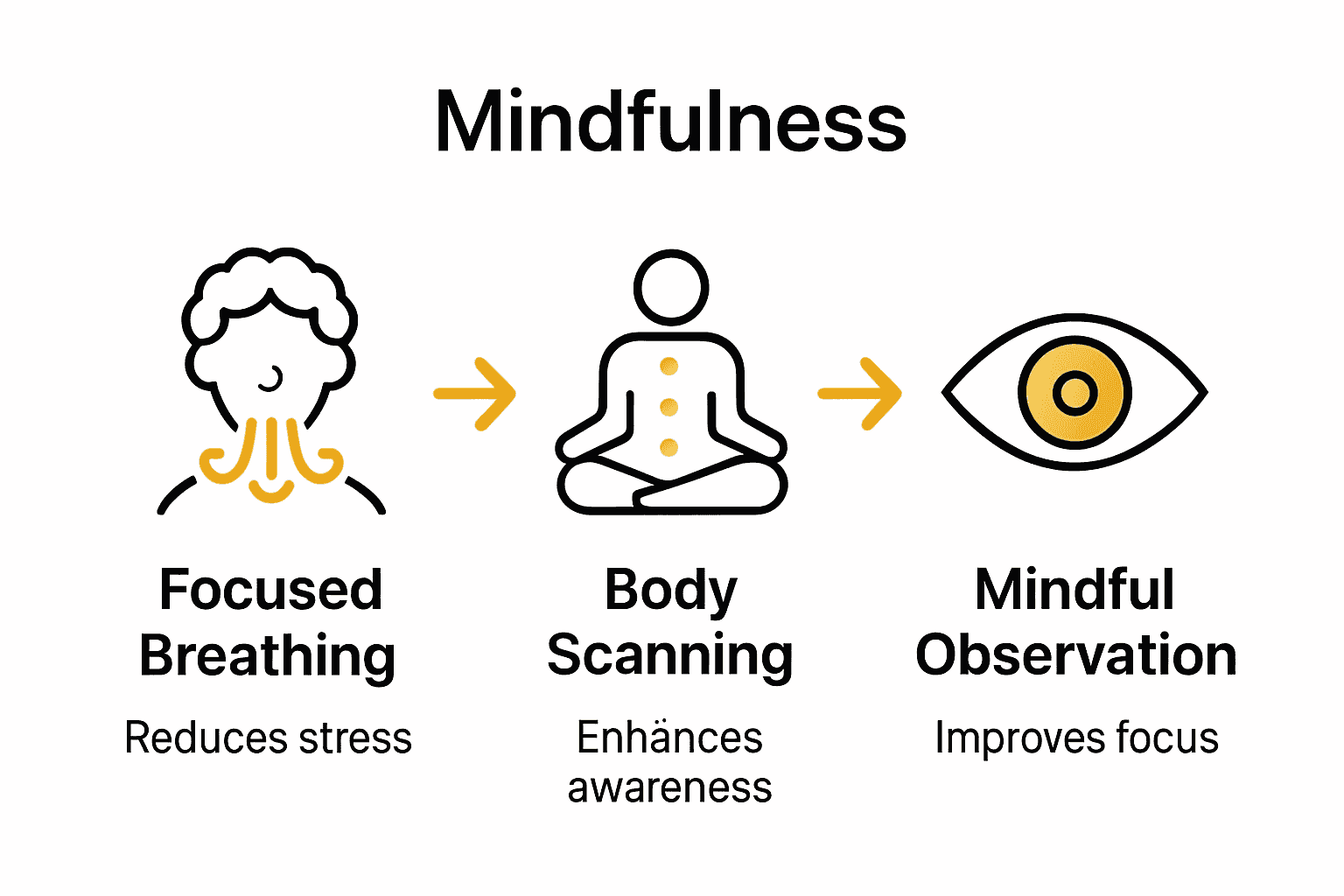
Mindfulness practices for professionals are strategic techniques designed to enhance mental clarity, emotional regulation, and workplace performance. Psychology Research highlights three fundamental core mindfulness techniques that professionals can readily integrate into their daily routines: focused breathing, body scanning, and mindful observation.
Here’s a summary of the core mindfulness techniques and their key benefits for professionals:
| Technique | How It Works | Main Benefits |
|---|---|---|
| Focused Breathing | Direct attention to breath 3-5 minute breaks |
Reduces stress Improves concentration |
| Body Scanning | Notice sensations Relax body regions |
Enhances self-awareness Promotes calm |
| Mindful Observation | Observe thoughts/emotions Non-judgmentally |
Builds emotional regulation Resilience |
Focused Breathing serves as the foundational practice for mindfulness. This technique involves deliberately directing attention to the breath, creating a momentary pause from work-related thoughts. Professionals can practice this by:
- Taking 3-5 minute breaks between tasks
- Breathing deeply through the nose and exhaling slowly
- Counting breaths to maintain concentration
- Gently redirecting attention when thoughts wander
According to arXiv Research, technology can play a significant role in supporting mindfulness practices. Modern professionals can leverage mobile apps, digital timers, and online guided sessions to maintain consistency in their mindfulness journey.
 These technological tools provide:
- Structured meditation guidance
- Progress tracking
- Reminder systems
- Customizable practice lengths
Beyond individual techniques, creating a mindful workplace environment involves developing a holistic approach. This means cultivating practices that encourage present-moment awareness, emotional intelligence, and intentional response rather than reactive behavior. By integrating these techniques systematically, professionals can transform their approach to work, stress, and personal development.
Major Benefits for Workplace Wellbeing
Workplace mindfulness represents a powerful strategy for transforming organizational health and individual employee experience. MDPI Research reveals that organizational mindfulness delivers multi-level benefits extending far beyond simple stress reduction, fundamentally reshaping how professionals interact with their work environment.
The psychological advantages are profound. According to PubMed Research, systematic mindfulness training produces significant improvements in employee mental health, demonstrating measurable reductions in workplace-related psychological challenges. Key benefits include:
- Decreased anxiety and stress levels
- Enhanced emotional regulation
- Improved cognitive flexibility
- Better sleep quality
- Increased overall psychological resilience
Professionals practicing mindfulness experience transformative changes in their workplace interactions. These benefits manifest through:
- More balanced emotional responses
- Increased empathy and interpersonal understanding
- Higher capacity for complex problem-solving
- Greater adaptability during organizational changes
Ultimately, mindfulness isn’t just an individual practice but a comprehensive approach to creating healthier, more productive work environments. By prioritizing mental well-being, organizations can cultivate a culture of awareness, compassion, and high performance that benefits both employees and the broader organizational ecosystem.
Integrating Mindfulness Into Daily Work Life
Workplace mindfulness requires strategic, intentional integration into professional routines. Associated Press highlights the importance of mini-meditations and discreet practices that can transform how professionals navigate their daily work challenges without disrupting productivity.
One powerful approach involves Booster Breaks, a concept explored by Wikipedia that provides structured opportunities for mental reset during the workday. These strategic pauses can be implemented through:
- 3-5 minute breathing exercises between meetings
- Brief visualization techniques during transitions
- Mindful walking breaks
- Short seated meditation moments
- Conscious awareness practices at your desk
Practical integration strategies include:
- Setting digital reminders for mindfulness moments
- Creating dedicated ‘pause spaces’ in the workplace
- Establishing morning and afternoon mindfulness rituals
- Developing personal trigger points for quick reset techniques
Professionals looking to deepen their mindfulness journey might consider why joining mindfulness workshops can provide structured guidance and community support in developing these essential skills. By treating mindfulness as a skill to be cultivated rather than a sporadic practice, individuals can create lasting positive changes in their professional and personal lives.
Risks, Misconceptions, and Common Pitfalls
Mindfulness implementation is not a one-size-fits-all solution, and professionals must navigate potential challenges with careful awareness. arXiv Research reveals that misconceptions about mindfulness can significantly impact its effectiveness, particularly when organizations fail to align practices with their unique cultural context.
Technological integration presents both opportunities and challenges. According to arXiv Research, user resistance and personalization are critical factors that can derail mindfulness initiatives. Common misconceptions include:
- Believing mindfulness is only meditation
- Expecting immediate, dramatic results
- Treating mindfulness as a quick fix for stress
- Assuming one approach works for everyone
- Neglecting individual differences in learning styles
The most significant risks professionals encounter involve:
- Superficial implementation without genuine commitment
- Over-intellectualizing the practice
- Creating additional stress by forcing mindfulness
- Lacking consistent, structured approach
- Ignoring individual psychological needs
Professionals must recognize that mindfulness is a nuanced skill requiring patience, practice, and personalized strategies. By understanding these potential pitfalls, individuals can develop a more authentic and sustainable approach to incorporating mindfulness into their professional lives.
Unlock Your Full Professional Potential with Mindfulness
Mastering mindfulness as outlined in this guide is about more than managing stress it means gaining control over your thoughts and emotions to stay present and responsive under pressure. If you find yourself overwhelmed by workplace demands or struggling to maintain focus mindfulness techniques like focused breathing and body scanning can offer profound benefits. These methods help you observe your mental state without judgment develop emotional regulation skills and build resilience during intense work situations.
Take the next step toward transformative change by exploring how Monika Varela supports professionals just like you. Whether you want to deepen your practice through expert-led mindfulness workshops, improve communication skills, or find personalized coaching, her services are designed with your wellbeing and growth in mind. Do not wait for stress to take its toll begin cultivating a mindful work life today by visiting Monika Varela’s homepage and discover the path to greater focus, calm, and effectiveness.
Frequently Asked Questions
What is mindfulness in professional settings?
Mindfulness in professional settings refers to a strategic approach to mental presence that enhances how individuals engage with their work environment. It involves maintaining deliberate attention on the present moment, allowing professionals to respond adeptly to workplace challenges.
What are the core mindfulness techniques that professionals can use?
The three core mindfulness techniques for professionals are focused breathing, body scanning, and mindful observation. These techniques help improve mental clarity, emotional regulation, and workplace performance.
How can I integrate mindfulness into my daily work routine?
You can integrate mindfulness into your daily work routine by practicing ‘Booster Breaks,’ setting digital reminders for mindfulness moments, creating pause spaces, and establishing morning and afternoon mindfulness rituals to foster present-moment awareness throughout the day.
What are the main benefits of practicing mindfulness at work?
The main benefits of practicing mindfulness at work include decreased anxiety and stress levels, enhanced emotional regulation, improved cognitive flexibility, better sleep quality, and increased overall psychological resilience, which lead to healthier professional interactions and a more productive work environment.
Recommended
- Why Join Mindfulness Workshops: The Definitive Guide – Mónika Varela
- Why Mindfulness Matters in 2025: Complete Guide – Mónika Varela
- How to Practice Mindfulness for Everyday Calm and Focus – Mónika Varela
- Psicologa Especializada En Mindfulness Y Formadora En Soft Skills
- Anleitung zur Stressbewältigung: Praktische Strategien für 2025






1 Comentario
[…] Mastering Mindfulness for Professionals: Complete Guide – Mónika Varela […]