


Most American counselors know that strong communication in therapy makes all the difference, yet research shows over 60 percent of clients struggle to feel truly understood during sessions. This gap affects outcomes and highlights just how complex therapeutic dialogue can be. Mastering these core concepts is more than professional skill; it shapes trust and supports real emotional growth. Discover what sets effective communication apart and learn how counselors create supportive environments tailored to every client.
Table of Contents
- Core Concepts Of Communication In Counseling
- Types Of Therapeutic Communication Techniques
- Essential Skills: Active Listening And Empathy
- Challenges And Barriers In Counseling Communication
- Common Mistakes And How To Avoid Them
Key Takeaways
| Point | Details |
|---|---|
| Importance of Therapeutic Communication | Effective communication in counseling fosters a supportive environment for emotional exploration and personal growth. |
| Core Skills: Active Listening and Empathy | Mastering active listening and empathy is essential for creating a genuine connection with clients, facilitating deep emotional understanding. |
| Addressing Communication Barriers | Recognizing and overcoming barriers, such as emotional resistance and cultural misunderstandings, is crucial for building trust in the therapeutic relationship. |
| Avoiding Common Pitfalls | Counselors must practice self-awareness to prevent mistakes like interrupting clients or displaying judgment, ensuring a safe space for open dialogue. |
Core Concepts of Communication in Counseling
Communication in counseling represents a nuanced and sophisticated interaction where professionals create safe psychological spaces for emotional exploration and personal growth. Therapeutic communication goes beyond traditional conversation, serving as a deliberate, structured approach to understanding human experiences and facilitating meaningful change.
According to research from bbconkollam , therapeutic communication fundamentally aims to establish a supportive relationship that helps clients process emotions, reduce anxiety, and develop problem-solving skills. This involves several critical components:
- Active listening : Fully engaging with the client’s narrative without judgment
- Empathetic responding : Acknowledging emotions authentically
- Non-verbal attunement : Understanding communication beyond spoken words
- Reflective dialogue : Helping clients gain deeper self-understanding
The hrcak research highlights five distinct communication levels in counseling: interpersonal, transpersonal, small-group, intrapersonal, and public communication.
These levels demonstrate the complexity of therapeutic interactions, showing that effective communication isn’t just about exchanging words, but creating meaningful psychological connections.
Professional counselors must masterfully navigate these communication levels, understanding that each interaction requires unique skills, emotional intelligence, and strategic responsiveness. The goal isn’t merely to talk, but to create transformative dialogues that support clients’ psychological well-being and personal development.
Types of Therapeutic Communication Techniques
Therapeutic communication techniques are specialized strategies counselors and mental health professionals use to create meaningful, supportive interactions with clients. These techniques go beyond ordinary conversation, designed to facilitate emotional exploration, understanding, and personal growth.
According to rivier, there are numerous techniques professionals can employ to enhance client interactions. Some key approaches include:
- Active listening: Providing full, focused attention to the client’s verbal and non-verbal messages
- Clarification techniques: Asking specific questions to understand deeper meanings
- Reflection: Mirroring the client’s emotions and experiences to demonstrate understanding
- Open-ended questioning: Encouraging clients to elaborate and explore their thoughts
Research from mccc emphasizes that these techniques are not just about gathering information, but creating a compassionate, safe environment where clients feel genuinely heard and supported. Empathy, sharing observations, and maintaining hope are critical elements that transform standard communication into therapeutic dialogue.
Professionals must skillfully adapt these techniques to individual client needs, recognizing that each interaction requires nuanced, personalized communication strategies. The ultimate goal is to create a supportive psychological space where clients can explore their emotions, challenges, and potential for personal transformation.
Essential Skills: Active Listening and Empathy
Active listening and empathy form the cornerstone of effective therapeutic communication, representing the most profound ways counselors connect with and support their clients. These skills transcend mere hearing or understanding, creating a deep psychological bridge that allows genuine emotional exploration and healing.
According to nenc, active listening involves multiple critical components that transform ordinary conversation into meaningful therapeutic interaction:
- Full attention: Completely focusing on the client without distraction
- Non-verbal engagement: Using body language that communicates genuine interest
- Reflective responses: Confirming understanding through thoughtful feedback
- Suspension of judgment: Creating a safe space for authentic emotional expression
Empathy goes beyond sympathy, requiring counselors to authentically feel and understand a client’s emotional experience without becoming emotionally overwhelmed. This skill demands profound emotional intelligence, allowing professionals to connect deeply while maintaining professional boundaries. By combining active listening with genuine empathy, counselors create a powerful therapeutic environment where clients feel truly seen, heard, and validated.
Mastering these skills requires continuous practice, self-awareness, and a commitment to personal growth.
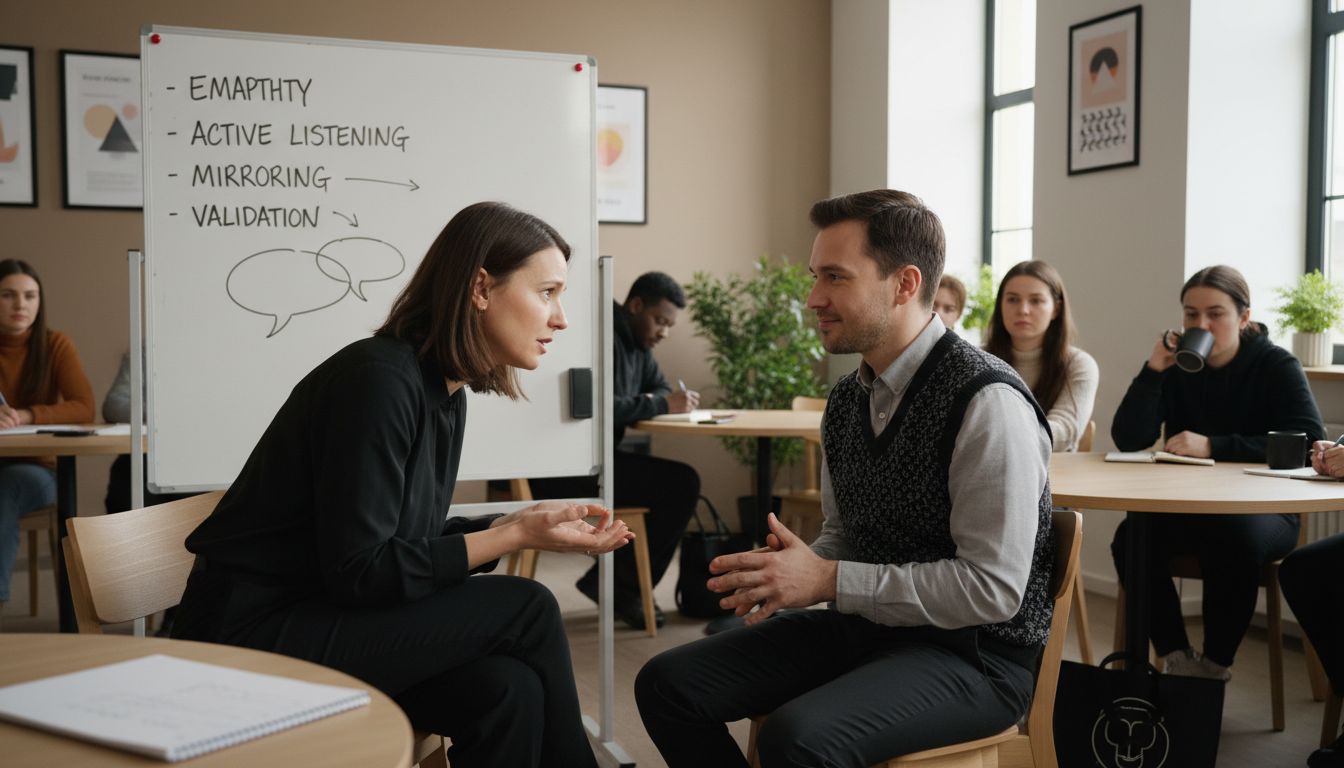 Counselors must consistently develop their ability to listen without interrupting, understand without interpreting, and respond with compassion that promotes client self-discovery and emotional healing.
Challenges and Barriers in Counseling Communication
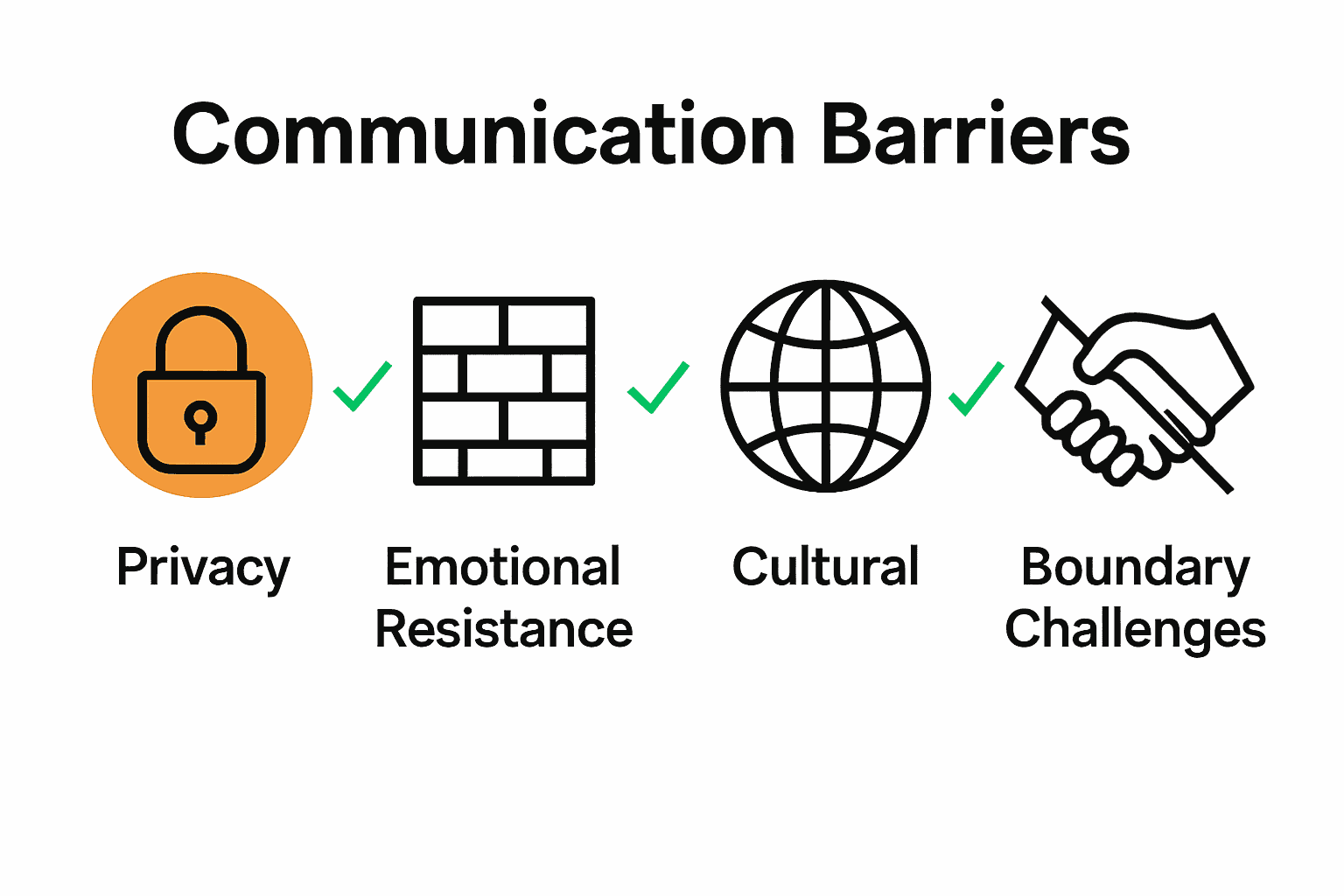
Communication barriers in counseling represent complex psychological and interpersonal challenges that can significantly impede the therapeutic process. These obstacles emerge from multiple sources, ranging from individual psychological defense mechanisms to systemic communication limitations.
According to research from bbconkollam, key communication barriers include:
- Privacy concerns: Clients’ hesitation to fully disclose personal information
- Emotional resistance: Psychological defense mechanisms blocking open dialogue
- Cultural misunderstandings: Differences in communication styles and expectations
- Professional boundary challenges: Maintaining appropriate therapeutic distance
The kvcn research highlights that overcoming these barriers requires sophisticated communication strategies. Counselors must develop advanced skills to navigate complex emotional territories, recognize subtle resistance patterns, and create safe psychological spaces that encourage authentic self-expression.
Effective communication in counseling demands continuous self-awareness, adaptability, and a nuanced understanding of human psychology.
 Professionals must remain vigilant, recognizing that each client brings unique communication challenges that require personalized, empathetic, and strategic approaches to building trust and facilitating meaningful therapeutic dialogue.
Common Mistakes and How to Avoid Them
Communication mistakes in counseling can significantly undermine the therapeutic relationship, potentially causing long-lasting psychological harm. These errors often emerge from well-intentioned but misguided attempts to help clients, highlighting the delicate nature of therapeutic interactions.
According to rivier, counselors frequently encounter several critical communication pitfalls:
- Interrupting clients: Breaking their narrative flow and emotional expression
- Offering premature advice: Solving problems before fully understanding the context
- Displaying judgmental body language: Unconscious negative reactions that close emotional pathways
- Minimizing client experiences: Inadvertently dismissing or trivializing emotional narratives
Professional counselors must develop sophisticated self-awareness to recognize and prevent these communication errors. This requires continuous personal and professional development, including regular supervision, self-reflection, and a commitment to understanding the nuanced psychological dynamics of therapeutic communication. The most effective professionals approach each interaction with humility, recognizing that every client’s experience is unique and deserves complete, non-judgmental attention.
Overcoming communication mistakes demands more than technical skill. It requires emotional intelligence, genuine empathy, and a profound respect for the client’s individual journey. Counselors must consistently practice active listening, maintain professional boundaries, and create a safe, supportive environment where clients feel genuinely heard and validated.
Strengthen Your Counseling Communication Skills Today
Mastering therapeutic communication techniques like active listening and empathy is essential for effective counseling. If you face challenges such as emotional resistance, cultural misunderstandings, or maintaining professional boundaries, know that expert guidance can make a real difference. Developing these skills creates safe, transformative spaces for your clients and supports your growth as a counselor.
Explore how Monika Varela’s psychotherapy and mindfulness coaching services offer personalized strategies to overcome common communication barriers and avoid typical counseling mistakes. Take the next step now to enhance your communication abilities with proven methods designed for lasting client trust and emotional healing. Visit Monika Varela to learn more and book your session today.
Frequently Asked Questions
What is therapeutic communication in counseling?
Therapeutic communication in counseling is a structured approach that goes beyond ordinary conversation. It aims to create a safe psychological space for clients, facilitating emotional exploration and personal growth while establishing a supportive relationship.
What are the key techniques used in therapeutic communication?
Key techniques in therapeutic communication include active listening, clarification, reflection, and open-ended questioning. These techniques are designed to enhance client interactions and create a compassionate environment where clients feel heard and supported.
How can counselors develop active listening skills?
Counselors can develop active listening skills by focusing fully on the client, engaging with non-verbal cues, providing reflective responses, and suspending judgment. Continuous practice and self-awareness are crucial for mastering this skill.
What are common communication barriers in counseling?
Common communication related barriers in counseling include privacy concerns, emotional resistance from clients, cultural misunderstandings, and challenges to maintaining professional boundaries. Recognizing and addressing these barriers is essential for effective therapeutic dialogue.






Aún no hay comentarios, ¡añada su voz abajo!