



Most American workplaces now recognize that stress and distraction undermine both well-being and productivity. As job demands increase, organizations face mounting pressure to support employees in more meaningful ways. A recent survey found that over 40 percent of American professionals report feeling burned out at work. Discover how corporate mindfulness is reshaping company culture, helping teams stay focused, productive, and resilient in a fast-paced environment.
Table of Contents
- Defining Corporate Mindfulness in Organizations
- How Mindfulness Improves Workplace Productivity
- Benefits for Employee Mental Health and Stress
- Integrating Mindfulness Training at Work
- Common Challenges and How to Overcome Them
Key Takeaways
| Point | Details |
|---|---|
| Transformative Practice | Corporate Mindfulness integrates present-moment awareness in workplaces, enhancing employee focus and emotional intelligence. |
| Employee Well-Being | Mindfulness practices significantly improve mental health, reduce stress, and foster a healthier work-life balance. |
| Productivity Enhancement | Mindfulness training boosts task concentration and decision-making, leading to higher-quality output. |
| Strategic Integration | Successful mindfulness adoption requires leadership support, structured training, and a culture promoting consistent practice. |
Defining Corporate Mindfulness in Organizations
Corporate Mindfulness represents a strategic approach to integrating mindfulness practices within professional environments, transforming traditional workplace dynamics. At its core, this practice focuses on cultivating present-moment awareness and non-judgmental observation among employees and leadership teams.
In organizational contexts, mindfulness goes beyond individual meditation techniques. Corporate mindfulness refers to fostering an environment of undivided attention and professional presence that enhances workplace interactions and individual performance. This approach involves training employees to remain fully engaged in current tasks, reduce stress, and develop heightened emotional intelligence.
The fundamental elements of corporate mindfulness include:
- Developing sustained attention
- Practicing non-reactive awareness
- Cultivating emotional regulation
- Promoting empathetic communication
- Reducing workplace psychological strain
Centuries-old mindfulness concepts have been strategically adapted to address modern professional challenges, creating structured frameworks that support employee well-being and organizational productivity. By integrating mindful practices, companies can create more resilient, focused, and emotionally intelligent workplace cultures.
Here’s a summary of how mindfulness impacts different aspects of organizational success:
| Organizational Dimension | Positive Impact of Mindfulness | Example Outcome |
|---|---|---|
| Employee Engagement | Increases focus and motivation | Higher project completion rates |
| Leadership Effectiveness | Enhances emotional intelligence | Improved team morale |
| Collaboration & Communication | Fosters empathy and clearer exchanges | Fewer workplace conflicts |
| Change Management | Builds adaptability and resilience | Smoother transitions |
| Innovation Capacity | Encourages open-minded problem-solving | More creative solutions |
Pro Tip: Start Small: Implement brief, five-minute mindfulness exercises at the beginning of meetings to help team members reset, refocus, and approach work with greater clarity and intentionality.
How Mindfulness Improves Workplace Productivity
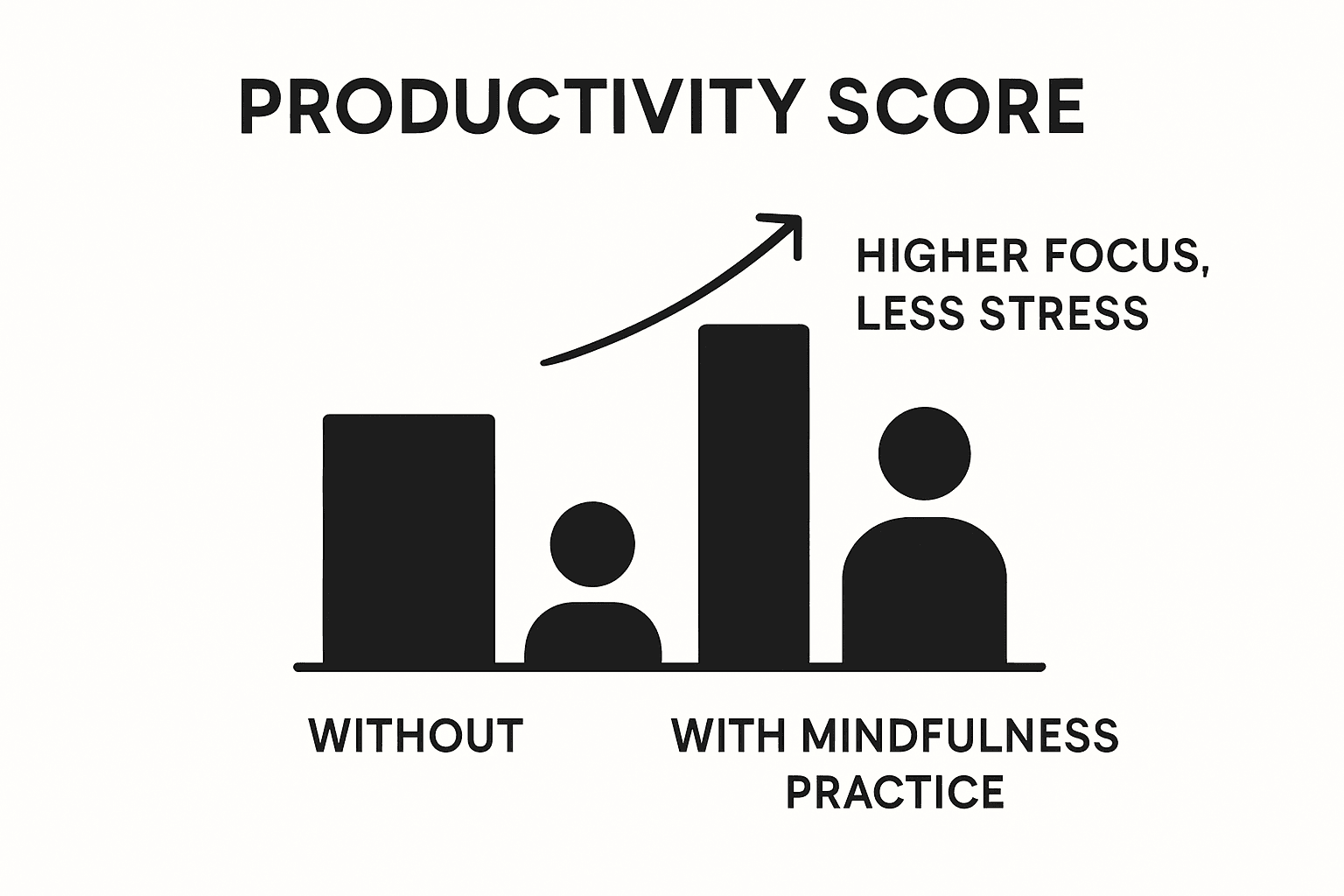
Workplace Productivity fundamentally transforms when employees integrate mindfulness practices into their daily professional routines. By cultivating a heightened sense of awareness and focused attention, organizations can unlock significant performance improvements across multiple dimensions of work.
Mindfulness training helps employees concentrate on one task at a time, achieving a state of flow that reduces errors and enhances overall efficiency. This concentrated approach allows professionals to minimize distractions and maintain a deeper level of engagement with their core responsibilities, ultimately leading to higher-quality output and reduced psychological strain.
The key productivity benefits of mindfulness include:
- Improved task concentration
- Reduced cognitive overload
- Enhanced decision-making capabilities
- Lower stress and burnout rates
- Increased emotional intelligence
Employees who practice mindfulness demonstrate remarkable improvements in cognitive performance. By training their minds to remain present and attentive, workers can develop more resilient mental frameworks that support sustained focus, creative problem-solving, and more effective interpersonal communication. Mindfulness for Professionals: Complete Guide provides deeper insights into developing these critical workplace skills.
Pro Tip: Daily Practice: Dedicate 10 minutes each morning to mindfulness meditation before starting work, creating a mental foundation of clarity and intentional focus for the entire day.
Benefits for Employee Mental Health and Stress
Employee Mental Health represents a critical cornerstone of organizational success, with mindfulness emerging as a powerful strategy for addressing workplace psychological challenges. Modern workplaces increasingly recognize the profound connection between mental well-being and overall professional performance.

A randomized controlled trial demonstrated that a 6-week mindfulness training program significantly improved employee well-being by enhancing attentional focus and reducing work-life conflict. Participants reported decreased stress levels and increased job satisfaction, highlighting the transformative potential of structured mindfulness interventions in professional environments.
Key mental health benefits of workplace mindfulness include:
- Reduced psychological strain
- Improved emotional regulation
- Enhanced stress management capabilities
- Better work-life balance
- Increased resilience to workplace pressures
Mindfulness helps employees view work tasks as less threatening and more manageable, leading to reduced stress and a healthier mental approach to professional challenges. By cultivating a non-reactive awareness, employees can develop more adaptive coping mechanisms, transforming potentially overwhelming situations into opportunities for growth and learning.
Pro Tip: Stress Reset: Create a 3-minute mindful breathing routine you can practice at your desk, using controlled breathing to immediately reduce tension and reset your mental state during high-pressure moments.
Integrating Mindfulness Training at Work
Workplace Mindfulness Integration requires a strategic and comprehensive approach that transforms traditional organizational culture. Successfully embedding mindfulness practices demands more than sporadic workshops or isolated training sessions.
An 8-week app-based mindfulness intervention demonstrated significant potential for implementing digital mindfulness programs within organizational environments. This research highlighted how technology-enabled interventions can effectively increase employee mindfulness levels, reduce emotional exhaustion, and enhance overall job satisfaction.
Key strategies for effective mindfulness integration include:
- Creating dedicated time for mindfulness practice
- Developing leadership support and role modeling
- Implementing structured training programs
- Offering multiple engagement formats
- Establishing a supportive organizational culture
Successful workplace mindfulness requires a holistic approach that encompasses leadership commitment, structured programming, and an environment that genuinely encourages consistent practice. Organizations must move beyond superficial implementations, embedding mindfulness as a core component of their professional development and employee wellness strategies.
Pro Tip: Implementation Kickstart: Begin by designating 10-15 minutes during weekly team meetings for guided mindfulness exercises, gradually normalizing these practices within your organizational culture.
Common Challenges and How to Overcome Them
Corporate Mindfulness Adoption encounters numerous obstacles that can derail even the most well-intentioned implementation strategies. Understanding these challenges is crucial for developing effective, sustainable mindfulness programs within organizational environments.
Integrating mindfulness in the corporate context can be challenging due to vocal skeptics and entrenched ways of working. Organizations must proactively address these resistance points by creating comprehensive strategies that demonstrate the tangible benefits of mindfulness practices.
Primary challenges in mindfulness implementation include:
- Organizational cultural resistance
- Skepticism from leadership
- Time constraints for employees
- Lack of understanding about mindfulness benefits
- Inconsistent program implementation
The fast-paced, high-stress nature of modern workplaces makes it difficult for employees to adopt new practices, requiring organizations to prioritize mindfulness by integrating it into daily routines. Successful programs must provide ongoing support, create accessible resources, and demonstrate clear connections between mindfulness and professional performance.
The table below highlights practical strategies for overcoming common mindfulness adoption barriers:
| Challenge | Practical Organizational Solution | Example Tactic |
|---|---|---|
| Cultural resistance | Foster leadership endorsement | Senior leaders practice first |
| Skepticism about benefits | Share evidence and measurable benefits | Present case studies |
| Time constraints | Incorporate short, regular exercises | 5-min meditations in meetings |
| Inconsistent implementation | Appoint mindfulness champions in teams | Peer-led practice sessions |
| Lack of awareness | Offer educational workshops and resources | Host lunch-and-learn events |
Pro Tip: Resistance Management: Start with small, voluntary mindfulness pilot programs that allow skeptical employees to experience benefits firsthand, using their positive feedback to gradually build organizational buy-in.
Elevate Employee Wellbeing with Expert Corporate Mindfulness Support
Addressing the stress and mental health challenges highlighted in the article is crucial for creating a thriving workplace. Many organizations struggle with cultural resistance and time constraints when introducing mindfulness practices. At Monikavarela.com, Monika Varela combines her expertise as a psychologist and mindfulness coach to deliver tailored corporate mindfulness training that boosts emotional regulation, reduces psychological strain, and fosters resilience.
Discover how integrating proven mindfulness strategies can transform your team’s focus and wellbeing. Take the first step by exploring Monika’s comprehensive offerings including psychotherapy, mindfulness workshops, and personalized coaching designed specifically for professional environments. Visit Monikavarela.com today and empower your employees to achieve greater clarity and balance.
Frequently Asked Questions
What is corporate mindfulness?
Corporate mindfulness is a strategic approach to integrating mindfulness practices within workplaces, focusing on present-moment awareness and non-judgmental observation among employees and leadership teams.
How does mindfulness improve employee wellbeing?
Mindfulness enhances employee wellbeing by reducing psychological strain, improving emotional regulation, and increasing stress management capabilities, leading to better work-life balance and resilience.
What are the productivity benefits of mindfulness at work?
Mindfulness improves workplace productivity by enhancing task concentration, reducing cognitive overload, improving decision-making skills, and lowering stress and burnout rates.
What strategies can organizations use to integrate mindfulness into the workplace?
Organizations can integrate mindfulness by creating dedicated time for practice, developing leadership support, implementing structured training programs, offering various engagement formats, and fostering a supportive culture.






Aún no hay comentarios, ¡añada su voz abajo!