


Nearly 60 percent of american professionals say workplace stress impacts their leadership abilities. This reality puts mindfulness in the spotlight as more leaders look for ways to manage emotions and connect meaningfully with their teams. Exploring how mindfulness shapes modern leadership can reveal practical tools and surprising benefits that empower both executives and their organizations to thrive in demanding environments.
Table of Contents
- Defining Mindfulness In Modern Leadership
- Core Mindfulness Skills For Leaders
- Mindfulness Practices That Enhance Leadership
- Impact Of Mindfulness On Workplace Culture
- Benefits And Pitfalls Of Mindful Leadership
Key Takeaways
| Point | Details |
|---|---|
| Transformative Leadership | Mindfulness shifts leadership from authority to genuine connection, fostering trust and empathy. |
| Core Mindfulness Skills | Leaders develop focus, clarity, creativity, and compassion, essential for navigating complex environments. |
| Mindfulness Practices | Implementing daily mindfulness techniques enhances emotional resilience and decision-making effectiveness. |
| Cultural Impact | Mindful leadership leads to improved communication, reduced stress, and a more supportive workplace culture. |
Defining Mindfulness in Modern Leadership
Mindfulness represents a transformative approach to leadership that goes far beyond traditional management strategies. At its core, mindfulness is the practice of maintaining intentional awareness of present moment experiences without judgment. For modern leaders, this means developing a heightened capacity to observe thoughts, emotions, and organizational dynamics with clarity and compassion.
Research reveals compelling connections between mindfulness and leadership effectiveness. A pivotal conceptual framework exploring leader characteristics demonstrates how mindful practices significantly influence trust-based relationships within organizational environments. Leaders who cultivate mindfulness can more effectively:
- Regulate emotional responses
- Enhance strategic decision making
- Improve interpersonal communication
- Develop deeper empathy with team members
The practical application of mindfulness in leadership involves intentional practices that shift from reactive to responsive engagement. This means moving beyond immediate impulses and creating space for thoughtful reflection. Leaders practicing mindfulness learn to pause, assess situations objectively, and choose responses that align with organizational goals and individual team member needs. By developing this internal awareness, leaders can create more resilient, adaptive, and emotionally intelligent work cultures that foster innovation and collaboration.
Ultimately, mindfulness in leadership is not about achieving perfection but cultivating a continuous learning mindset. It requires ongoing practice, self-compassion, and a genuine commitment to personal and professional growth. Modern leaders who embrace mindfulness understand that their internal state directly influences their external impact, transforming leadership from a position of authority to a practice of genuine human connection.
Core Mindfulness Skills for Leaders
Mindful leadership demands a sophisticated set of skills that transform traditional management approaches. Research has identified three fundamental pillars essential for effective leadership: attention, awareness, and authenticity. These interconnected qualities enable leaders to navigate complex organizational landscapes with greater precision and emotional intelligence.
According to expert research, mindful leaders develop four critical skills that distinguish their leadership style:
- Focus: The ability to maintain concentrated attention without distraction
- Clarity: Seeing situations objectively and without preconceived judgments
- Creativity: Generating innovative solutions through open and flexible thinking
- Compassion: Connecting genuinely with team members and understanding their perspectives
Effective leaders understand that developing mindful leadership skills requires consistent practice and self-reflection. Each skill builds upon the others, creating a holistic approach to leadership that goes beyond traditional hierarchical models. By cultivating these skills, leaders can create more adaptive, responsive, and emotionally intelligent work environments that foster trust, collaboration, and sustainable performance.
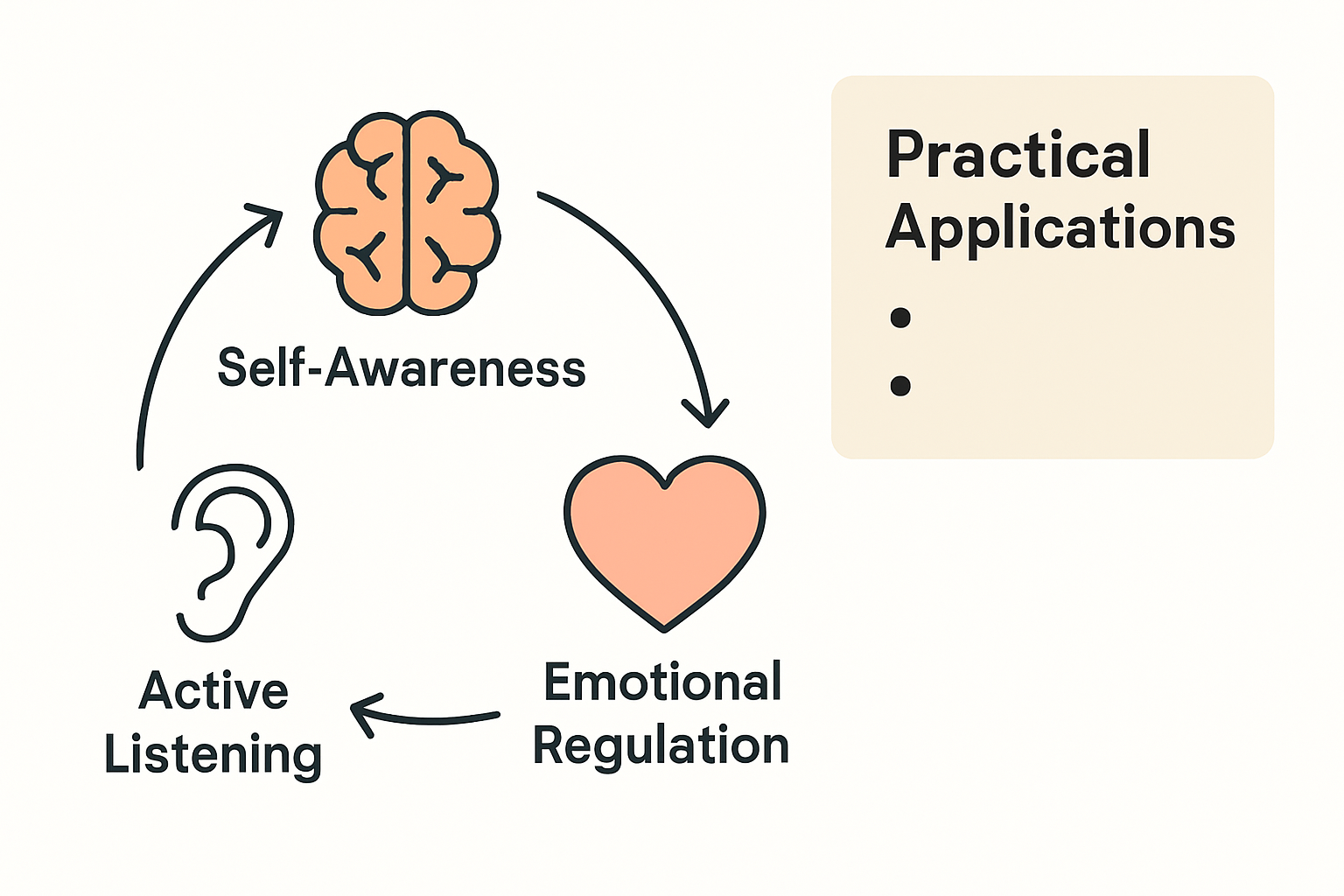
Ultimately, core mindfulness skills are not about achieving perfection but maintaining a continuous growth mindset. Leaders who embrace these practices learn to respond rather than react, understand the deeper dynamics of their teams, and create meaningful connections that transcend conventional management techniques. The journey of mindful leadership is an ongoing process of personal and professional development, where self-awareness becomes the foundation for transformative leadership.
Mindfulness Practices That Enhance Leadership
Leadership effectiveness hinges on intentional practices that cultivate mental clarity and emotional resilience. Mindfulness techniques offer powerful strategies for leaders to develop their inner capacity, transforming how they approach challenges and engage with their teams. Specific mindfulness practices can dramatically improve leadership skills by providing tools for emotional regulation, strategic thinking, and interpersonal connection.
Leaders can integrate several key mindfulness practices into their daily routine:
- Two-Minute Centering Breaths: Quick breathing exercises to reset mental focus
- Daily Meditation Sessions: 10-minute practices to enhance emotional awareness
- Mindful Listening: Intentional engagement without immediate judgment
- Reflective Journaling: Documenting insights and emotional patterns
- Body Scan Techniques: Developing physical and emotional self-awareness
The most transformative mindfulness practices go beyond simple stress reduction. They create a fundamental shift in leadership approach, enabling professionals to respond strategically rather than react impulsively. By developing consistent mindfulness habits, leaders can cultivate deeper self-understanding, improve decision-making processes, and create more authentic connections with their teams.
Successful implementation of mindfulness practices requires commitment and patience. Leaders must approach these techniques not as quick fixes, but as ongoing developmental tools that evolve with personal and professional growth. The goal is not perfection, but progressive improvement in emotional intelligence, communication skills, and organizational awareness. Through dedicated practice, mindfulness becomes a powerful catalyst for transformative leadership, enabling professionals to lead with greater clarity, compassion, and strategic insight.
Impact of Mindfulness on Workplace Culture
Workplace culture transforms fundamentally when mindfulness becomes an intentional organizational practice. Research demonstrates how mindful leadership enhances focus, awareness, and interpersonal presence within professional environments, creating more collaborative and emotionally intelligent organizational systems.
The profound cultural shifts emerge through several key dimensions:
- Improved communication and transparency
- Enhanced emotional intelligence across teams
- Reduced workplace stress and conflict
- Increased employee engagement and retention
- Greater adaptability during organizational changes
A comprehensive study of senior leaders revealed that consistent mindfulness practices can dramatically reshape organizational dynamics. By dedicating just ten minutes daily to mindfulness techniques, leaders can develop remarkable improvements in critical interpersonal skills like empathy, resilience, and strategic thinking. These individual transformations cascade through organizational structures, creating more supportive, responsive, and innovative workplace environments.

Ultimately, mindfulness in workplace culture represents more than a trendy intervention—it is a fundamental reimagining of human interaction. Organizations that embrace these practices move beyond traditional hierarchical models, creating spaces where psychological safety, genuine connection, and continuous personal growth become core organizational values. The result is not just improved performance, but a more humane, compassionate approach to professional development that recognizes the full potential of human capabilities.
Benefits and Pitfalls of Mindful Leadership
Mindful leadership represents a nuanced approach to organizational management that offers profound opportunities and significant challenges. Integrating ethical principles with contemporary organizational practices reveals a complex landscape of potential transformations and potential limitations in leadership development.
The key benefits of mindful leadership include:
- Enhanced trust and collaborative dynamics
- Improved emotional intelligence
- Greater organizational sustainability
- Reduced workplace stress
- More authentic interpersonal communication
- Increased adaptability during organizational changes
Emerging research explores the intricate balance between mindful practices and potential implementation challenges, highlighting that mindfulness is not a universal solution but a sophisticated approach requiring careful navigation. Leaders must recognize that mindful leadership demands ongoing personal development, self-reflection, and a commitment to continuous learning. The potential pitfalls emerge when leaders approach mindfulness as a quick fix rather than a profound personal and organizational transformation.
Successful mindful leadership requires a delicate balance between theoretical understanding and practical application. Organizations must create supportive environments that allow leaders to develop authentic mindfulness practices without transforming them into performative exercises. The most effective approaches integrate mindfulness as a genuine commitment to human potential, recognizing that true leadership transcends traditional hierarchical models and focuses on cultivating genuine human connections, empathy, and shared organizational purpose.
Transform Your Leadership with Mindfulness Today
The article highlights how mindful leadership unlocks emotional intelligence, strategic clarity, and genuine connection—qualities essential for overcoming common leadership challenges like stress, reactive decision making, and limited team engagement. If you are striving to cultivate focus, compassion, and authenticity in your leadership style, these goals are within reach through dedicated mindfulness practice and guidance.

Discover how mindfulness coaching with Monika Varela, a seasoned psychologist and mindfulness expert, can help you build the focus and emotional resilience needed to transform your leadership approach. By integrating proven mindfulness techniques such as daily meditation and mindful listening, you accelerate your growth from reactive management to responsive leadership. Do not wait to enhance your organizational impact and workplace culture. Visit Monikavarela.com now to explore tailored coaching, workshops, and training that support your continuous development journey and make mindful leadership your new reality.
Frequently Asked Questions
What is mindfulness in leadership?
Mindfulness in leadership refers to the practice of maintaining intentional awareness of present experiences without judgment, allowing leaders to observe thoughts, emotions, and organizational dynamics with clarity and compassion.
How can mindfulness enhance a leader’s effectiveness?
Mindfulness can enhance a leader’s effectiveness by improving emotional regulation, strategic decision-making, interpersonal communication, and empathy toward team members, fostering a more collaborative work environment.
What are some practical mindfulness techniques for leaders?
Some practical mindfulness techniques for leaders include brief centering breaths, daily meditation, mindful listening, reflective journaling, and body scan practices, helping them to cultivate emotional resilience and mental clarity.
What impact does mindfulness have on workplace culture?
Mindfulness can fundamentally transform workplace culture by improving communication, reducing stress, enhancing emotional intelligence, and increasing employee engagement, resulting in a more adaptive and supportive environment.
Recommended
- Best 7 Mindfulness Tools for Professionals – Expert Comparison 2025 – Mónika Varela
- What Are Mindfulness Workshops? Complete Guide 2024 – Mónika Varela
- Why Mindfulness Matters in 2025: Complete Guide – Mónika Varela
- Mastering Mindfulness for Professionals: Complete Guide – Mónika Varela
- INUSUAL | 7 competencias claves de líderes para transformar equipos
- 7 Ways Cannabis and Mindfulness Enhance Daily Wellness – California Blendz





Aún no hay comentarios, ¡añada su voz abajo!