


More than 80 percent of American organizations are shifting toward holistic mental wellness strategies by 2025. For leaders and mental health professionals in Latin America and Spain, this transformation highlights an urgent need to rethink old approaches. As mental wellness becomes a core organizational value, learning from American innovations can inspire customized frameworks that address local workplace challenges while supporting employee resilience and reducing stigma.
Table of Contents
- Defining Mental Wellness in 2025 Context
- Types of Support: Digital, Hybrid, and In-Person
- Emerging Workplace Trends and Innovations
- Leadership Roles in Promoting Wellbeing
- Practical Risks, Barriers, and Solutions
Key Takeaways
| Point | Details |
|---|---|
| Holistic Approach to Mental Wellness | By 2025, mental wellness will be integrated, focusing on societal, organizational, and individual dimensions for comprehensive employee well-being. |
| Diverse Support Models | The emergence of digital, hybrid, and in-person support frameworks recognizes the need for personalized mental health solutions across different employee preferences. |
| Leadership’s Critical Role | Leaders are essential in fostering a culture of psychological safety and support, significantly influencing overall employee resilience and engagement. |
| Addressing Systemic Barriers | Organizations must confront stigma, access disparities, and technological impacts on mental health through proactive, tailored strategies that promote wellness. |
Defining Mental Wellness in 2025 Context
Mental wellness in 2025 represents a holistic, proactive paradigm shift far beyond traditional understanding of workplace psychological health. Global workplace wellness trends now recognize mental wellness as an interconnected system involving societal, organizational, and individual dimensions.
The emerging framework integrates physical, emotional, and cognitive health into a comprehensive approach. Organizations are moving from reactive problem management to preventative, systemic strategies that address mental wellness holistically. Key drivers include destigmatization of mental health discussions, understanding economic impacts, and developing integrated workplace policies that support comprehensive employee well-being.
By 2025, mental wellness will be characterized by precision and proactivity. Precision mental health initiatives emphasize brain health, longevity, and systemic approaches that transform mental wellness from a peripheral concern to a foundational organizational priority. This means developing workplace environments that inherently support psychological resilience, emotional intelligence, and continuous personal development.
Pro Tip: Workplace Mental Health Assessment: Conduct quarterly comprehensive mental wellness evaluations that measure not just stress levels, but overall psychological ecosystem health, including employee engagement, purpose alignment, and cognitive flexibility.
Types of Support: Digital, Hybrid, and In-Person
Workplace mental health support is evolving into a multifaceted ecosystem that recognizes no single approach fits all employees. Digital mental health interventions are transforming traditional support models, offering unprecedented accessibility and scalability across diverse organizational environments.

Three primary support models are emerging in 2025: digital, hybrid, and in-person approaches. Digital solutions include mobile apps, virtual counseling platforms, and online self-assessment tools that provide immediate, anonymous mental health resources. Hybrid models strategically combine digital convenience with periodic in-person interactions, creating flexible support frameworks that adapt to individual employee preferences and needs.
Comprehensive workplace mental health strategies now emphasize personalization, recognizing that effective support requires matching intervention styles with individual psychological needs. In-person support remains critical for complex emotional challenges, providing deep therapeutic connections that digital platforms cannot fully replicate. The most advanced organizations are developing integrated support systems that seamlessly transition between digital and face-to-face interventions based on employee requirements.
Here’s a comparison of the three main workplace mental health support models in 2025:
| Model Type | Key Advantages | Best for | Limitations |
|---|---|---|---|
| Digital | Immediate access, anonymity | Large or remote teams | Limited deep personal connection |
| Hybrid | Flexible, adaptable | Mixed-preference environments | Can be complex to coordinate |
| In-Person | Deep relationships, empathy | High-need emotional support | Less scalable, resource intensive |
Pro Tip: Support Model Flexibility: Design mental health support frameworks that allow employees to dynamically switch between digital and in-person resources, ensuring personalized, accessible mental wellness pathways that respect individual comfort levels and communication preferences.
Emerging Workplace Trends and Innovations
Global workplace wellbeing initiatives are rapidly transforming organizational approaches to mental health, moving beyond traditional reactive models to proactive, strategic interventions. This shift represents a fundamental reimagining of workplace culture, where mental wellness becomes a core business strategy rather than a peripheral consideration.
Key emerging trends include the integration of artificial intelligence and digital health solutions to personalize mental health support. Advanced organizations are implementing predictive analytics to identify potential mental health risks, developing early intervention strategies that can prevent burnout and support employee resilience. Innovative approaches now blend technological solutions with human-centered design, creating support systems that are both technologically sophisticated and deeply empathetic.
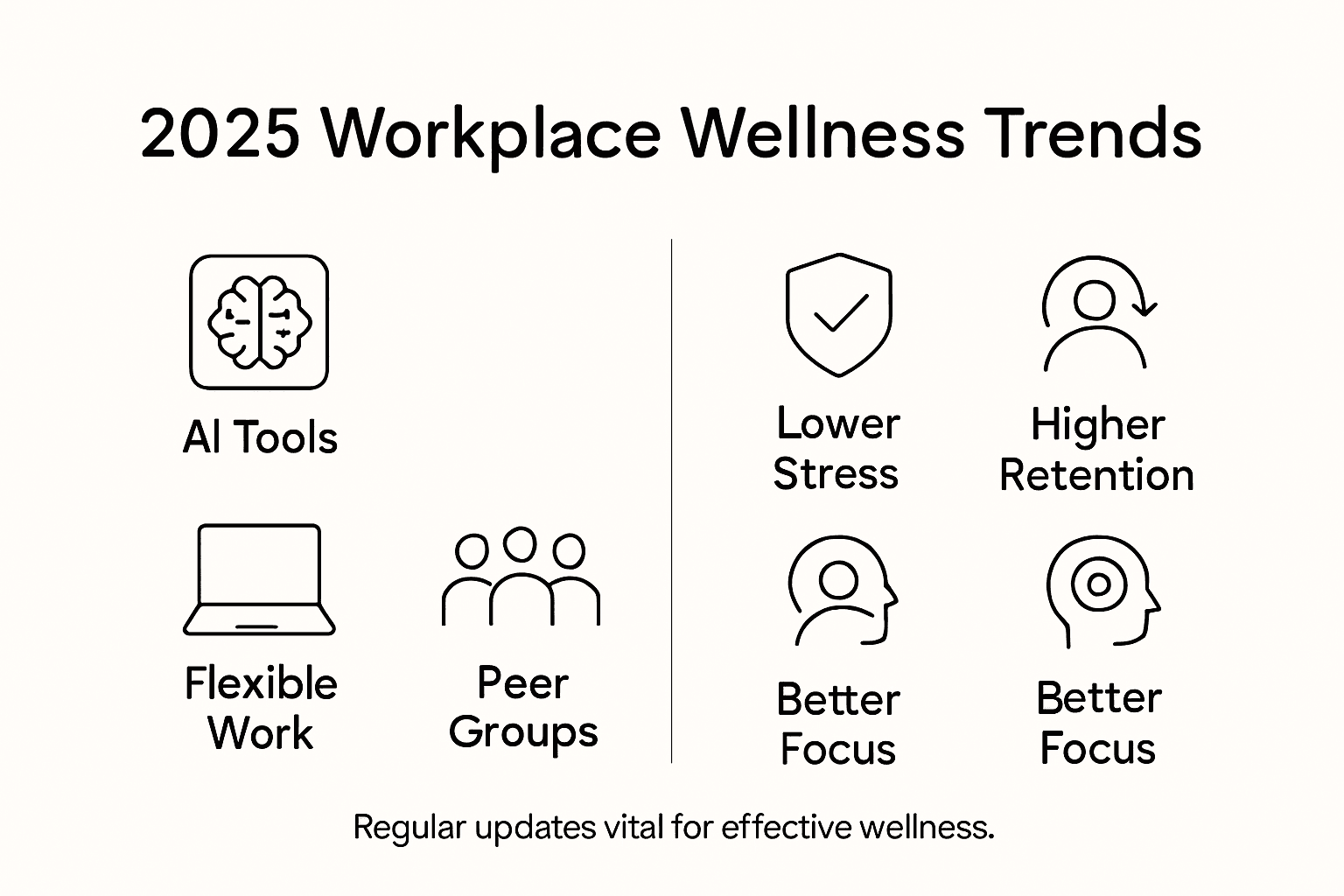
Inclusive leadership is becoming a critical component of mental wellness strategies. Organizations are recognizing that mental health support must be tailored to diverse workforce needs, considering factors like cultural background, neurodiversity, and individual communication preferences. This approach goes beyond traditional accommodation models, instead creating workplace environments that inherently support psychological safety, emotional intelligence, and continuous personal development.
Pro Tip: Trend Integration Strategy: Conduct quarterly organizational audits that assess the alignment between emerging mental health trends and your current workplace support infrastructure, ensuring your approach remains adaptive, responsive, and cutting-edge.
Leadership Roles in Promoting Wellbeing
Mental health leadership strategies are transforming workplace cultures by recognizing leadership’s profound impact on organizational mental wellness. Modern leaders are no longer passive observers but active architects of psychological safety, understanding that their behaviors and policies directly influence employee resilience, engagement, and overall organizational health.
Leadership’s role extends beyond traditional management functions, requiring a holistic approach to wellbeing. This involves creating environments that normalize mental health discussions, provide accessible support resources, and demonstrate genuine commitment to employee psychological welfare. Effective leaders must develop emotional intelligence, actively model healthy stress management techniques, and create transparent communication channels that reduce stigma around mental health challenges.
Organizational wellbeing frameworks now emphasize a comprehensive approach integrating social, physical, mental, emotional, and spiritual dimensions of wellness. Leaders are expected to implement systemic changes that support employee development, recognize individual differences, and create adaptive workplace environments that respond dynamically to emerging mental health needs.
Pro Tip: Leadership Wellness Audit: Develop a quarterly self-assessment protocol that measures your leadership’s impact on workplace mental health, tracking tangible metrics like employee engagement, psychological safety indicators, and team resilience levels.
Practical Risks, Barriers, and Solutions
Workplace mental health frameworks reveal a complex landscape of challenges that organizations must strategically navigate. The primary barriers include persistent workplace stigma, uneven access to mental health resources, chronic stress environments, and systemic communication breakdowns that prevent meaningful intervention and support.
Technological transformation introduces additional complexity, with emerging risks related to data privacy, digital burnout, and the psychological impact of constant connectivity. Organizations must develop nuanced approaches that balance technological efficiency with human psychological needs. This involves creating flexible policies that protect employee privacy, establish clear digital boundaries, and provide robust support mechanisms for managing technology-induced stress and potential mental health challenges.
Global workplace wellness strategies emphasize a multilevel approach to addressing mental health barriers. This requires collaborative interventions that operate simultaneously at individual, organizational, and societal levels. Successful approaches integrate comprehensive risk assessment, tailored mental health interventions, and adaptive policy frameworks that can respond dynamically to evolving workplace psychological challenges.
This table summarizes critical workplace mental wellness risks and proactive solutions for 2025:
| Main Risk | Underlying Cause | Example Solution |
|---|---|---|
| Persistent stigma | Cultural taboos | Awareness campaigns |
| Digital burnout | Excessive tech use | Enforce digital boundaries |
| Data privacy concerns | Increased data collection | Transparent data use policies |
| Communication breakdowns | Systemic process gaps | Leadership training initiatives |
Pro Tip: Risk Mitigation Protocol: Develop a systematic quarterly review process that proactively identifies potential mental health risks, maps emerging workplace stressors, and creates targeted intervention strategies before these challenges escalate into more significant organizational problems.
Empower Workplace Mental Wellness with Expert Guidance from Monika Varela
The evolving landscape of mental wellness in 2025 demands precision, proactive leadership, and flexible support models. If your organization faces challenges like persistent stigma, digital burnout, or the need for integrated mental health strategies, you do not have to navigate this alone. Monika Varela combines psychological expertise with mindful communication coaching to help individuals and organizations build resilient, inclusive environments that promote psychological safety and continuous growth.
Discover personalized solutions ranging from psychotherapy and mindfulness workshops to corporate training tailored for diverse workplace needs. Take the first step toward transforming your mental wellness approach by visiting Monika Varela’s professional site . Explore how her expertise can help you implement strategic mental health frameworks aligned with the latest 2025 trends and start fostering lasting wellbeing today.
Frequently Asked Questions
What is mental wellness in the context of 2025?
Mental wellness in 2025 is a holistic approach integrating physical, emotional, and cognitive health. It emphasizes proactive strategies, organizational support, and individualized interventions to enhance employee well-being.
What types of mental health support models are expected in workplaces by 2025?
The three primary mental health support models are digital, hybrid, and in-person. Digital solutions offer immediate access, hybrid models blend in-person and digital support, and in-person options are critical for deep emotional connections.
How can organizations effectively promote mental wellness among employees?
Organizations can promote mental wellness by implementing comprehensive strategies that include destigmatizing mental health discussions, providing accessible resources, and fostering inclusive leadership that actively supports diverse employee needs.
What are some emerging trends in workplace mental wellness for 2025?
Emerging trends include the use of artificial intelligence for personalized support, a focus on inclusive leadership, and proactive strategies that address diverse workforce needs and enhance psychological safety.






Aún no hay comentarios, ¡añada su voz abajo!