


Every American professional knows how challenging it can be to hold an audience’s attention during a presentation. In a sea of distractions, the ability to connect and communicate effectively sets successful speakers apart. Research finds that over 80 percent of presentation success comes from understanding your audience and delivering content with purpose. This guide walks you through simple and proven steps to help you create presentations that resonate and drive real engagement.
Table of Contents
- Step 1: Assess Your Presentation Intentions And Audience
- Step 2: Craft Mindful Content Tailored To Your Goals
- Step 3: Practice Mindful Delivery Techniques
- Step 4: Engage Your Audience With Presence
- Step 5: Reflect And Improve Future Presentations
Quick Summary
| Key Point | Explanation |
|---|---|
| 1. Define your presentation goals clearly | Understand whether you aim to inform, persuade, or educate your audience to create targeted content. |
| 2. Tailor content to audience needs | Conduct demographic assessments to ensure your material is relevant and engaging for your specific audience. |
| 3. Practice mindful delivery techniques | Focus on nonverbal communication and authenticity to connect emotionally and invite engagement from listeners. |
| 4. Engage your audience actively | Use personal stories and questions to transform the presentation into a collaborative experience for your audience. |
| 5. Reflect on presentations for improvement | Document observations post-presentation to identify strengths and areas for growth in future talks. |
Step 1: Assess Your Presentation Intentions and Audience
Crafting an impactful presentation starts with understanding your core objectives and the people you’ll be addressing. Audience analysis involves more than just knowing who will be in the room it requires a strategic approach to connecting with your listeners.
Begin by clearly defining your presentation’s purpose. Ask yourself key questions: What specific outcome do you want to achieve? Are you aiming to inform, persuade, motivate, or educate? Next, conduct a thorough demographic assessment of your audience. Consider their professional background, knowledge level, potential interests, and potential challenges they might have with your content. For instance, a technical presentation to engineers will look dramatically different from one designed for marketing professionals or students.
Your goal is to create a presentation that feels personalized and relevant. Research your audience’s expectations, anticipate their questions, and structure your content to address their specific needs. This means tailoring your language, examples, and depth of information to match their expertise and engagement level. By doing this preparatory work, you transform your presentation from a generic lecture into a targeted communication experience.
Pro Tip: Always develop a quick pre presentation survey or informal poll to gather immediate insights about your audience’s background and expectations before you finalize your content.
Here is a summary of key factors to consider when tailoring your presentation to different types of audiences:
| Audience Type | Preferred Communication Style | Key Motivators | Common Challenges |
|---|---|---|---|
| Technical Professionals | Data-driven, detailed | Accurate information | Avoiding too much jargon |
| Marketing Professionals | Visual, creative | Innovation, engagement | Balancing substance and style |
| Students | Interactive, clear | Real-world relevance | Maintaining attention |
| Executives | Concise, strategic | Bottom-line results | Time constraints |
Step 2: Craft Mindful Content Tailored to Your Goals
Transforming your presentation from ordinary to extraordinary requires intentional content design that aligns precisely with your core objectives. Presentation content structuring is an art that demands strategic thinking and purposeful communication.
Begin by creating a clear content blueprint that directly supports your presentation goals. Each slide, example, and narrative element should serve a specific purpose. Audience knowledge assessment is crucial when developing your material. Ask yourself critical questions: What core message must be communicated? What actionable insights will your audience gain? What emotional or intellectual response do you want to evoke?

Mindful content creation means being selective and intentional. Remove any information that does not directly contribute to your central narrative. Use storytelling techniques that make complex ideas accessible and engaging. Integrate visual aids that illuminate your points without overwhelming your audience. Your goal is to create a presentation that feels both informative and effortless a seamless journey that guides your listeners toward understanding and inspiration.
Pro Tip: Always create a content outline before building slides, ensuring every element has a clear purpose and contributes meaningfully to your overall presentation objective.
Step 3: Practice Mindful Delivery Techniques
Delivering a powerful presentation goes far beyond memorizing words it requires mastering the subtle art of mindful communication. Effective presentation strategies involve understanding how your voice, body language, and presence can transform your message.
Focus on developing a natural and authentic delivery style that connects deeply with your audience. Nonverbal communication research reveals that your physical presence communicates as much as your words. Practice maintaining open body posture, making genuine eye contact, and using intentional gestures that reinforce your key points. Your voice is a powerful instrument modulate its tone, pace, and volume to maintain engagement. Pause strategically to allow important concepts to resonate and give your audience time to absorb critical information.
Mindful delivery means being fully present in the moment. Cultivate a sense of calm and confidence by practicing deep breathing techniques before your presentation. Visualize yourself delivering the content with clarity and purpose. Remember that nervousness is natural your goal is not to eliminate it completely but to channel that energy into passionate and authentic communication.
Pro Tip: Record yourself practicing the presentation and review the recording with a critical yet compassionate eye, focusing on improving your natural communication style rather than achieving perfection.
The following table compares the impact of various mindful delivery techniques on audience engagement:
| Delivery Technique | Audience Perception | Engagement Outcome |
|---|---|---|
| Eye contact | Personal connection | Increased attentiveness |
| Modulated voice | Dynamic communication | Sustained interest |
| Purposeful movement | Energy and confidence | Enhanced message retention |
| Storytelling | Relatable experience | Stronger emotional response |
Step 4: Engage Your Audience with Presence
Creating a magnetic presentation requires more than just delivering information it demands creating a genuine connection with your listeners. Presentation quality research reveals that the first few moments are critical in capturing and maintaining audience attention.
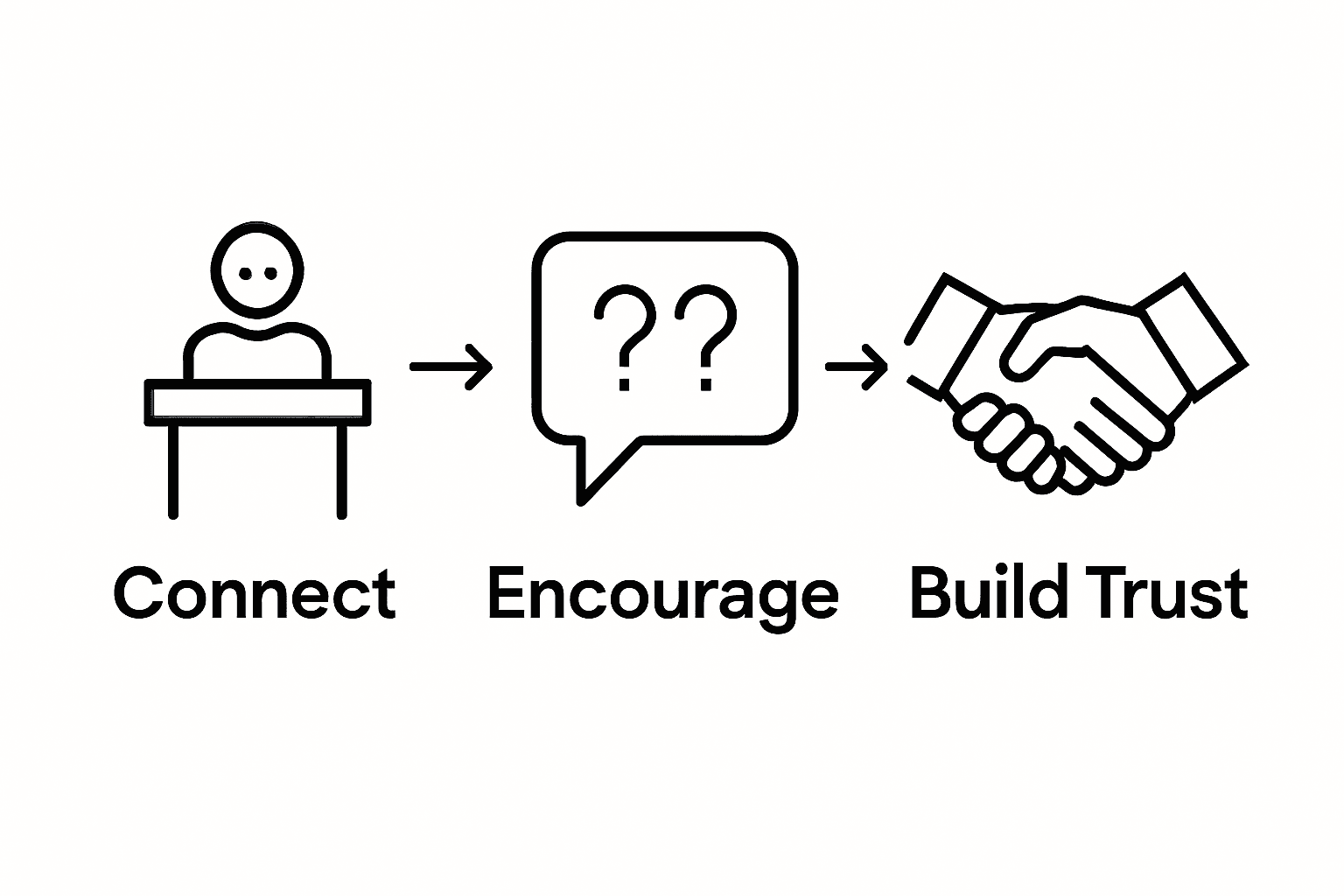
Understand that engagement is a dynamic interaction. Nonverbal communication analysis demonstrates that your physical presence speaks volumes before you even utter a word. Make intentional eye contact with different audience members create a sense of individual connection. Move purposefully around the space use gestures that naturally emphasize your points. Your goal is to create a sense of intimacy and immediacy that transforms passive listeners into active participants.
Authenticity is your most powerful engagement tool. Speak from genuine passion and personal experience. Share stories that illustrate your points rather than reciting dry facts. Allow moments of vulnerability show your human side. Invite audience participation through thoughtful questions or brief interactive moments. This approach turns your presentation from a monologue into a shared conversation where everyone feels involved and valued.
Pro Tip: Practice the art of genuine curiosity by preparing three engaging questions that invite audience reflection and create an immediate sense of collaborative learning.
Step 5: Reflect and Improve Future Presentations
Growing as a presenter requires more than delivering a single talk it demands a commitment to continuous self improvement and thoughtful analysis. Audience response analysis provides powerful tools for understanding how your message truly resonates with listeners.
Create a systematic reflection process immediately after each presentation. Document your observations honestly and comprehensively. Note what worked well what felt challenging and any specific moments where you sensed audience engagement or potential disconnection. Listen to any recorded feedback or watch video recordings with a compassionate yet critical eye. Pay attention to your body language vocal modulation and the flow of your narrative. Seek feedback from trusted colleagues or audience members who can provide constructive insights about your performance.
Treat each presentation as a learning opportunity rather than a final performance. Develop a personal improvement framework where you track specific skills you want to enhance. Set measurable goals for your next presentation such as reducing filler words improving storytelling techniques or increasing audience interaction. Remember that mastery is a journey of consistent small improvements not sudden transformations. Embrace vulnerability and view each presentation as a chance to grow both professionally and personally.
Pro Tip: Maintain a dedicated presentation reflection journal where you document your insights progress and specific techniques you want to implement in future talks.
Elevate Your Presentation Skills with Mindful Coaching
Are you ready to transform nervous, ordinary presentations into powerful moments of authentic connection and professional impact? This guide highlights key challenges such as crafting purposeful content, mastering mindful delivery, and engaging audiences with presence. If you want to overcome common obstacles like anxiety, lack of clarity, or limited engagement, our expert services can help you align your communication with your core intentions.
Discover how Monika Varela’s personalized mindfulness and public speaking coaching can guide you in creating presentations that resonate deeply with your listeners. Explore insights and updates in our Noticias archivos – Mónika Varela to stay informed about the latest strategies. Start your journey toward confident, mindful presentations today by visiting Monika Varela and unlocking access to therapeutic support, corporate training, and tailored workshops. Take the next step to captivate your audience with clarity and passion now.
Frequently Asked Questions
How can I assess my audience before giving a presentation?
To assess your audience, create a quick pre-presentation survey or informal poll to gather insights about their background and expectations. This will help you tailor your content to better meet their needs and interests.
What content structure should I use for an effective presentation?
Begin by creating a clear outline that directly supports your presentation goals. Ensure that each slide or topic serves a specific purpose, focusing on key messages and actionable insights.
What delivery techniques can I use to engage my audience?
Use techniques such as maintaining eye contact, modulating your voice, and incorporating storytelling into your presentation. Practicing these methods can enhance audience attention and improve message retention.
How do I invite audience participation during my presentation?
Invite audience participation by preparing engaging questions or brief interactive moments throughout your talk. This transforms your presentation into a conversation, making it more inclusive and dynamic.
What should I do after my presentation to improve for next time?
After your presentation, reflect on your performance by documenting what worked well and where you faced challenges. Set specific improvement goals for your next presentation, such as reducing filler words or enhancing audience interaction.
How can mindfulness enhance my delivery during a presentation?
Mindfulness can enhance your delivery by helping you remain present and calm, allowing for authentic communication with your audience. Practice deep breathing techniques before your talk to channel any nervous energy into confident and passionate delivery.





Aún no hay comentarios, ¡añada su voz abajo!