


Nearly 80 percent of American adults say stress regularly affects their health. With demanding workdays and constant digital noise, professionals across the United States face mounting mental pressure that demands new solutions. Learning about meditation and its role in stress relief could be the difference between chronic overwhelm and true balance, especially as more American workers seek practical ways to restore focus and emotional well-being.
Table of Contents
- Defining Meditation and Stress Relief
- Types of Meditation for Managing Stress
- Scientific Evidence Behind Meditation Benefits
- Integrating Meditation Into Daily Routine
- Common Mistakes and How to Avoid Them
Key Takeaways
| Point | Details |
|---|---|
| Meditation Reduces Stress | Regular meditation practice can significantly lower stress levels and improve mental well-being by promoting relaxation and focus. |
| Variety of Techniques | Professionals should explore various meditation techniques to find one that suits their preferences and lifestyle for optimal stress relief. |
| Integration into Daily Life | Incorporating short meditation sessions into daily routines can enhance mindfulness and support mental wellness without requiring extensive time commitment. |
| Manage Expectations | Practitioners should approach meditation with patience and realism, understanding that progress is gradual and requires consistent practice. |
Defining Meditation and Stress Relief
Meditation represents a powerful mental technique designed to help professionals manage stress by redirecting mental focus and promoting inner calm. At its core, meditation is a mind-body practice that promotes relaxation and inner peace by systematically training attention and eliminating chaotic thought patterns.
The practice fundamentally works by creating a deliberate mental space where individuals can observe their thoughts without judgment. When practiced consistently, meditation triggers a profound physiological response. Research indicates that meditation can ease stress by inducing a relaxation response that decreases metabolism, lowers blood pressure, and improves heart rate . These changes represent significant benefits for professionals experiencing chronic biological workplace stress.
Meditation techniques vary widely, but most share common elements: focused breathing, intentional awareness, and systematic mental training. Professionals can choose from multiple approaches, including mindfulness meditation, transcendental meditation, and guided visualization. Each method aims to interrupt stress cycles by creating mental distance from anxious thoughts and promoting a sense of present-moment awareness.
Pro Tip: Start Small: Begin with just 5 minutes of daily meditation, using a quiet space and comfortable seated position. Consistency matters more than duration when establishing a new mental wellness practice.
Types of Meditation for Managing Stress
Professionals seeking stress relief have multiple meditation approaches to choose from, each offering unique benefits for mental wellness. Mindfulness-Based Stress Reduction (MBSR) represents a comprehensive eight-week program that combines meditation techniques designed to help individuals develop more effective stress management strategies.
The most prominent meditation types for stress management include mindfulness meditation, transcendental meditation, loving-kindness meditation, and Mindfulness-Based Pain Management (MBPM), which adapts core concepts from MBSR and Mindfulness-Based Cognitive Therapy. Mindfulness meditation focuses on present-moment awareness, encouraging practitioners to observe thoughts without judgment. Transcendental meditation uses silent mantra repetition to achieve deep relaxation, while loving-kindness meditation cultivates compassionate emotions toward oneself and others.
Each meditation approach offers distinct advantages for professionals. Mindfulness practices help interrupt reactive stress patterns, transcendental techniques promote deep mental rest, and loving-kindness meditations enhance emotional resilience. The key is finding a method that resonates with individual preferences and lifestyle demands. Professionals should experiment with different techniques to discover which approach provides the most significant stress reduction and mental clarity.
Here is a comparison of popular meditation techniques used for stress relief:
| Meditation Type | Main Approach | Typical Duration | Key Benefits |
|---|---|---|---|
| Mindfulness Meditation | Observing thoughts non-judgmentally | 5-30 minutes | Reduces anxiety and stress |
| Transcendental Meditation | Silent mantra repetition | 15-20 minutes | Deep relaxation, clarity |
| Loving-Kindness Meditation | Generating compassion and goodwill | 10-20 minutes | Improves mood, emotional balance |
| Guided Visualization | Imagining calming scenes or journeys | 5-20 minutes | Enhances focus, mental imagery |
Pro Tip: Technique Exploration: Try 2-3 different meditation styles for at least two weeks each before selecting your preferred approach. Keep a brief journal to track your emotional and physical responses during practice.
Scientific Evidence Behind Meditation Benefits
Meditation has emerged as a scientifically validated approach to managing stress, with robust research demonstrating its profound impact on mental and physiological functioning. A groundbreaking randomized clinical trial revealed significant improvements in spontaneous brain activities, specifically highlighting enhanced interoceptive brain capacity, which plays a critical role in emotional regulation and anxiety management.
Neurological studies have consistently shown that regular meditation practice produces measurable changes in brain structure and function. Researchers have documented increased gray matter density in regions associated with learning, memory, emotional regulation, and perspective taking. These neuroplastic changes suggest that meditation is not merely a temporary relaxation technique, but a powerful tool for long-term mental wellness and cognitive enhancement.

Beyond neurological benefits, scientific research has documented meditation’s impact on multiple physiological systems. Studies demonstrate meditation can lower cortisol levels, reduce inflammatory markers, improve immune system functioning, and decrease blood pressure. These biological changes translate into tangible health outcomes, including reduced risk of cardiovascular disease, improved stress resilience, and enhanced overall mental health.
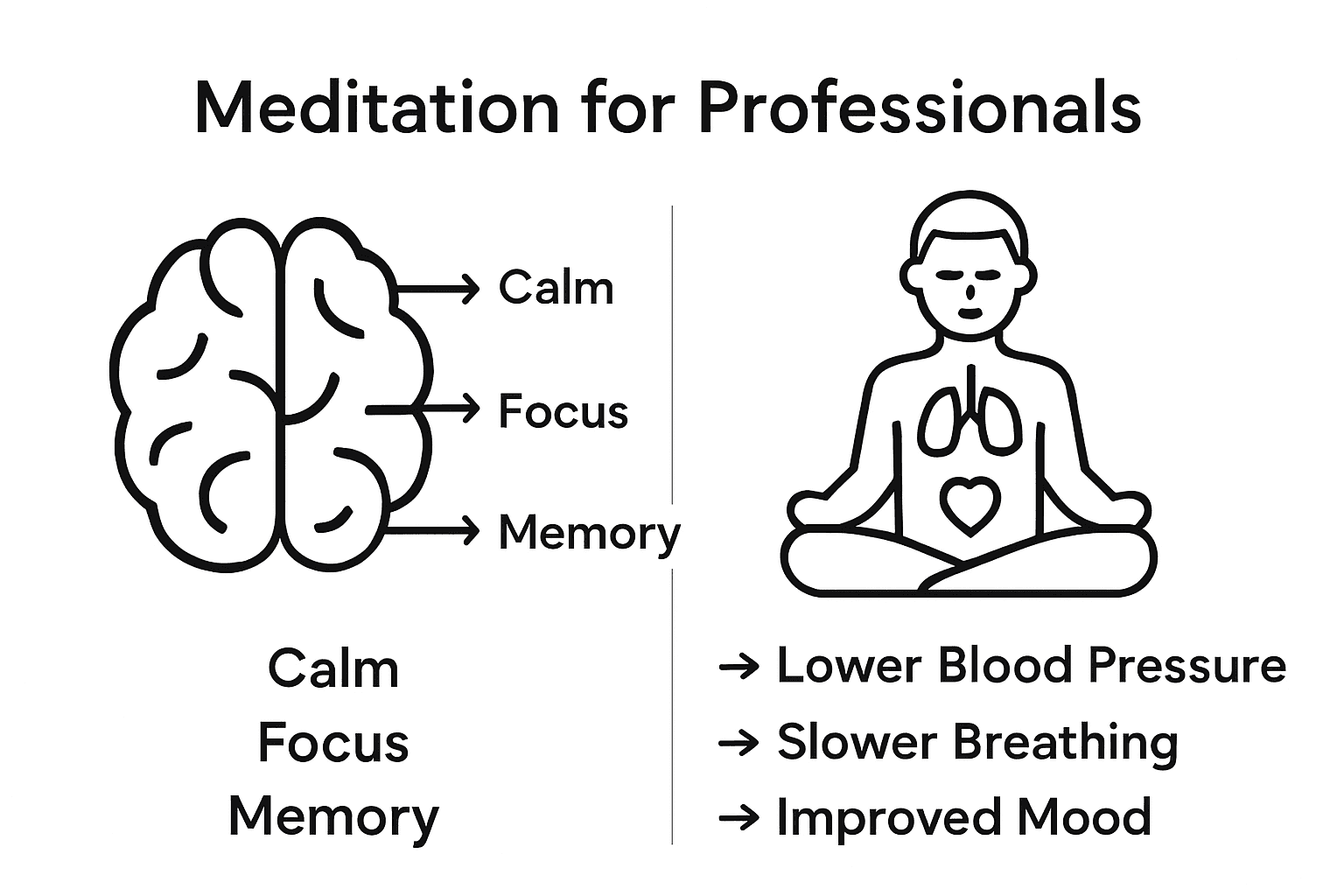
The following summary highlights meditation’s scientifically proven physical and mental health impacts:
| Benefit Category | Example Improvement | Clinical Evidence |
|---|---|---|
| Physiological Health | Lowered blood pressure | Multiple controlled studies |
| Brain Function | Increased gray matter density | MRI-based research |
| Stress Hormones | Reduced cortisol levels | Randomized trials |
| Emotional Regulation | Enhanced anxiety management | Published peer-reviewed data |
Pro Tip: Evidence-Based Practice: Select meditation techniques supported by scientific research, and track your personal progress using objective metrics like heart rate variability or stress hormone levels. Consistency and systematic observation are key to understanding your individual meditation benefits.
Integrating Meditation Into Daily Routine
Meditation can be practiced seamlessly within daily life, transforming seemingly mundane moments into opportunities for mindfulness and stress reduction. Professionals can incorporate meditation techniques during routine activities like commuting, waiting in line, or between meetings, making it an accessible strategy for mental wellness.
Regular meditation practice can effectively slow breathing, reduce blood pressure, relax muscles, and improve focus and concentration. Successful integration requires strategic planning and creating micro-moments of mindfulness throughout the day. Techniques like breath awareness during computer work, short guided meditations during lunch breaks, and mindful walking can help professionals maintain consistent mental equilibrium without disrupting workflow.
Effective meditation integration involves establishing realistic expectations and creating flexible routines. Professionals might start with 3-5 minute sessions, gradually increasing duration as comfort and skill develop. Key strategies include setting smartphone reminders, using meditation apps, creating dedicated quiet spaces at home and work, and establishing consistent practice times that align with individual energy rhythms and schedule constraints.
Pro Tip: Habit Stacking: Anchor your meditation practice to an existing daily habit, like brewing morning coffee or completing your commute, to make the new practice feel more natural and sustainable.
Common Mistakes and How to Avoid Them
Many professionals make critical errors when beginning their meditation practice, primarily by harboring unrealistic expectations about immediate transformation. The most significant pitfall is anticipating instant results, which can lead to frustration and early abandonment of the practice. Understanding that meditation is a skill requiring consistent cultivation helps practitioners develop patience and resilience.
Contrary to common misconceptions, meditation does not require special equipment or elaborate settings. Professionals often erroneously believe they need dedicated meditation spaces, expensive cushions, or specific environments to practice effectively. In reality, meditation can be performed anywhere – during a commute, between meetings, or even while sitting at a desk. This accessibility removes significant barriers to consistent practice.
Another prevalent mistake involves judgment and self-criticism during meditation. Many practitioners become discouraged when their minds wander, interpreting this as failure. However, mental distraction is a normal part of the meditation process. Successful meditators learn to observe thoughts without attachment, gently redirecting focus without harsh self-evaluation. Developing this skill of non-judgmental awareness is crucial for long-term meditation success and stress management.
Pro Tip: Expectation Management: Treat meditation like a muscle-building exercise – progress is gradual, inconsistent, and requires persistent, compassionate practice. Celebrate small improvements and be kind to yourself during the learning process.
Discover How Meditation Can Transform Your Professional Life
Feeling overwhelmed by workplace stress or struggling to manage your anxiety and focus? This article highlights meditation as a proven method to reduce stress through mindfulness, intentional breathwork, and emotional regulation. If you recognize the challenge of maintaining calm amid the demands of a busy schedule, you are not alone. Many professionals face these exact struggles but find lasting relief by cultivating meditation practices tailored to their lifestyle.
Take control of your mental wellness today by exploring expert-guided mindfulness coaching and psychotherapy services at Monika Varela. With a deep understanding of stress management and meditation techniques backed by scientific research, Monika offers personalized support designed to fit your unique needs. Visit https://monikavarela.com now to start your journey toward improved focus, emotional balance, and lasting stress relief. Dont wait to empower yourself through evidence-based mindfulness strategies and professional guidance.
Frequently Asked Questions
What is meditation and how does it help with stress relief?
Meditation is a mind-body practice that promotes relaxation and inner peace by training attention and reducing chaotic thought patterns. It helps manage stress by inducing a relaxation response, which reduces metabolism, lowers blood pressure, and improves heart rate.
What are the different types of meditation techniques for stress management?
Common types of meditation for stress relief include mindfulness meditation, transcendental meditation, loving-kindness meditation, and guided visualization. Each technique offers unique benefits, such as enhancing emotional resilience or promoting deep relaxation.
How can I integrate meditation into my daily routine?
You can integrate meditation by creating small moments for mindfulness during everyday activities. Start with short sessions of 3-5 minutes, gradually increasing the duration. Consider using techniques like breath awareness during work or mindful walking during breaks.
What are some common mistakes to avoid when starting meditation?
Common mistakes include having unrealistic expectations, believing you need special equipment or a specific environment, and being self-critical about wandering thoughts. It’s important to approach meditation with patience and a non-judgmental attitude.





Aún no hay comentarios, ¡añada su voz abajo!