


More than sixteen percent of American adults report trying mindfulness-based practices to improve their mental health, and that number keeps rising. As people face growing stress and emotional challenges, curiosity about proven therapeutic approaches has never been higher. Mindfulness-based therapy stands out by guiding individuals to respond differently to their thoughts and emotions, offering simple strategies that anyone can apply for greater emotional clarity and resilience.
Table of Contents
- Defining Mindfulness-Based Therapy Principles
- Core Techniques And Therapeutic Approaches
- Major Variations And Related Methods
- Applications For Professionals And Individuals
- Benefits, Limitations, And Misconceptions
Key Takeaways
| Point | Details |
|---|---|
| Mindfulness-Based Therapy Principles | This therapy emphasizes intentional awareness, non-reactivity, and acceptance of thoughts and emotions without judgment. |
| Core Techniques | Common techniques include breath-focused meditation, body scans, and cognitive defusion strategies to enhance emotional regulation and psychological flexibility. |
| Applications for Professionals and Individuals | Mindfulness can enhance emotional intelligence and resilience in professionals while also benefiting individuals in managing stress, anxiety, and self-awareness. |
| Benefits and Misconceptions | Key benefits include stress reduction and improved emotional regulation, but mindfulness is often misunderstood as a means to eliminate thoughts rather than observe them. |
Defining Mindfulness-Based Therapy Principles
Mindfulness-based therapy represents a transformative approach to psychological healing that integrates ancient contemplative practices with modern clinical psychology. Rooted in centuries-old meditative traditions, this therapeutic methodology focuses on cultivating present-moment awareness and developing a non-judgmental relationship with one’s internal experiences. According to research from PubMed , these therapies fundamentally emerge from contemplative traditions and have been progressively adapted for clinical intervention.
At its core, mindfulness-based therapy emphasizes three critical principles: intentional awareness, non-reactivity, and acceptance. Practitioners learn to observe their thoughts, emotions, and bodily sensations without immediately attempting to change or suppress them. This approach differs dramatically from traditional cognitive therapies by encouraging individuals to develop a compassionate, curious stance toward their inner experiences rather than engaging in constant mental struggle or resistance.
The practical application of mindfulness-based therapy involves specific techniques designed to interrupt automatic psychological patterns. These techniques include:
- breath-focused meditation
- Body scan practices
- Mindful movement exercises
- Cognitive defusion strategies
- Sensory awareness training
By systematically training attention and cultivating meta-cognitive awareness, individuals can develop greater psychological flexibility.
 This means learning to respond to challenging situations with clarity and intentionality, rather than reacting from habitual emotional or cognitive patterns. The ultimate goal is not to eliminate difficult experiences, but to transform an individual’s relationship with those experiences, promoting holistic psychological well-being.
Core Techniques and Therapeutic Approaches
Mindfulness-based therapy encompasses a range of sophisticated techniques designed to help individuals develop deeper psychological awareness and emotional regulation. According to Psychology Choices, Mindfulness-Based Cognitive Therapy (MBCT) represents a powerful approach that integrates both formal and informal practices to address complex psychological challenges, particularly in treating mood disorders and preventing relapse.
The core therapeutic techniques in mindfulness-based interventions typically involve a multifaceted approach that combines structured meditation practices with cognitive strategies. These techniques are strategically designed to interrupt automatic thought patterns and cultivate a more balanced, observant mental state. Key approaches include:
- Sitting meditation practices
- Mindful breathing exercises
- Body scan techniques
- Cognitive decentering strategies
- Group-based therapeutic interactions
Practitioners utilize a combination of structured and unstructured mindfulness interventions to help individuals develop meta-cognitive awareness. This involves learning to observe thoughts and emotions without becoming entangled in them, creating a critical psychological distance that allows for more intentional responses to challenging experiences. The therapeutic process emphasizes developing skills that can be applied both during formal meditation sessions and in everyday life situations, enabling individuals to build resilience and emotional flexibility.
Major Variations and Related Methods
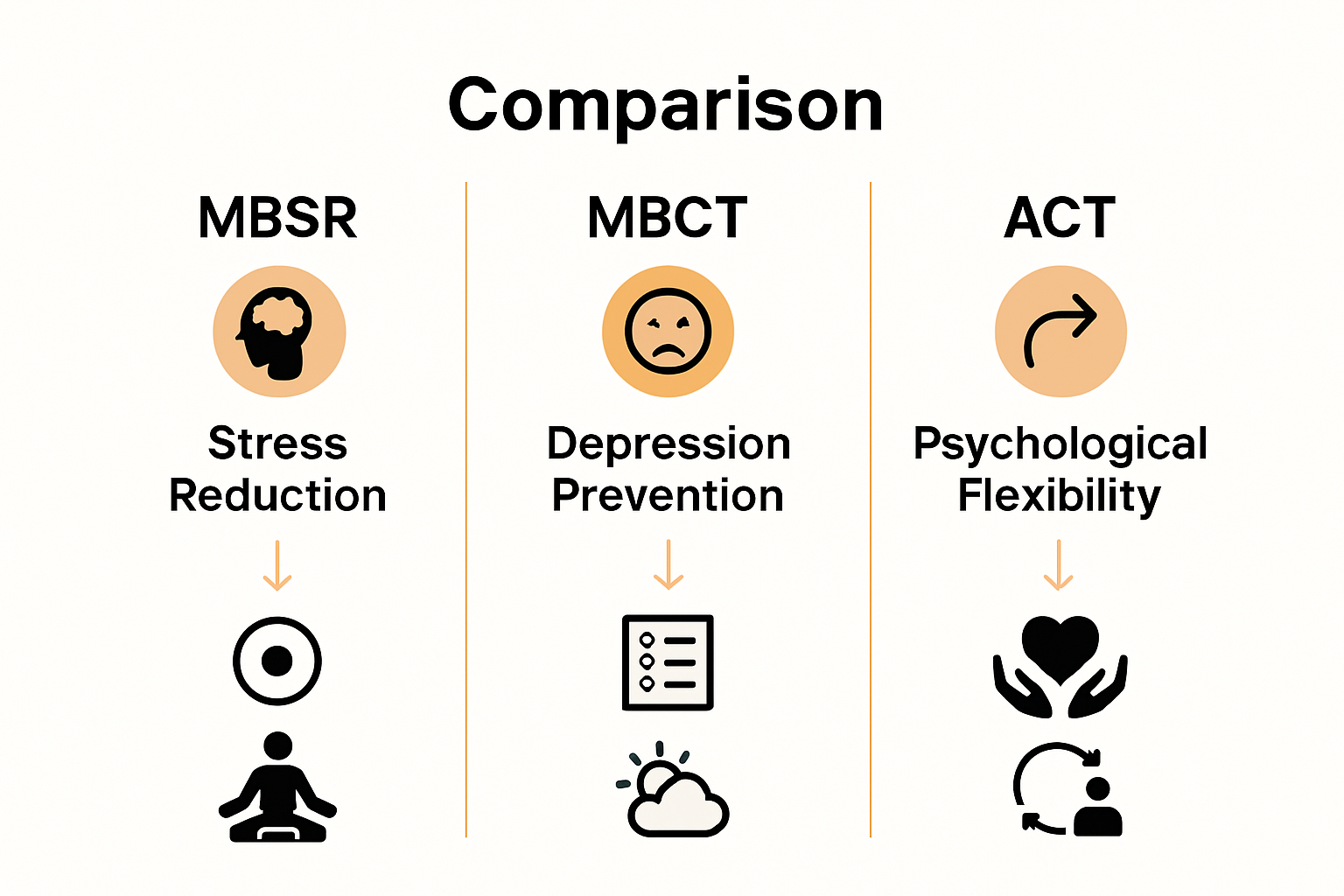
Mindfulness-based therapeutic approaches represent a diverse landscape of psychological interventions, each with unique philosophical foundations and practical applications. PubMed research highlights several significant variations, including Mindfulness-Based Stress Reduction (MBSR), Mindfulness-Based Cognitive Therapy (MBCT), Dialectical Behavior Therapy (DBT), and Acceptance and Commitment Therapy (ACT), each offering distinct methodological approaches to psychological healing.
These therapeutic variations share core mindfulness principles while diverging in their specific techniques and target populations. For instance, MBSR focuses on stress reduction through meditation and body awareness, while MBCT specifically targets recurring depression by interrupting negative cognitive patterns. Dialectical Behavior Therapy emphasizes emotional regulation for individuals with borderline personality disorder, and Acceptance and Commitment Therapy concentrates on developing psychological flexibility through value-driven behavioral changes.
Additionally, some integrative approaches blend mindfulness with somatic techniques. Wikipedia discusses the Hakomi Method, which exemplifies this integration by combining mindfulness principles with body-centered psychotherapy. Key characteristics of these holistic approaches include:
- Emphasizing mind-body connection
- Promoting nonviolent therapeutic interactions
- Integrating bodily sensations with psychological awareness
- Cultivating present-moment experiencing
- Supporting holistic personal transformation
Each variation offers unique therapeutic tools, allowing practitioners to select approaches most aligned with individual client needs, psychological conditions, and personal growth objectives. The diversity of mindfulness-based methods reflects the complex, multifaceted nature of human psychological experience, providing flexible frameworks for understanding and addressing mental health challenges.
Applications for Professionals and Individuals
Mindfulness-based therapies demonstrate remarkable versatility across professional and personal domains, offering transformative strategies for psychological and physiological well-being. PubMed research comprehensively reviews the empirical evidence supporting these interventions, highlighting their effectiveness in addressing a wide range of psychological and physical challenges.
For professionals, mindfulness techniques provide powerful tools for managing workplace stress, enhancing emotional intelligence, and improving overall performance. Mental health practitioners, corporate leaders, educators, and healthcare providers can integrate mindfulness practices to:
- Develop enhanced emotional regulation
- Improve communication and interpersonal skills
- Reduce burnout and compassion fatigue
- Increase cognitive flexibility
- Cultivate more authentic leadership approaches
Individuals seeking personal growth can leverage mindfulness-based approaches to address numerous life challenges. These techniques offer profound benefits for managing chronic stress, navigating complex emotional landscapes, and developing greater self-awareness. The adaptable nature of mindfulness interventions means they can be customized to address specific personal goals, whether that involves managing anxiety, improving relationships, or cultivating a more balanced and intentional approach to daily living. By practicing systematic awareness and non-judgmental observation, individuals can transform their relationship with challenging experiences, developing resilience and psychological flexibility that extends far beyond traditional therapeutic interventions.
Benefits, Limitations, and Misconceptions
PubMed research highlights the nuanced landscape of mindfulness-based therapies, revealing both substantial benefits and important practical considerations for clinicians and individuals. While these approaches offer transformative potential, understanding their scope and limitations is crucial for effective implementation and realistic expectations.
The key benefits of mindfulness-based interventions are profound and multifaceted:
- Significant stress reduction
- Enhanced emotional regulation
- Improved cognitive flexibility
- Increased self-awareness
- Better management of chronic pain and anxiety
- Reduced symptoms of depression
- Improved interpersonal relationships
However, common misconceptions can undermine the therapeutic process. Many individuals mistakenly believe mindfulness is about completely eliminating thoughts or achieving a perpetual state of calm. According to PubMed research, mindfulness actually involves observing thoughts without judgment, recognizing that mental fluctuations are natural and expected. This subtle distinction is critical – mindfulness is not about suppression, but about developing a compassionate, curious relationship with one’s inner experiences.
Practitioners and clients must also recognize the limitations of mindfulness-based approaches. These techniques are not a universal solution or a replacement for traditional medical or psychological treatments. They work best when integrated into a comprehensive care strategy, complementing other therapeutic interventions. Some individuals may find sustained mindfulness practice challenging, requiring patience, consistent effort, and potentially professional guidance to develop effective techniques that resonate with their unique psychological landscape.
Enhance Your Mindfulness Journey with Expert Guidance
Mindfulness-based therapy offers profound benefits like stress reduction and emotional regulation but mastering its principles of non-judgmental awareness and intentional response can be challenging on your own. If you find yourself struggling to cultivate consistent practice or seeking tailored strategies to deepen your psychological flexibility, Monika Varela’s expertise as a psychologist and mindfulness coach is here to support you. Her therapeutic approaches and training services directly address pain points such as managing habitual emotional reactions and building resilience through mindful awareness.
Discover personalized mindfulness coaching and comprehensive therapeutic solutions at Monika Varela’s website. Whether you need one-on-one psychotherapy, customized mindfulness workshops, or corporate trainings that foster emotional intelligence and reduce burnout, you can take the next step toward transforming your relationship with inner experiences today. Visit Monika Varela’s landing page now to explore how mindful living can become your new foundation for lasting wellbeing. Start your journey toward meaningful change and unlock your full personal and professional potential.
Frequently Asked Questions
What is mindfulness-based therapy?
Mindfulness-based therapy is a psychological healing approach that integrates ancient meditative practices with modern clinical psychology. It focuses on cultivating present-moment awareness and developing a non-judgmental relationship with one’s internal experiences.
What are the core principles of mindfulness-based therapy?
The core principles of mindfulness-based therapy include intentional awareness, non-reactivity, and acceptance. Practitioners observe their thoughts, emotions, and bodily sensations without immediately trying to change or suppress them, fostering a compassionate stance toward their experiences.
How do mindfulness-based interventions help in managing stress and anxiety?
Mindfulness-based interventions help manage stress and anxiety by promoting greater emotional regulation, enhancing self-awareness, and developing psychological flexibility. Practicing mindfulness techniques enables individuals to respond to challenging situations mindfully, rather than reacting from habitual emotional patterns.
What are some common misconceptions about mindfulness-based therapy?
A common misconception is that mindfulness aims to eliminate thoughts or achieve a constant state of calm. In reality, mindfulness involves observing thoughts without judgment and accepting them as a natural part of the mental experience, fostering a compassionate relationship with one’s inner world.





Aún no hay comentarios, ¡añada su voz abajo!