


Nearly one in three American professionals report experiencing chronic work stress, making effective mental wellness strategies more vital than ever. Mindfulness is gaining traction in modern workplaces as more organizations recognize its power to transform daily routines and strengthen emotional resilience. This article explores how practical mindfulness, rooted in intentional awareness, is reshaping American office culture by fostering better focus, emotional intelligence, and balanced decision-making.
Table of Contents
- Defining Mindfulness For Modern Workplaces
- Types Of Mindfulness Practices In Organizations
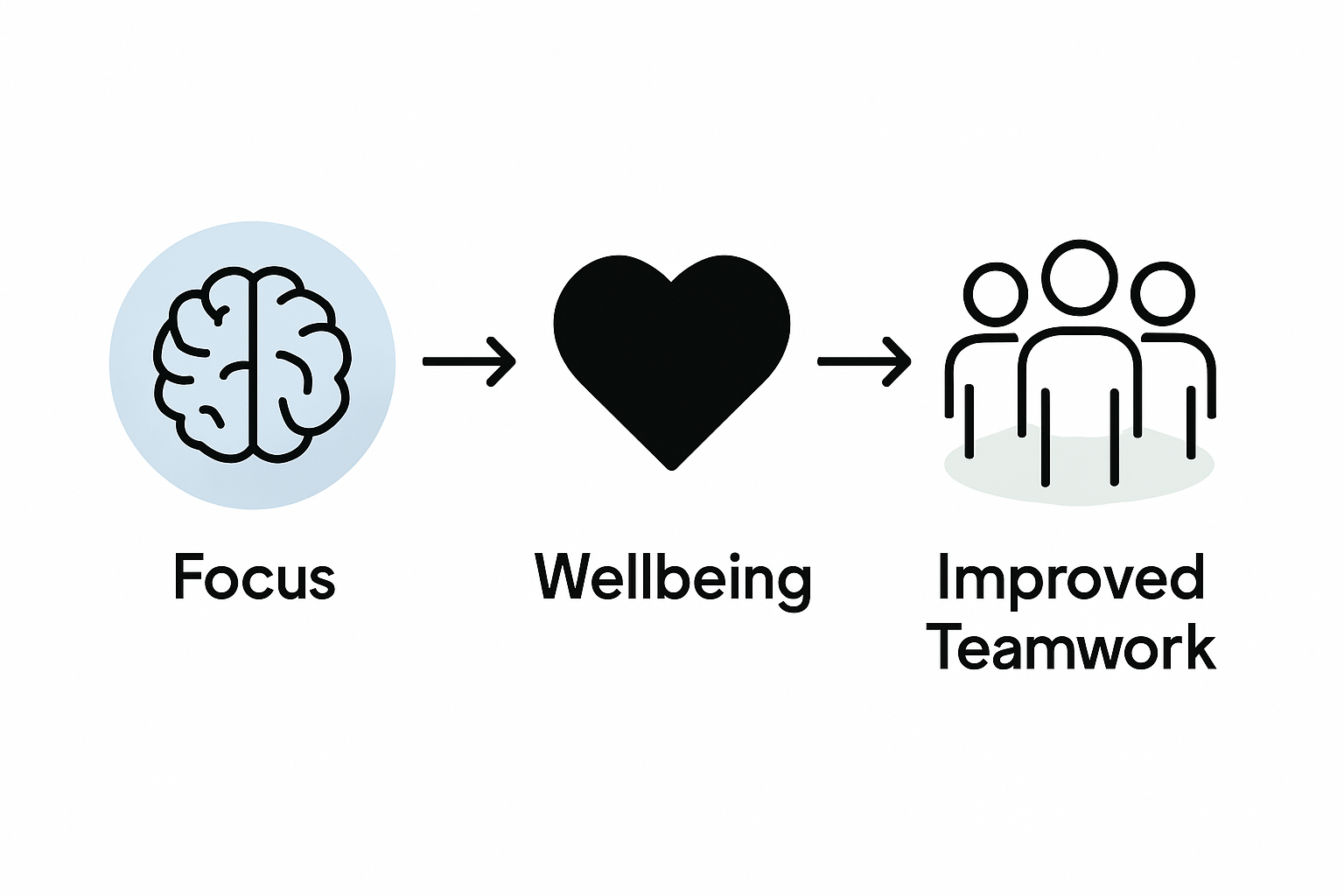
- How Mindfulness Improves Employee Wellbeing
- Leadership Development Through Mindful Techniques
- Challenges And Misconceptions Of Workplace Mindfulness
Key Takeaways
| Point | Details |
|---|---|
| Mindfulness Boosts Workplace Performance | Implementing mindfulness practices can significantly enhance employees’ focus, emotional regulation, and cognitive clarity. |
| Diverse Techniques Support Employee Wellbeing | Incorporating varied mindfulness practices fosters emotional intelligence and resilience within teams. |
| Transformative Leadership Development | Mindfulness empowers leaders to cultivate self-awareness and empathy, improving decision-making and team dynamics. |
| Addressing Challenges is Crucial | Understanding the complexities and misconceptions of mindfulness is vital to ensuring effective implementation in workplace cultures. |
Defining Mindfulness for Modern Workplaces
Mindfulness represents a deliberate, non-judgmental state of present-moment awareness that transforms how professionals engage with work environments. Within organizational contexts, mindfulness goes beyond traditional meditation practices, emerging as a strategic approach to enhance cognitive performance, emotional intelligence, and workplace resilience. Mindfulness for professionals involves cultivating intentional attention and self-awareness that allows individuals to respond rather than react to workplace challenges.
Research from organizational psychology reveals that mindfulness operates through multiple interconnected processes. Organizational mindfulness encompasses five critical dimensions: concern with potential failures, reluctance to oversimplify complex situations, heightened sensitivity to operational dynamics, commitment to organizational resilience, and maintaining flexible leadership structures. These processes enable teams to develop more adaptive, responsive, and emotionally intelligent workplace cultures.
Practical mindfulness in modern workplaces means integrating deliberate practices that foster present-moment awareness, emotional regulation, and cognitive clarity. Professionals practicing mindfulness can expect improvements in several key areas:
- Enhanced focus and concentration
- Reduced stress and emotional reactivity
- Improved decision-making capabilities
- Better interpersonal communication
- Increased emotional intelligence
By understanding mindfulness not as a passive technique but an active skill, organizations can transform their workplace dynamics, creating environments where employees are more engaged, resilient, and psychologically balanced.
Types of Mindfulness Practices in Organizations
Organizations are increasingly adopting diverse mindfulness practices to enhance employee performance, emotional intelligence, and workplace resilience. Mindfulness workshops offer structured approaches that help professionals develop critical skills for managing stress, improving focus, and cultivating psychological well-being in high-pressure work environments.
Workplace mindfulness techniques encompass a range of strategic interventions designed to promote mental clarity and emotional regulation. These practices typically include:
- Breathing Meditation: Structured exercises that help employees center themselves and reduce immediate stress
- Body Scan Techniques: Systematic awareness practices that reconnect individuals with physical sensations
- Mindful Movement: Gentle physical exercises like yoga or tai chi integrated into workplace wellness programs
- Guided Visualization: Directed mental exercises that promote relaxation and cognitive reset
- Reflective Journaling: Structured writing practices that encourage self-awareness and emotional processing
Implementing these mindfulness practices requires a thoughtful, integrated approach that goes beyond simple stress management. By creating dedicated spaces, providing professional guidance, and normalizing mental wellness practices, organizations can transform workplace culture, enhance employee engagement, and develop more resilient, adaptive professional communities.
How Mindfulness Enhances Employee Wellbeing
Employee wellbeing represents a complex ecosystem of mental, emotional, and physical health that directly impacts workplace performance and organizational success. Mindfulness tools for professionals provide strategic interventions that systematically address the multifaceted challenges of modern workplace stress and psychological resilience.

Workplace psychological research reveals that mindfulness practices deliver significant benefits across multiple dimensions of employee health. These practices contribute to reducing stress, enhancing emotional regulation, and improving critical cognitive functions like attention and decision-making. By cultivating mental clarity and emotional stability, organizations can create more supportive, adaptive work environments that promote individual and collective well-being.
The profound impact of mindfulness on employee wellness extends beyond immediate stress reduction. Key benefits include:
- Decreased emotional exhaustion
- Improved psychological flexibility
- Enhanced interpersonal communication
- Reduced workplace conflict
- Lower turnover intentions
- Increased overall job satisfaction
By integrating mindfulness practices, organizations demonstrate a genuine commitment to employee mental health, creating a culture that values psychological safety, personal growth, and holistic professional development. This approach not only supports individual employees but also builds more resilient, innovative, and compassionate workplace communities.
Leadership Development Through Mindful Techniques
Leadership development requires more than traditional management skills. Role of Mindfulness in Leadership provides transformative approaches that help leaders cultivate deeper self-awareness, emotional intelligence, and adaptive thinking essential for navigating complex organizational challenges.
Mindfulness training research demonstrates that mindful techniques create a more flexible sense of self among leaders. By developing heightened emotional awareness and cognitive agility, leaders can:
- Respond strategically instead of reacting impulsively
- Develop greater empathy and interpersonal understanding
- Manage stress more effectively
- Make more balanced and thoughtful decisions
- Navigate organizational complexity with greater resilience
- Foster more inclusive and supportive team environments
Through consistent mindfulness practices, leaders can transcend traditional hierarchical approaches, creating dynamic, compassionate workplace cultures that prioritize psychological safety, continuous learning, and holistic professional growth. This approach transforms leadership from a positional role to an adaptive, empathetic practice of continuous personal and collective development.
Challenges and Misconceptions of Workplace Mindfulness
Workplace mindfulness is not a universal solution but a nuanced approach requiring careful implementation and understanding. Mindfulness tools for professionals reveal that successful integration depends on addressing common misconceptions and organizational barriers that can undermine its effectiveness.
Organizational mindfulness research highlights critical challenges in implementing mindfulness interventions across diverse workplace environments. The primary obstacles include:
- Variability in mindfulness technique effectiveness
- Employee skepticism and potential resistance
- Difficulty aligning practices with specific organizational cultures
- Inconsistent measurement of intervention outcomes
- Risk of superficial implementation without genuine commitment
- Potential misunderstanding of mindfulness as a quick fix
Critical to overcoming these challenges is developing a sophisticated, contextually sensitive approach that recognizes mindfulness as a comprehensive psychological skill rather than a standardized corporate program. Organizations must invest in robust training, create supportive environments, and demonstrate genuine commitment to employee well-being beyond surface-level interventions. By acknowledging the complexity of mindfulness practices, companies can transform potential barriers into opportunities for meaningful personal and professional growth.
Elevate Leadership with Mindfulness for Lasting Workplace Impact
The challenge of developing adaptive, emotionally intelligent leaders is central to the Role of Mindfulness in Organizations – Lasting Impact at Work article. It highlights how mindful techniques help leaders respond strategically, manage stress, and foster compassionate team dynamics. These goals speak directly to professionals and organizations seeking to transform traditional leadership into a practice rooted in self-awareness, empathy, and resilience.
At Monikavarela.com, Monika Varela offers expert mindfulness workshops and coaching designed to cultivate exactly these skills. Through personalized programs, you can overcome common barriers such as skepticism or superficial training and invest in meaningful, sustainable leadership growth. Start your journey now to become a mindful leader who inspires trust, inclusion, and effective decision-making in complex work environments.
Unlock your leadership potential today and build emotionally intelligent teams by exploring our mindfulness tools for professionals. Visit Monikavarela.com to book a session or discover how mindful leadership can shape a healthier, more resilient workplace culture.
Frequently Asked Questions
What is mindfulness in the workplace?
Mindfulness in the workplace refers to a deliberate practice of maintaining present-moment awareness without judgment, which enhances employee engagement, emotional intelligence, and cognitive performance.
How can mindfulness practices improve employee well-being?
Mindfulness practices can significantly reduce stress, improve emotional regulation, enhance interpersonal communication, and increase overall job satisfaction, leading to a more supportive workplace culture.
What are some effective mindfulness techniques for organizations?
Effective mindfulness techniques for organizations include breathing meditation, body scan techniques, mindful movement, guided visualization, and reflective journaling, all aimed at fostering mental clarity and emotional resilience.
How does leadership benefit from mindfulness training?
Leadership benefits from mindfulness training by developing deeper self-awareness, emotional intelligence, and the ability to respond strategically, which enhances team dynamics and creates a more compassionate workplace culture.






Aún no hay comentarios, ¡añada su voz abajo!