




Over half of American adults report struggling to maintain daily mindfulness in their routines. With stress levels rising across the United States, finding a practical way to set authentic intentions is more important than ever. This practical guide offers simple steps to help you create a personal environment for mindful reflection and shows how transforming small habits can deeply impact your sense of calm and clarity.
Table of Contents
- Step 1: Prepare Your Environment for Mindful Reflection
- Step 2: Clarify Your Purpose and Motivation
- Step 3: Formulate Clear and Authentic Intentions
- Step 4: Anchor Intentions with Present-Moment Awareness
- Step 5: Review and Refine Your Mindful Intentions
Quick Summary
| Key Point | Explanation |
|---|---|
| 1. Create a Calm Reflection Space | Select a quiet, peaceful area and organize it with soothing colors and natural materials to foster contemplation. |
| 2. Clarify Intentions for Mindfulness | Understand your motivations by asking deep questions and journaling to uncover personal goals that resonate with your values. |
| 3. Set Authentic and Specific Intentions | Frame your intentions as present commitments using “I am” statements to encourage immediate embodiment of your goals. |
| 4. Anchor Intentions in Daily Life | Develop a practice of checking in with your intentions and use physical reminders to maintain focus on your commitments. |
| 5. Regularly Review and Refine Intentions | Periodically reflect on your intentions to ensure they align with your evolving self, allowing for compassionate adjustments. |
Step 1: Prepare Your Environment for Mindful Reflection
Creating a dedicated space for mindful reflection is about transforming a simple area into a sanctuary of calm and introspection. Your environment plays a crucial role in supporting mental clarity and emotional balance. By intentionally designing a mindful space , you signal to your brain that it is time to shift into a more relaxed and contemplative state.
Start by selecting a quiet corner in your home that feels naturally peaceful. This could be near a window with natural light, a cozy nook away from high traffic areas, or a spot with a pleasant view. Choose soothing colors and natural materials that help you feel grounded and serene. Consider incorporating soft textures like a comfortable cushion, a lightweight throw blanket, or a plush rug that invites you to sit and breathe. Adding small natural elements like potted plants or a small indoor fountain can further enhance the sense of tranquility and connection to the present moment.
One pro tip: Keep this space clutter free. A clean, organized environment supports a clear mind. Remove digital distractions and unnecessary items that might pull your attention away from your mindful practice. Your reflection space should feel like a gentle invitation to pause, breathe, and reconnect with yourself.
Step 2: Clarify Your Purpose and Motivation
Clarifying your purpose is about understanding the deeper reasons behind your mindful practice and creating meaningful intentions that truly resonate with your personal growth. This step involves peeling back the layers of your everyday experiences to uncover what truly matters to you and how your mindfulness journey connects with your core values and aspirations.
Creating value in your intention setting requires honest self reflection. Start by asking yourself powerful questions that go beyond surface level goals. What drives you? What changes do you want to see in yourself? What feelings or qualities do you want to cultivate through your mindfulness practice? Take time to journal these thoughts, allowing yourself to explore without judgment. Consider mapping out your core values personal strengths and the areas of your life where you most want to grow. This process helps transform vague wishes into clear intentional pathways for personal transformation.
A practical tip is to make your motivation concrete and specific. Rather than a broad statement like “I want to be happier,” try “I want to develop more patience with myself during challenging moments.” This specificity creates a powerful anchor for your mindfulness practice and makes your intentions feel more achievable and meaningful.
Step 3: Formulate Clear and Authentic Intentions
Setting intentions is more than just creating a wishlist of personal goals. It is an intimate process of aligning your inner values with your external actions. Think of your intentions as compassionate compasses that guide you toward meaningful personal growth, not rigid rules that limit your potential. Your intentions should feel like gentle invitations to explore your best self, creating space for genuine transformation and self understanding.

To craft truly authentic intentions, start by getting radically honest with yourself. Close your eyes and take a few deep breaths. Reflect on what truly matters to you beyond external expectations or societal pressures. What qualities do you want to nurture? What patterns do you want to shift? Write down intentions that feel resonant and alive. Instead of vague statements like “I want to be happier,” try specifics such as “I will approach challenges with curiosity and self-compassion” or “I choose to listen to my inner wisdom with patience and trust.”
A key insight is to frame your intentions as present moment commitments rather than future achievements. Use language that empowers you right now. Words like “I am” instead of “I will” create an immediate sense of embodiment and possibility. Remember that authentic intentions are living documents. They can evolve as you grow, reflecting your expanding understanding of yourself and your path.
Step 4: Anchor Intentions with Present-Moment Awareness
Mindful intention setting is about bringing your carefully crafted goals into the living, breathing landscape of your everyday experience. Practicing daily embodiment of your intentions transforms them from abstract concepts into tangible ways of being. This step is about creating a bridge between your inner commitments and your moment to moment lived experience.
To anchor your intentions, start by developing a simple daily practice of checking in with yourself. Choose specific moments throughout your day where you pause and reconnect with your core intentions. This might look like taking three conscious breaths before a challenging meeting, silently recommitting to your intention of patience during a potentially stressful interaction, or mindfully noticing how you are showing up in your relationships. The key is consistent gentle awareness not harsh self judgment. Notice how your intentions feel in your body. Are you feeling contracted or expansive? Curious or defensive? Your bodily sensations are powerful messengers of your internal alignment.
A practical tip is to create small physical or visual reminders of your intentions. This could be a meaningful phrase written on a sticky note, a subtle piece of jewelry, or a phone background that gently nudges you back to your committed path. These anchors serve as compassionate touchstones, helping you repeatedly return to your authentic intentions without criticism or struggle.
Step 5: Review and Refine Your Mindful Intentions
Regularly reviewing and refining your intentions is a crucial practice of self awareness and personal growth. Think of this process as tending to a living garden of your inner landscape. Just as plants need consistent care and occasional pruning, your intentions require mindful attention and compassionate reevaluation to remain vibrant and meaningful.
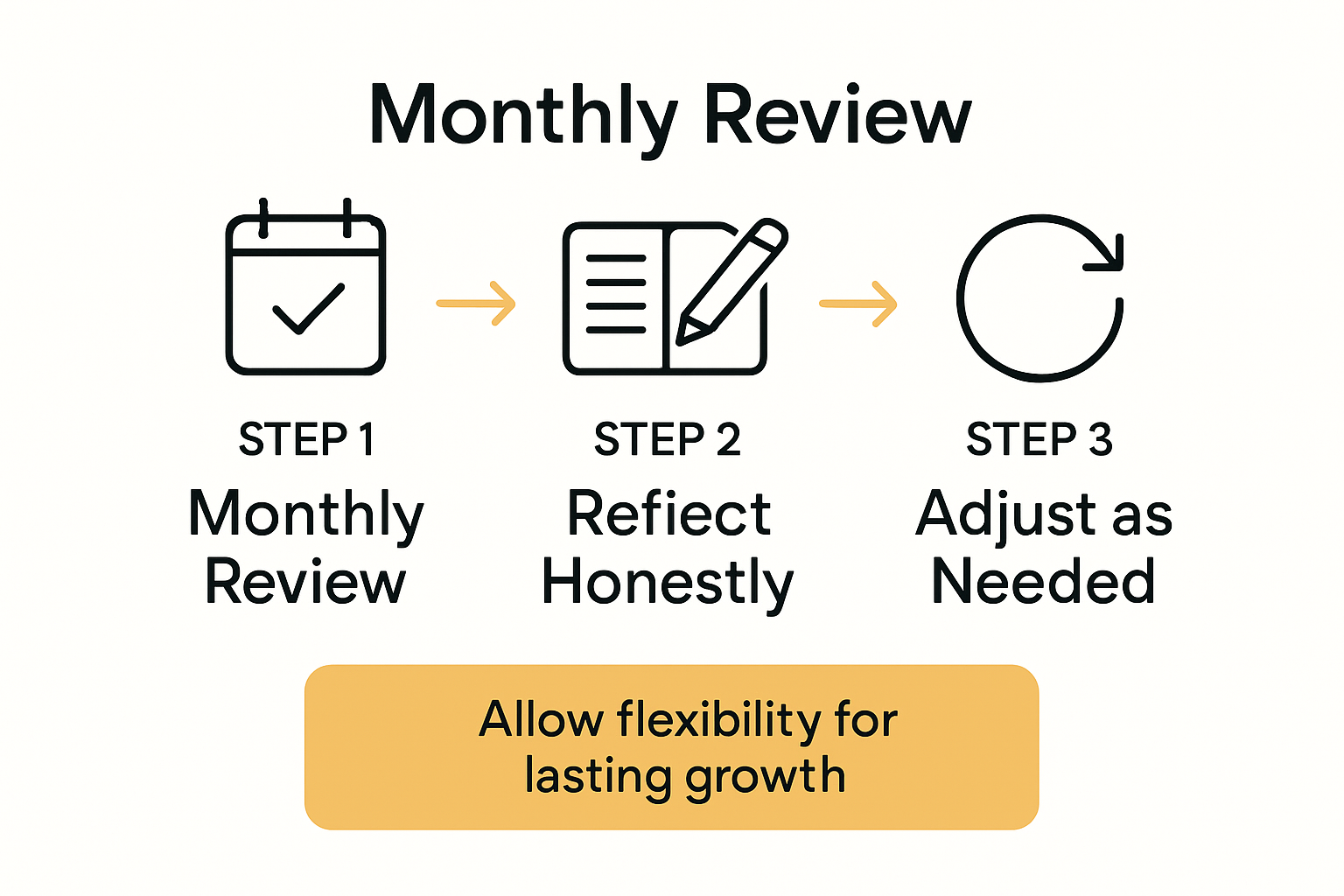
Allowing flexibility in your intention setting means approaching your personal development with curiosity and openness. Set aside time every few weeks to reflect on your initial intentions. Ask yourself powerful questions. Have your priorities shifted? Are these intentions still resonant with who you are becoming? Notice not just the content of your intentions but how they feel in your body. Do they generate a sense of expansion or constriction? Write down your observations without judgment. Some intentions might need subtle reframing, while others might require complete reimagining.
A practical approach is to create a gentle review ritual. This could be a monthly journaling session, a quiet walk where you contemplate your path, or a meditation focused on honest self reflection. The goal is not perfection but compassionate awareness. Remember that your intentions are guideposts, not rigid destinations. They are meant to evolve as you grow, offering loving support rather than creating additional pressure on your journey of self discovery.
Unlock Lasting Positive Change with Mindful Guidance
The journey to set mindful intentions for lasting positive change starts with clarity and compassionate self-commitment. If you find yourself struggling to maintain focus or translate your intentions into everyday actions, you are not alone. Many seek practical support to create a mindful space where growth feels possible and sustainable. Key challenges include anchoring authentic intentions in the present moment and regularly reviewing them without self-judgment. These concerns reflect the need for personalized strategies in rooted professional expertise.

Discover how Monika Varela integrates psychology and mindfulness coaching to help you design your mental wellness goals with precision and heart. Whether you want to deepen your practice, develop emotional resilience, or improve communication skills, Monika’s therapeutic services and mindful workshops offer tailored tools to keep you anchored and evolving. Begin your transformation today by exploring mindfulness coaching and therapy options crafted for individuals who value meaningful and lasting change. Take the first step toward a life shaped by clear intention and present-moment awareness with trusted professional guidance.
Frequently Asked Questions
How can I create a dedicated space for mindful reflection at home?
Creating a dedicated space involves selecting a quiet corner that feels peaceful, using calming colors and natural materials. Identify an area near a window or a cozy nook, declutter it, and add comfortable seating.
What questions should I ask myself to clarify my purpose for mindfulness?
To clarify your purpose, ask yourself questions like “What changes do I want to see in myself?” and “What qualities do I want to cultivate through my mindfulness practice?” Journaling your responses can help transform vague wishes into clear intentions.
How can I formulate clear and authentic intentions?
To formulate clear intentions, focus on specific, present-moment commitments rather than broad goals. For instance, instead of saying, “I want to be happier,” say, “I choose to listen to my inner wisdom with patience and trust.”
What are some effective ways to anchor my intentions in daily life?
An effective way to anchor your intentions is to establish daily check-in moments, like taking three deep breaths before a meeting. Create physical reminders, such as sticky notes or symbols, to help reinforce your intentions throughout the day.
How often should I review and refine my mindful intentions?
You should review and refine your intentions every few weeks to ensure they remain resonant with your evolving self. Consider setting up a monthly journaling session to reflect on your intentions and adjust them as needed.
What should I do if my intentions no longer resonate with me?
If your intentions no longer resonate, approach the situation with curiosity and openness. Reflect on how they feel in your body and consider reframing them or creating new intentions that better align with your current values and goals.
Recommended
- Role of Mindfulness in Leadership Explained – Mónika Varela
- Why Mindfulness Matters in 2025: Complete Guide – Mónika Varela
- Best 7 Mindfulness Tools for Professionals – Expert Comparison 2025 – Mónika Varela
- What Are Mindfulness Workshops? Complete Guide 2024 – Mónika Varela
- Building Healthy Habits Naturally: A Step-by-Step Guide – naturessoulshop
- How to Cultivate Daily Wellness Naturally for Ageless Radiance – EMILY SANDERS LIFESTYLE





Aún no hay comentarios, ¡añada su voz abajo!